
insolvent - Master This Word
Master this word with our 5-step learning method – Learn English in English
Train English Through Brain Routes, Not Translation.
This page helps you stop memorizing isolated translations and start understanding a word through its shared mental image, native-style thinking, and practical training steps.
Master this word with our 5-step learning method – Learn English in English
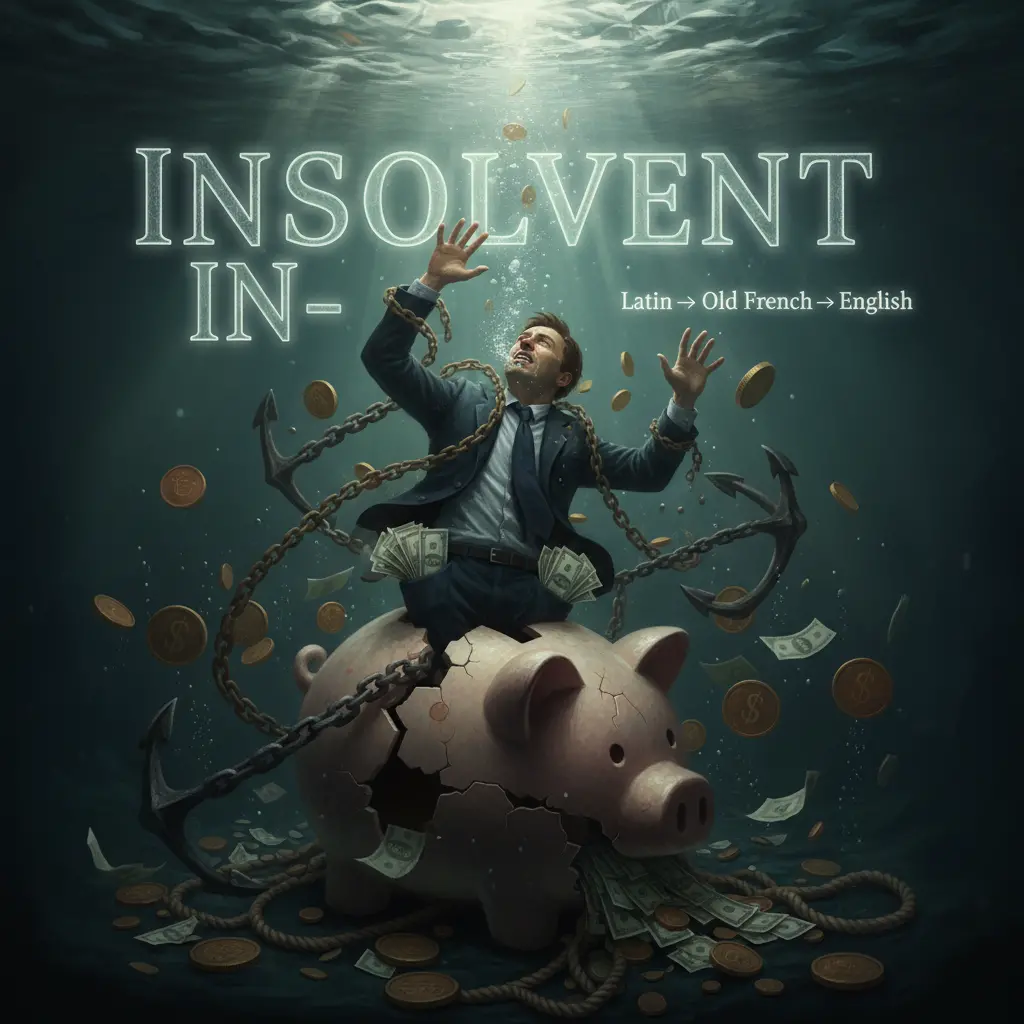
Example sentences are the start of understanding. Don't rush to memorize. First feel how the word works in a sentence.
insolvent = in- (not) + solvent (able to pay). Historical origin: Latin → Old French → English. Memory image: Imagine a person drowning in debt, completely submerged and unable to surface for air, representing their inability to pay.
Note 1: These definitions and etymologies are not standard dictionary definitions, but extended explanations provided to help with memorization and understanding of the actual application of words. Through this background information, we strive to make words more vivid and easier to understand, and help you remember their meanings in real life.
Note 2: LexiTalk designs the learning flow around the linguistics principle of “Comprehensible Input.” When learners encounter material that is slightly above their level but still understandable from context, the brain naturally absorbs the language. That’s why we keep every word inside authentic contexts, using examples and associations to help you understand it and use it flexibly.
Read the FAQ explanation of Comprehensible InputInsolvent describes someone or a business that cannot meet its debt obligations as they come due. It is more formal than simply being 'broke' because insolvency can be a legal or financial state, not a temporary lack of cash for a single purchase. For individuals, insolvency means liabilities exceed assets and cash flow is insufficient to pay debts. For companies, it can occur when total debts exceed assets or when the entity cannot service debt even if it has some cash on hand. The term comes from in- (not) + solvent (able to pay). A common memory image: being underwater in a sea of debt, unable to surface and pay what is owed.
In English, insolvency is a formal state that can have legal and financial implications, not just a defaulting on a few bills. Learners often equate it with being 'broke' or failing temporarily; English tends to reserve insolvency for serious financial failure, sometimes tied to bankruptcy. Typical mistakes include using insolv ent interchangeably with 'unable to pay a few debts' and missing the nuance that insolvency can exist even when some assets remain.
What is the meaning of 'insolvent'?
In which of the following sentences is 'insolvent' used correctly?
Which of the following is an antonym of 'insolvent'?
In what real-life context would someone be considered 'insolvent'?
Reflect on a situation where being 'insolvent' would be a serious problem.
Download LexiTalk app for personalized learning experience
Download AppCookies
We use cookies for essential site functions, analytics, and ads. You can accept, reject, or manage preferences. Privacy Policy