
inspissate - Master This Word
Master this word with our 5-step learning method – Learn English in English
Train English Through Brain Routes, Not Translation.
This page helps you stop memorizing isolated translations and start understanding a word through its shared mental image, native-style thinking, and practical training steps.
Master this word with our 5-step learning method – Learn English in English
Example sentences are the start of understanding. Don't rush to memorize. First feel how the word works in a sentence.
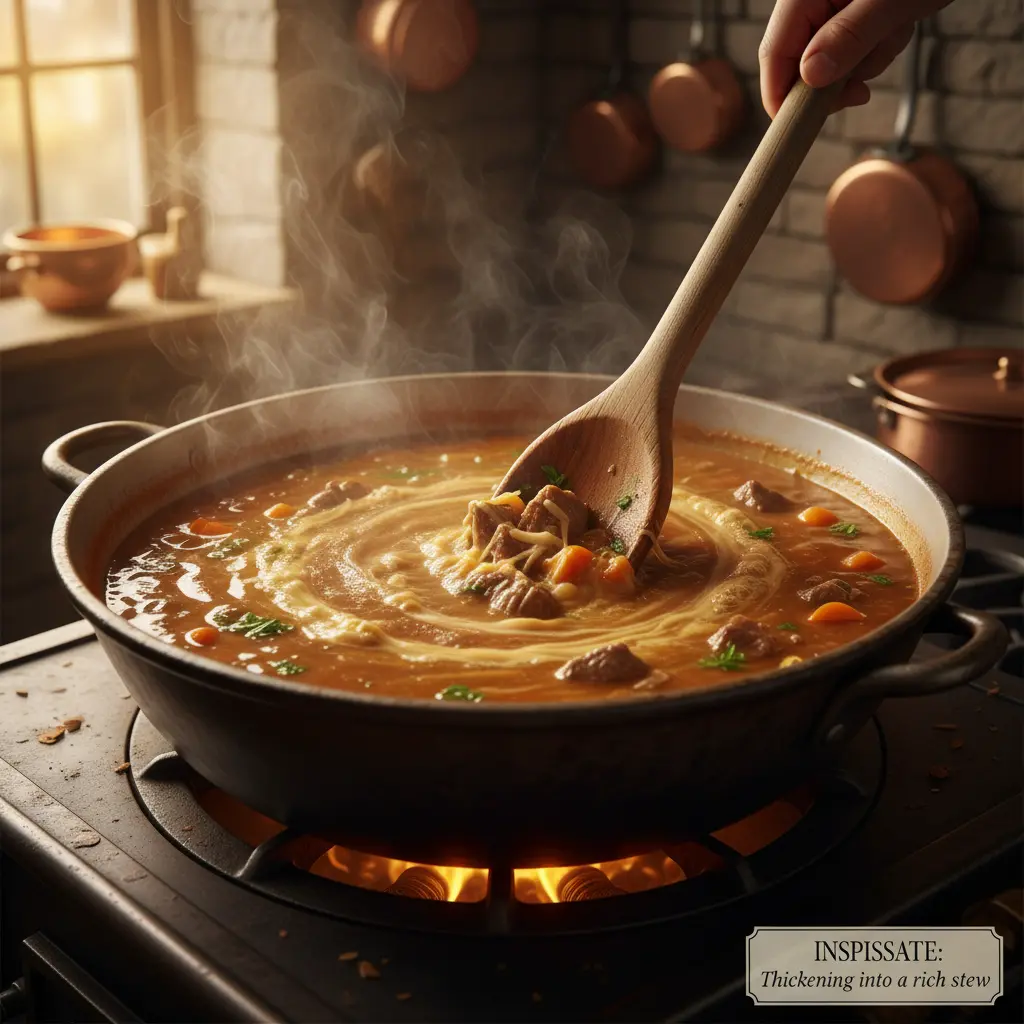
Root decomposition: in- (into) + spissate (from Latin spissatus, meaning thickened). Historical origin: Latin spissare → Old French espissier → English inspissate. Memory image: Picture a thickening broth that transforms from a watery soup into a rich stew, thickening with each stir.
Note 1: These definitions and etymologies are not standard dictionary definitions, but extended explanations provided to help with memorization and understanding of the actual application of words. Through this background information, we strive to make words more vivid and easier to understand, and help you remember their meanings in real life.
Note 2: LexiTalk designs the learning flow around the linguistics principle of “Comprehensible Input.” When learners encounter material that is slightly above their level but still understandable from context, the brain naturally absorbs the language. That’s why we keep every word inside authentic contexts, using examples and associations to help you understand it and use it flexibly.
Read the FAQ explanation of Comprehensible InputIn everyday English, inspissate is a relatively rare verb meaning to thicken, condense, or make more viscous. It is most at home in scientific, culinary, or literary prose rather than casual speech. You might see it describing a syrup reducing to a glaze, a solution becoming more concentrated as water evaporates, or a textural change in a sauce. The process is typically intentional and analytic, not accidental. The word points to a clear physical transformation: liquid becomes thicker or more viscous as a function of time, temperature, or evaporation. Pronounce it as in-SPISS-ate, with stress on the second syllable.
For English learners, think of inspissate as a precise, almost academic way to say 'to thicken' with an emphasis on the process of concentration. It signals a deliberate change, usually in science or literature, not everyday talk. Learners often overgeneralize it to all thickening verbs or try to use it with animate subjects, which sounds odd.
What does the word 'inspissate' mean?
Which of the following sentences uses 'inspissate' correctly?
Which word is most similar to 'inspissate'?
What is the opposite of 'inspissate'?
Can you give an example of a real-life scenario where a liquid might inspissate?
Download LexiTalk app for personalized learning experience
Download AppCookies
We use cookies for essential site functions, analytics, and ads. You can accept, reject, or manage preferences. Privacy Policy