
it - Master This Word
Master this word with our 5-step learning method – Learn English in English
Train English Through Brain Routes, Not Translation.
This page helps you stop memorizing isolated translations and start understanding a word through its shared mental image, native-style thinking, and practical training steps.
Master this word with our 5-step learning method – Learn English in English
Example sentences are the start of understanding. Don't rush to memorize. First feel how the word works in a sentence.
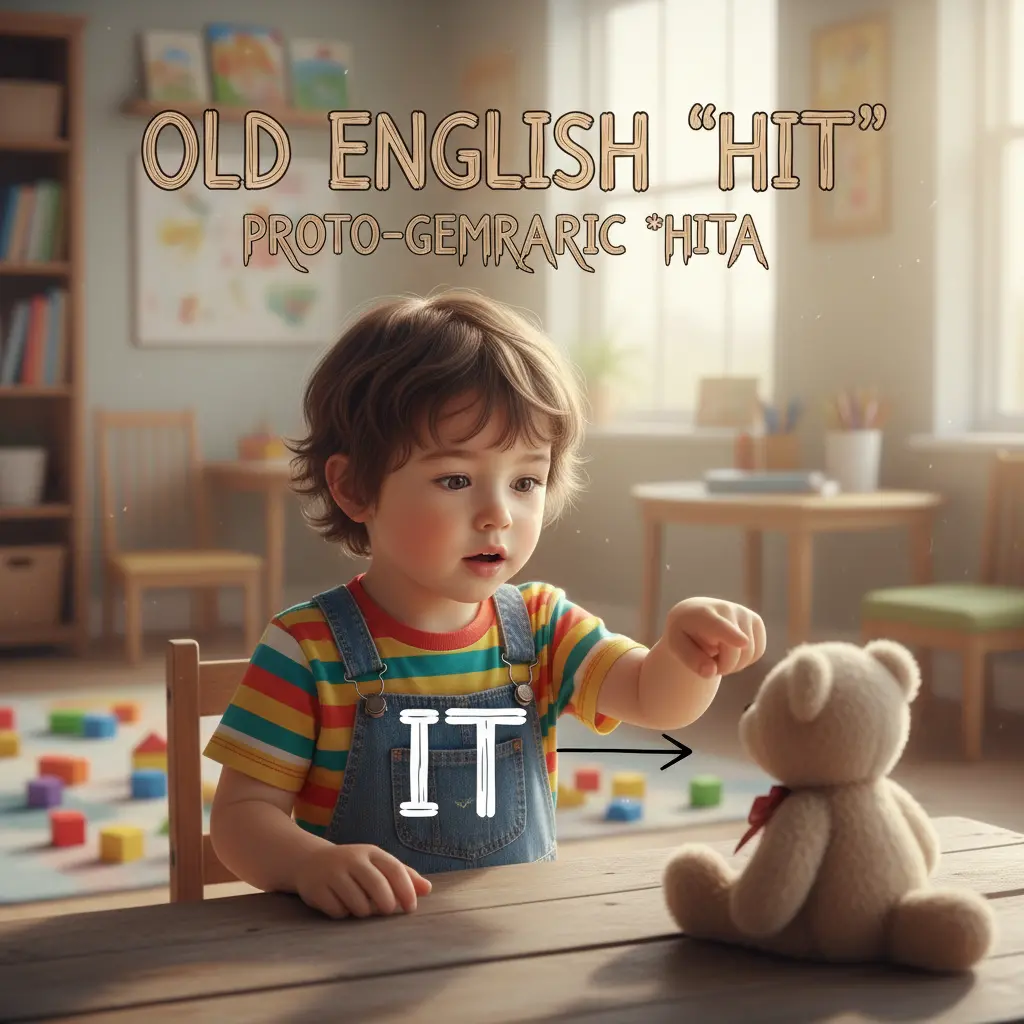
The word 'it' has roots in Old English 'hit', which comes from Proto-Germanic '*hita'. Picture a child pointing at an object and saying 'it' with curiosity, illustrating the very essence of identifying and relating to things around us.
Note 1: These definitions and etymologies are not standard dictionary definitions, but extended explanations provided to help with memorization and understanding of the actual application of words. Through this background information, we strive to make words more vivid and easier to understand, and help you remember their meanings in real life.
Note 2: LexiTalk designs the learning flow around the linguistics principle of “Comprehensible Input.” When learners encounter material that is slightly above their level but still understandable from context, the brain naturally absorbs the language. That’s why we keep every word inside authentic contexts, using examples and associations to help you understand it and use it flexibly.
Read the FAQ explanation of Comprehensible InputI pick up a cup and move it to the edge of the table. The cup sits there, and I sense I will use it to talk about that thing later. I adjust my pace, and the word it slips into my sentence with a natural ease. In real talk, I just say it to keep the flow going when I am pointing to the cup.
English uses it as a neutral, singular pronoun to refer to a thing already mentioned or obvious from context, and also as a dummy subject in weather expressions, such as it is raining, or when the real subject is delayed or unknown. In conversation, it helps avoid repeating a noun and keeps sentences flowing. Learners often trip over whether to use it or repeat the noun, and they may try to assign gender or animate meanings to it that English does not require. Remember that it cannot refer to a plural noun and the antecedent must be clear.
Explain to an English speaker (meta, keep short)
How is the word 'it' commonly used in sentences?
Which word is similar to 'it'?
What is the opposite of the word 'it'?
In what real-life context would you commonly hear the word 'it'?
Download LexiTalk app for personalized learning experience
Download AppCookies
We use cookies for essential site functions, analytics, and ads. You can accept, reject, or manage preferences. Privacy Policy