laggard - Master This Word
Master this word with our 5-step learning method – Learn English in English
Train English Through Brain Routes, Not Translation.
This page helps you stop memorizing isolated translations and start understanding a word through its shared mental image, native-style thinking, and practical training steps.
Master this word with our 5-step learning method – Learn English in English
Example sentences are the start of understanding. Don't rush to memorize. First feel how the word works in a sentence.
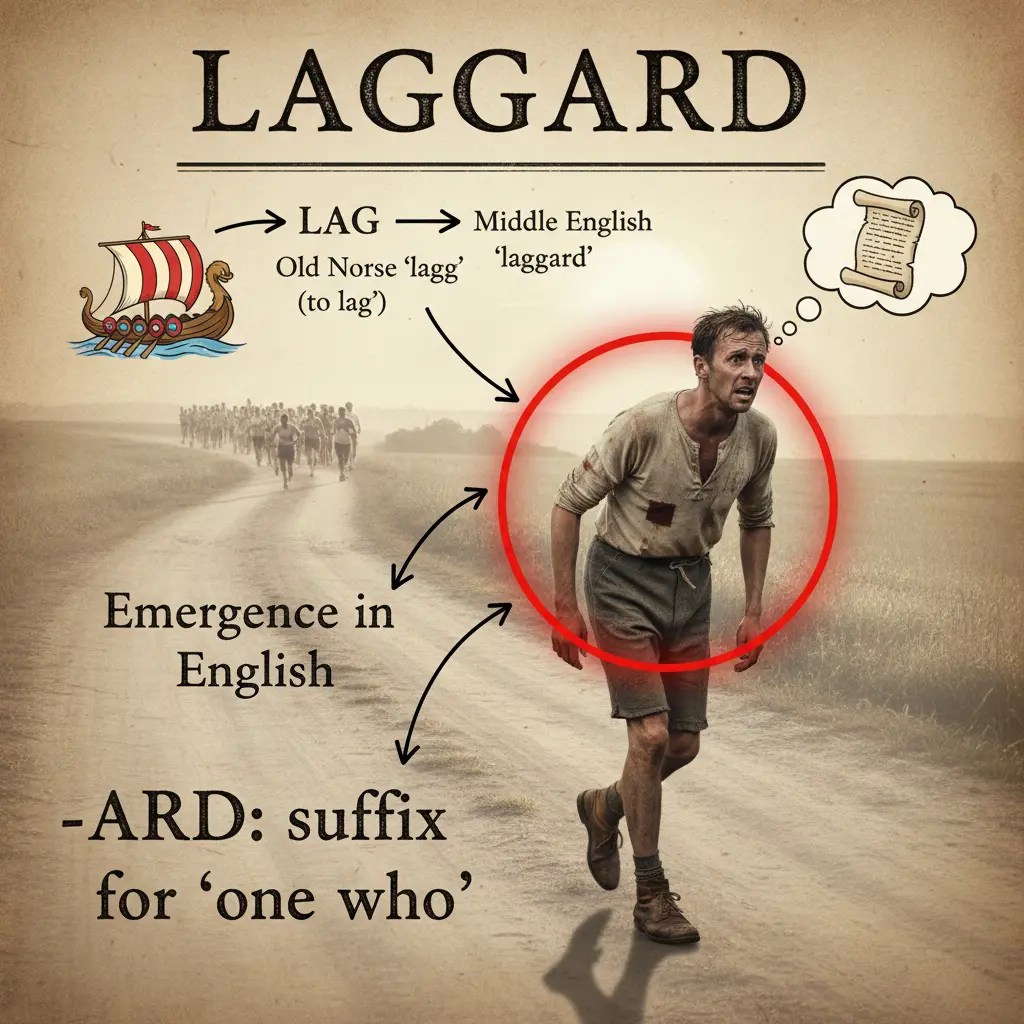
laggard = lag + -ard. Historical origin: From Middle English 'laggard', from Old Norse 'lagg' (to lag) → Emerged as 'laggard' in English. Memory image: Imagine someone trailing far behind in a race, constantly looking back, embodying slowness.
Note 1: These definitions and etymologies are not standard dictionary definitions, but extended explanations provided to help with memorization and understanding of the actual application of words. Through this background information, we strive to make words more vivid and easier to understand, and help you remember their meanings in real life.
Note 2: LexiTalk designs the learning flow around the linguistics principle of “Comprehensible Input.” When learners encounter material that is slightly above their level but still understandable from context, the brain naturally absorbs the language. That’s why we keep every word inside authentic contexts, using examples and associations to help you understand it and use it flexibly.
Read the FAQ explanation of Comprehensible InputA laggard is a person who is slow to develop or respond, or who lags behind others in progress or pace. The term can carry a mild, teasing edge or a sharper critical tone, depending on context. You might hear it about a student who takes longer to grasp a concept, a colleague who misses deadlines, or a traveler who falls behind a tour group. It can function as a noun (a laggard) or as an adjective in phrases like laggard behavior. Its etymology blends lag with -ard, signaling someone marked by slow progress; use with care to avoid unkind impressions.
Laggard is a pejorative label in English that emphasizes relative slowness in progress. Learners often assume it only applies to individuals who are obviously lazy, or to sports contexts; in reality it covers any situation where someone lags behind a group or task. English speakers also distinguish between a temporary delay and a character trait, which non-native speakers may misread as a permanent feature.
What is the meaning of 'laggard'?
In which sentence is 'laggard' used correctly?
Which word is an antonym of 'laggard'?
In what real-life context would you use the word 'laggard'?
Can you think of a sentence using the word 'laggard'?
Download LexiTalk app for personalized learning experience
Download AppCookies
We use cookies for essential site functions, analytics, and ads. You can accept, reject, or manage preferences. Privacy Policy