
legislature - Master This Word
Master this word with our 5-step learning method – Learn English in English
Train English Through Brain Routes, Not Translation.
This page helps you stop memorizing isolated translations and start understanding a word through its shared mental image, native-style thinking, and practical training steps.
Master this word with our 5-step learning method – Learn English in English
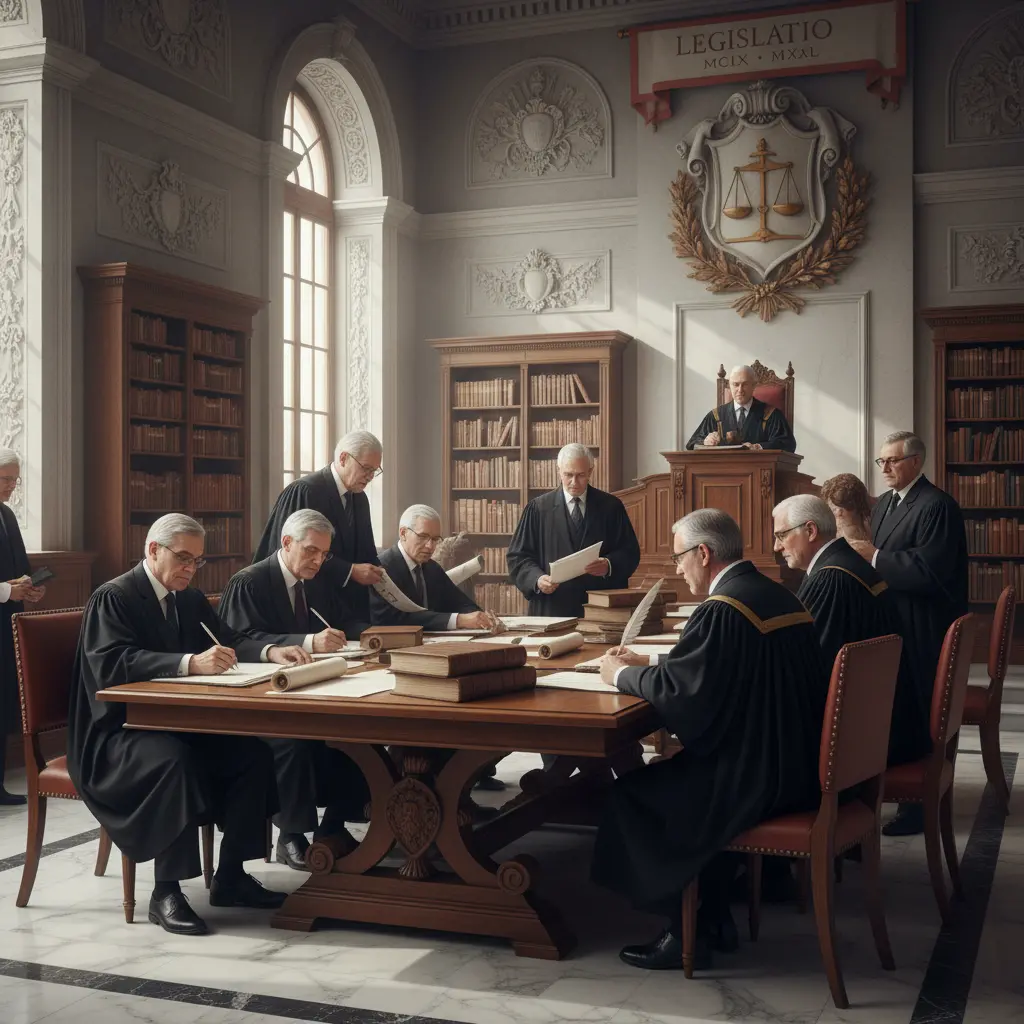
Example sentences are the start of understanding. Don't rush to memorize. First feel how the word works in a sentence.
Legislature: legis- = law, lat- = relating to creating. From Latin 'legislatio' → Old French 'legislation' → English. Imagine a group of officials gathered to write down laws, symbolizing order and governance.
Note 1: These definitions and etymologies are not standard dictionary definitions, but extended explanations provided to help with memorization and understanding of the actual application of words. Through this background information, we strive to make words more vivid and easier to understand, and help you remember their meanings in real life.
Note 2: LexiTalk designs the learning flow around the linguistics principle of “Comprehensible Input.” When learners encounter material that is slightly above their level but still understandable from context, the brain naturally absorbs the language. That’s why we keep every word inside authentic contexts, using examples and associations to help you understand it and use it flexibly.
Read the FAQ explanation of Comprehensible InputFirst I lean in, set my notes on the table, and push a motion forward. The room moves as voices rise, hands shift, and a vote begins to turn. I feel the effort in my hands as I adjust my stance, keep my focus, and let the idea change shape. By the end, the gathering holds its breath and a decision settles into the air.
Legislature refers to a formal body with authority to write, debate, and pass laws. In democracies it is typically an elected assembly representing the people, though structures vary: some countries have two houses (bicameral), others only one (unicameral). A legislature drafts laws, reviews and amends proposed bills, and oversees the executive through committees and investigations. It also approves budgets and sets policy priorities. The term can describe the institution itself, or the process of lawmaking in general. When you hear about a bill, a committee, or a law, people are usually discussing actions of the legislature and its members.
Legislature emphasizes formal institutions and processes; English learners should note distinct terms for the body (legislature) vs the act (legislation) and common collocations like passes, drafts, or oversees.
What is the meaning of 'legislature'?
Which of the following sentences uses 'legislature' correctly?
What is a synonym for 'legislature'?
What is an opposite (antonym) for 'legislature'?
In what real-life context would you encounter a 'legislature'?
Download LexiTalk app for personalized learning experience
Download AppCookies
We use cookies for essential site functions, analytics, and ads. You can accept, reject, or manage preferences. Privacy Policy