lesser - Master This Word
Master this word with our 5-step learning method – Learn English in English
Train English Through Brain Routes, Not Translation.
This page helps you stop memorizing isolated translations and start understanding a word through its shared mental image, native-style thinking, and practical training steps.
Master this word with our 5-step learning method – Learn English in English
Example sentences are the start of understanding. Don't rush to memorize. First feel how the word works in a sentence.
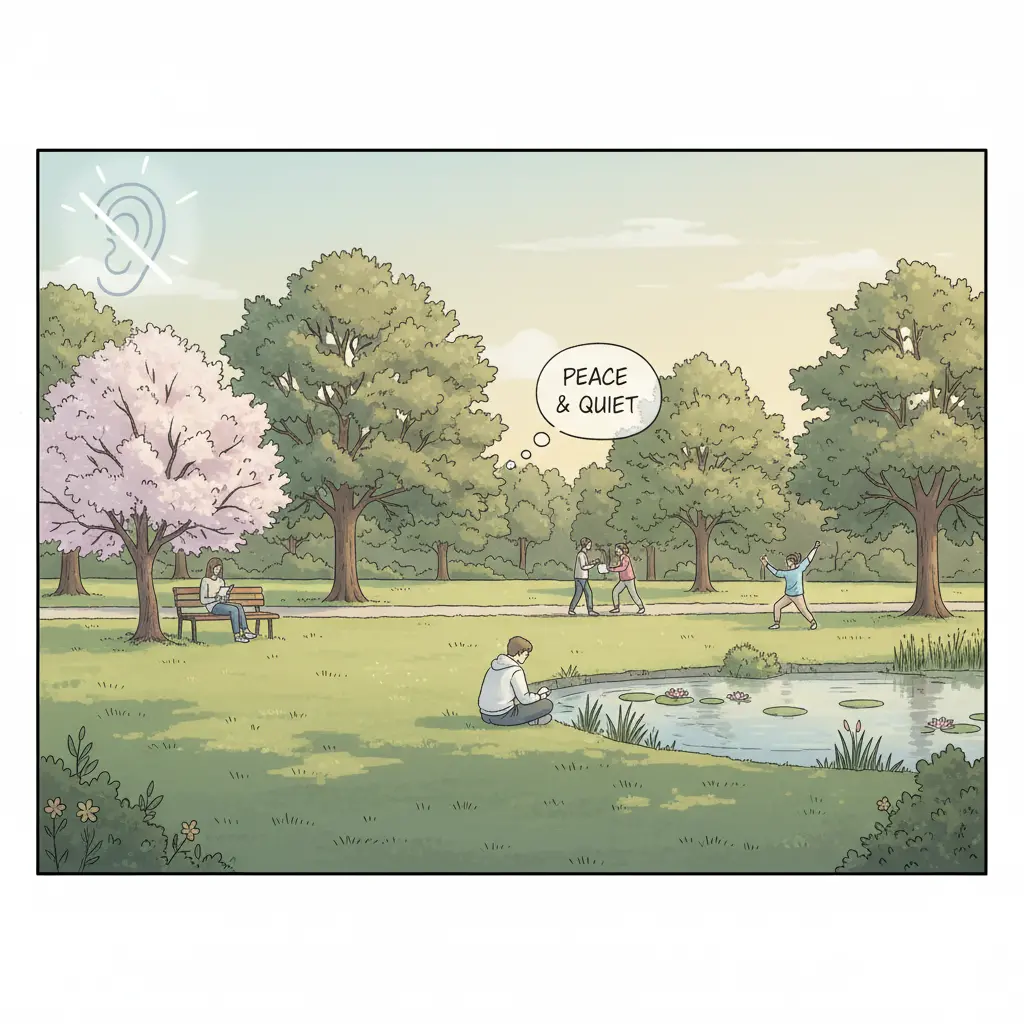
Root: 'less' derives from Old English 'leas', meaning 'not' or 'without'. Historical Origin: Old English → Middle English → Modern English. Memory Image: Imagine a less crowded park where you can relax more freely, emphasizing the absence of noise and distraction.
Note 1: These definitions and etymologies are not standard dictionary definitions, but extended explanations provided to help with memorization and understanding of the actual application of words. Through this background information, we strive to make words more vivid and easier to understand, and help you remember their meanings in real life.
Note 2: LexiTalk designs the learning flow around the linguistics principle of “Comprehensible Input.” When learners encounter material that is slightly above their level but still understandable from context, the brain naturally absorbs the language. That’s why we keep every word inside authentic contexts, using examples and associations to help you understand it and use it flexibly.
Read the FAQ explanation of Comprehensible InputFirst, I place a glass on the counter and move the line of liquid a touch to the side. I push a little less water in, watching the space between the marks shrink. I hold my breath a moment, then adjust my grip and keep the pour steady, feeling the effort to stay lighter. This small turn of how much I give or take becomes a hint I can use when I need to keep things simpler later.
Less is a versatile word used to compare quantities, degrees, or intensity. It can modify nouns in expressions like less time or less money, and modify adjectives or adverbs with less expensive or less slowly. When talking about countable items, English typically uses fewer (fewer apples) instead of less (less apples is incorrect). In negations, less often pairs with than to draw a comparison (less than usual). Less can also function as a determiner meaning a smaller amount of before uncountable nouns. Common mistakes include using less with countable nouns, or using less to mean slightly or smaller in all contexts; remember fewer for countables and less for uncountables.
For English learners, the key difference is between less and fewer: use less with uncountable nouns (water, time) and fewer with countable nouns (cars, apples). Learners often overextend less to countable nouns or think not as much always means less. Remember that not as much is an alternative phrasing in some contexts.
What is the meaning of the word 'lesser'?
Which sentence below uses 'lesser' correctly?
Which word is most similar to 'lesser'?
What is the opposite of 'lesser'?
Can you think of a real-life context for the word 'lesser'?
Download LexiTalk app for personalized learning experience
Download AppCookies
We use cookies for essential site functions, analytics, and ads. You can accept, reject, or manage preferences. Privacy Policy