
lethargy - Master This Word
Master this word with our 5-step learning method – Learn English in English
Train English Through Brain Routes, Not Translation.
This page helps you stop memorizing isolated translations and start understanding a word through its shared mental image, native-style thinking, and practical training steps.
Master this word with our 5-step learning method – Learn English in English
Example sentences are the start of understanding. Don't rush to memorize. First feel how the word works in a sentence.
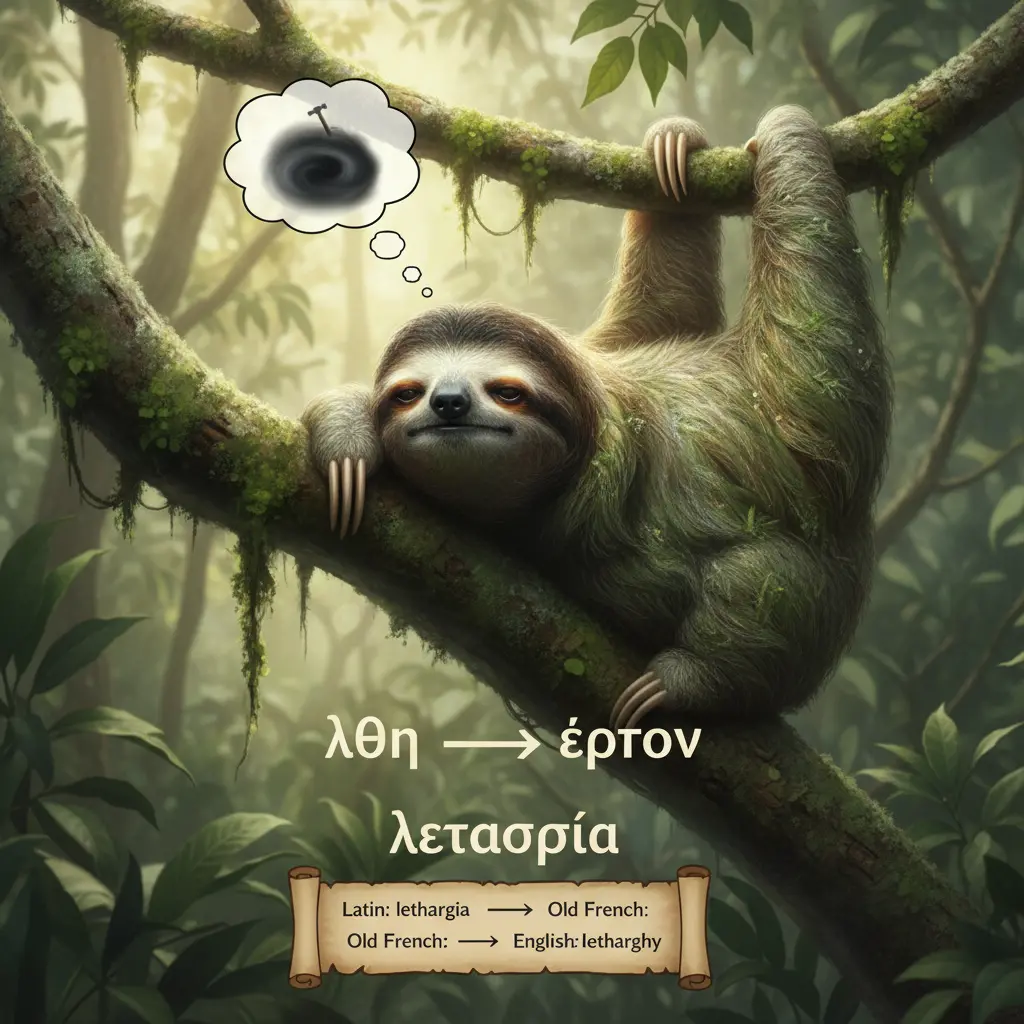
The root 'lethargy' comes from the Greek 'lethargia', from 'lethe' (oblivion) and 'ergon' (work). Historically, it transformed from Greek into Latin and then into Old French before reaching English. Picture a languid sloth, too tired to even think about moving—a vivid reminder of lethargy.
Note 1: These definitions and etymologies are not standard dictionary definitions, but extended explanations provided to help with memorization and understanding of the actual application of words. Through this background information, we strive to make words more vivid and easier to understand, and help you remember their meanings in real life.
Note 2: LexiTalk designs the learning flow around the linguistics principle of “Comprehensible Input.” When learners encounter material that is slightly above their level but still understandable from context, the brain naturally absorbs the language. That’s why we keep every word inside authentic contexts, using examples and associations to help you understand it and use it flexibly.
Read the FAQ explanation of Comprehensible InputLethargy is a state of sluggishness and inactivity that can range from mild fatigue to a deeper loss of energy and motivation. It often sits between tiredness and apathy, making ordinary tasks seem disproportionately hard. In medical terms it can signal illness or a side effect of medications, yet in everyday speech it describes a mood or day when you feel unusually slow or slow to react. People describe mornings after poor sleep as lethargic, or a long stretch of routine work that drains curiosity. The word carries a historical sense of a mind dulled by Lethe’s oblivion, contrasting sharp alertness with a heavy, stumbling pace.
In English, lethargy is used for both medical and everyday tiredness, so learners should distinguish between being sleepy, physically slow, and emotionally low.
What does 'lethargy' mean?
Which sentence uses 'lethargy' correctly?
Which word is most similar to 'lethargy'?
What is the opposite of 'lethargy'?
Can you think of a real-life context where someone might feel lethargic?
Download LexiTalk app for personalized learning experience
Download AppCookies
We use cookies for essential site functions, analytics, and ads. You can accept, reject, or manage preferences. Privacy Policy