
lithe - Master This Word
Master this word with our 5-step learning method – Learn English in English
Train English Through Brain Routes, Not Translation.
This page helps you stop memorizing isolated translations and start understanding a word through its shared mental image, native-style thinking, and practical training steps.
Master this word with our 5-step learning method – Learn English in English
Example sentences are the start of understanding. Don't rush to memorize. First feel how the word works in a sentence.
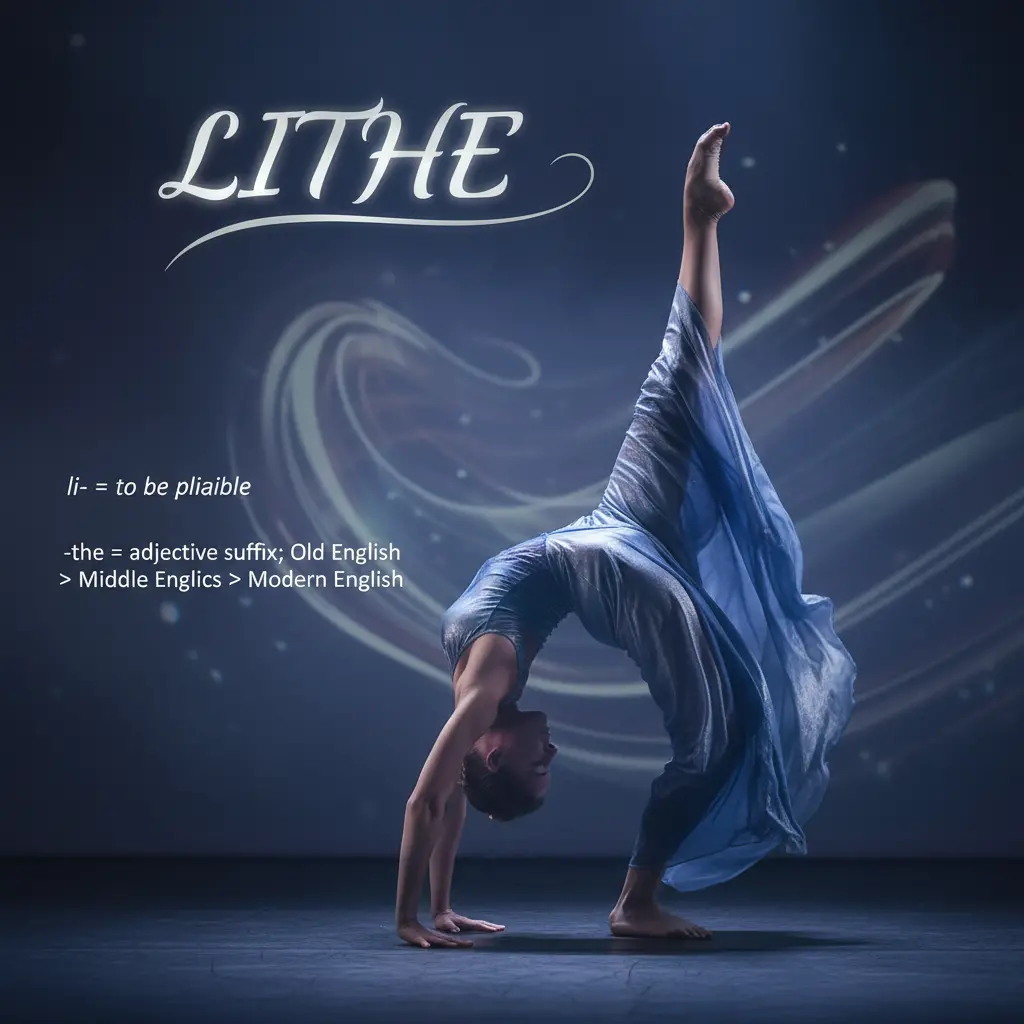
li- = to be pliable, -the = adjective suffix; Old English > Middle English > Modern English. Imagine a graceful dancer effortlessly bending and flowing through movements, representing flexibility.
Note 1: These definitions and etymologies are not standard dictionary definitions, but extended explanations provided to help with memorization and understanding of the actual application of words. Through this background information, we strive to make words more vivid and easier to understand, and help you remember their meanings in real life.
Note 2: LexiTalk designs the learning flow around the linguistics principle of “Comprehensible Input.” When learners encounter material that is slightly above their level but still understandable from context, the brain naturally absorbs the language. That’s why we keep every word inside authentic contexts, using examples and associations to help you understand it and use it flexibly.
Read the FAQ explanation of Comprehensible InputLithe describes someone or something that is both flexible and graceful, especially in motion. It goes beyond mere flexibility to imply lightness, balance, and control: a lithe gymnast can bend and twist with ease; a lithe dancer flows through leaps and turns without excess effort; lithe movements feel smooth, fluid, and almost effortless. The term is often used for living beings, but can also describe a sleek, flexible object that moves with ease. It connotes poise and athletic grace rather than loud strength. Historically, it comes from Old English, evolving through Middle English to Modern English, with the sense of pliability and supple vitality.
English speakers often associate lithe with athletic grace and fluid motion, emphasizing poise and ease in movement. Learners may overuse it with any flexible thing or misapply it to imply weakness or mere thinness.
What is the meaning of the word 'lithe'?
In which sentence is 'lithe' used correctly?
Which word is a synonym of 'lithe'?
What is the opposite of 'lithe'?
How would you describe a ballet dancer who moves in a lithe manner?
Download LexiTalk app for personalized learning experience
Download AppCookies
We use cookies for essential site functions, analytics, and ads. You can accept, reject, or manage preferences. Privacy Policy