way - Master This Word
Master this word with our 5-step learning method – Learn English in English
Train English Through Brain Routes, Not Translation.
This page helps you stop memorizing isolated translations and start understanding a word through its shared mental image, native-style thinking, and practical training steps.
Master this word with our 5-step learning method – Learn English in English
Example sentences are the start of understanding. Don't rush to memorize. First feel how the word works in a sentence.
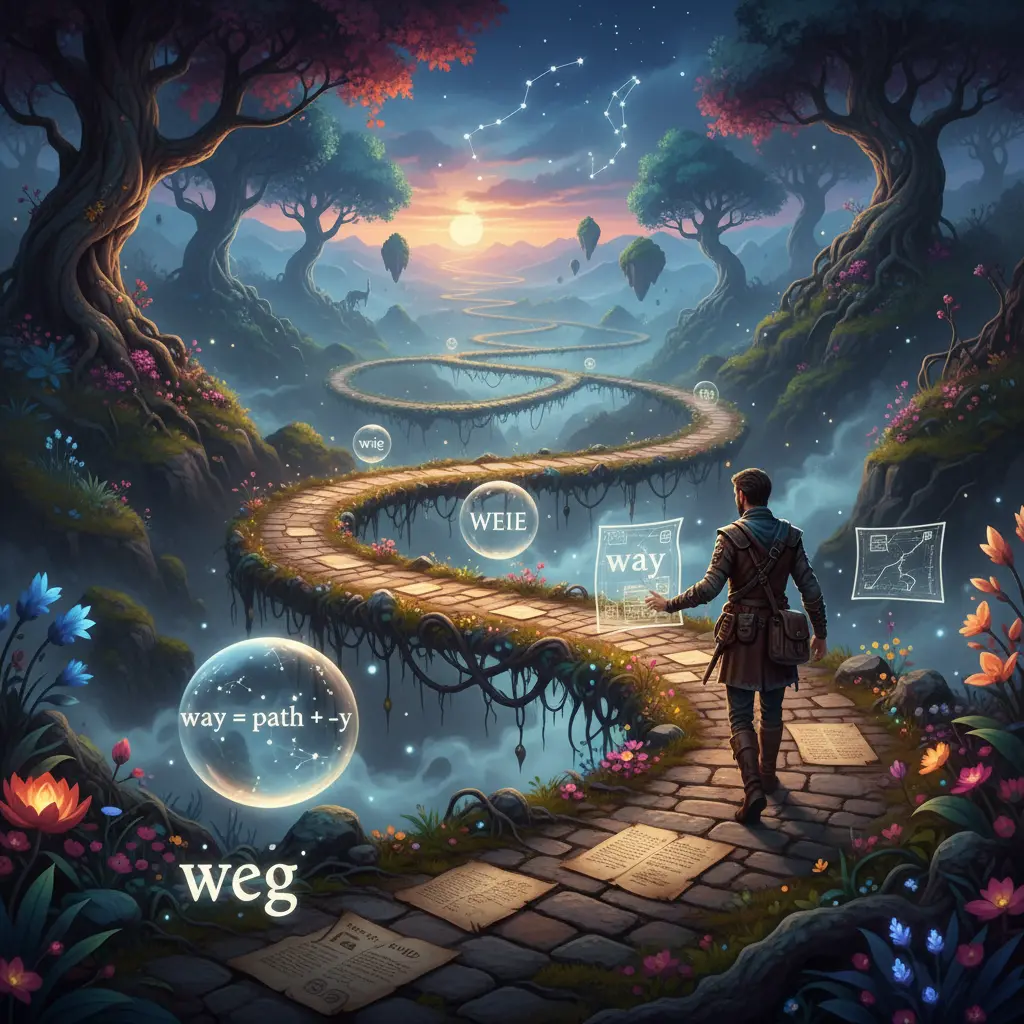
way = path + -y (denoting a characteristic); Old English 'weg' → Middle English 'weie' → Modern English 'way'. Imagine walking along a winding path, discovering new routes and methods as you go.
Note 1: These definitions and etymologies are not standard dictionary definitions, but extended explanations provided to help with memorization and understanding of the actual application of words. Through this background information, we strive to make words more vivid and easier to understand, and help you remember their meanings in real life.
Note 2: LexiTalk designs the learning flow around the linguistics principle of “Comprehensible Input.” When learners encounter material that is slightly above their level but still understandable from context, the brain naturally absorbs the language. That’s why we keep every word inside authentic contexts, using examples and associations to help you understand it and use it flexibly.
Read the FAQ explanation of Comprehensible InputHands hover over the switch, I push it and the light flickers on. I move from one setting to another, taking a steady breath and adjusting until the path feels clear. This small act makes me feel that a way is a method I can use to reach a goal, a little habit I can keep practicing. The more I practice this shifting, the more the idea of a way becomes a lived routine.
Way is a versatile noun in English that ties together three core ideas: method, route, and manner. As a method, a way names a technique or approach for doing something, such as finding a quicker way to finish a task or choosing a different way to learn a concept. As a route, it describes a path, road, or direction you can follow, whether you are navigating a city street or planning a hiking trip. As a manner, it denotes a characteristic style or way of doing something, often in phrases like in this way or the old way. Etymologically, way comes from path plus -y, with Old English weg evolving through weg to weie and finally to modern English way, reflecting a journey from road to method.
Think of way as a flexible umbrella word that covers both concrete routes and abstract methods; English uses many idioms that attach to way, so learners must track collocations and prepositions to avoid misuses.
What is the meaning of the word 'way'?
How is the word 'way' used in a sentence?
Which word is similar to 'way'?
Which word is the opposite of 'way'?
Can you provide a real-life context where the word 'way' is used?
Download LexiTalk app for personalized learning experience
Download AppCookies
We use cookies for essential site functions, analytics, and ads. You can accept, reject, or manage preferences. Privacy Policy