little - Master This Word
Master this word with our 5-step learning method – Learn English in English
Train English Through Brain Routes, Not Translation.
This page helps you stop memorizing isolated translations and start understanding a word through its shared mental image, native-style thinking, and practical training steps.
Master this word with our 5-step learning method – Learn English in English
Example sentences are the start of understanding. Don't rush to memorize. First feel how the word works in a sentence.
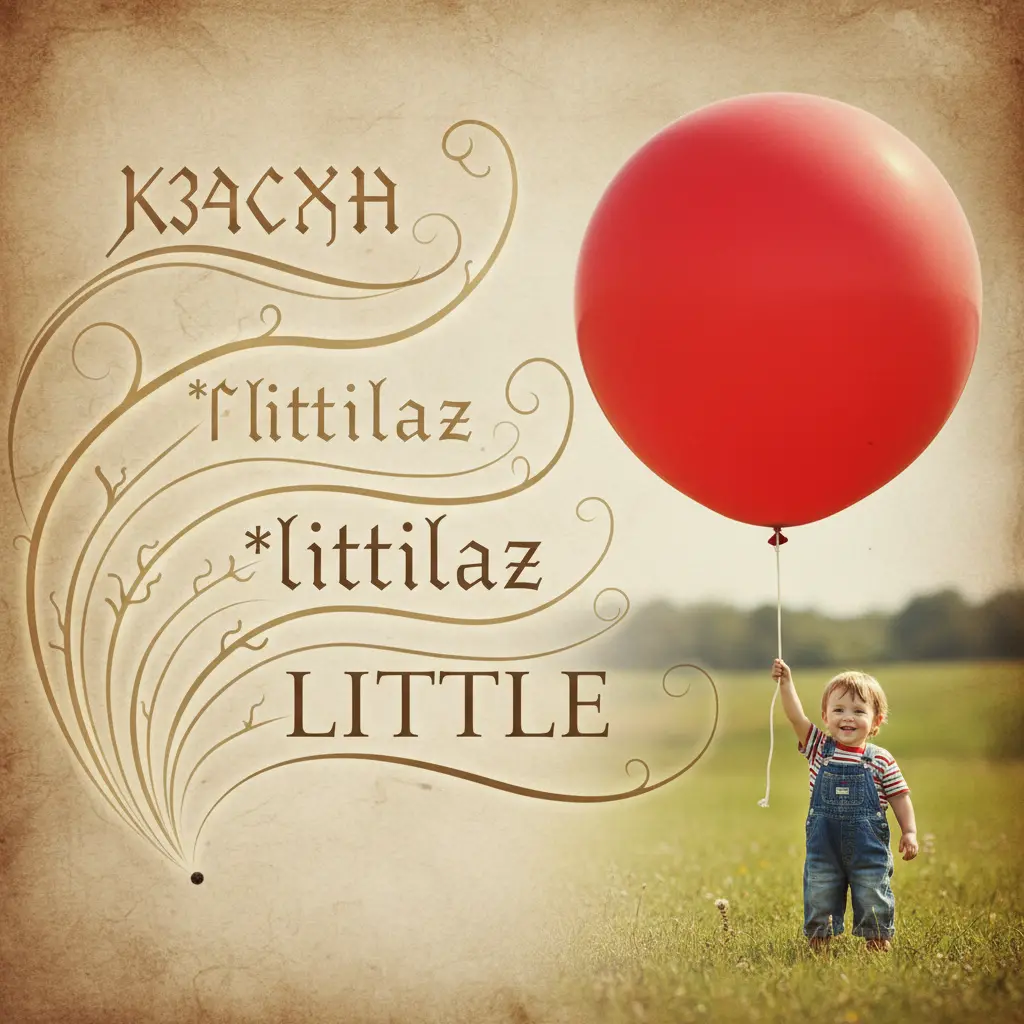
The word 'little' is derived from the Old English 'littl,' which comes from Proto-Germanic *littilaz (root: 'lit' = small). Imagine a tiny dot representing something small. As it evolved, it captures the essence of being small or minor in various contexts, like a little child holding a big balloon.
Note 1: These definitions and etymologies are not standard dictionary definitions, but extended explanations provided to help with memorization and understanding of the actual application of words. Through this background information, we strive to make words more vivid and easier to understand, and help you remember their meanings in real life.
Note 2: LexiTalk designs the learning flow around the linguistics principle of “Comprehensible Input.” When learners encounter material that is slightly above their level but still understandable from context, the brain naturally absorbs the language. That’s why we keep every word inside authentic contexts, using examples and associations to help you understand it and use it flexibly.
Read the FAQ explanation of Comprehensible InputI grip a bottle, tilt it, and move a little stream of water into my palm. I watch how a tiny amount glides, and I adjust my grip as the stream changes direction. The effort feels light but steady, a deliberate turn of control, keeping the water from spilling. In real use, I keep shaping the flow, letting a little go where I want, and holding back the rest until it matches my plan.
Little is a versatile word in English. As an adjective, it describes something small in size or amount, for example a little dog or a little water. As an adverb, it can mean to a small degree or barely: She was little surprised. It also appears in phrases like a little by little or not a little to emphasize a larger quantity or impact. It can refer to young or inexperienced people, as in a little child, an inexperienced coder. The sense is relative and context matters; what is little to one person may be huge to another. Its etymology traces to Old English littl and Proto-Germanic *littilaz, underscoring the core idea of smallness.
Little emphasizes a small amount or a young/untested status; learners often confuse it with few and misplace it with count nouns.
Which sentence uses the word 'little' correctly?
Which word is most similar to 'little'?
What is the opposite of 'little'?
Can you give an example of a real-life scenario where 'little' is used?
Download LexiTalk app for personalized learning experience
Download AppCookies
We use cookies for essential site functions, analytics, and ads. You can accept, reject, or manage preferences. Privacy Policy