
liver - Master This Word
Master this word with our 5-step learning method – Learn English in English
Train English Through Brain Routes, Not Translation.
This page helps you stop memorizing isolated translations and start understanding a word through its shared mental image, native-style thinking, and practical training steps.
Master this word with our 5-step learning method – Learn English in English
Example sentences are the start of understanding. Don't rush to memorize. First feel how the word works in a sentence.
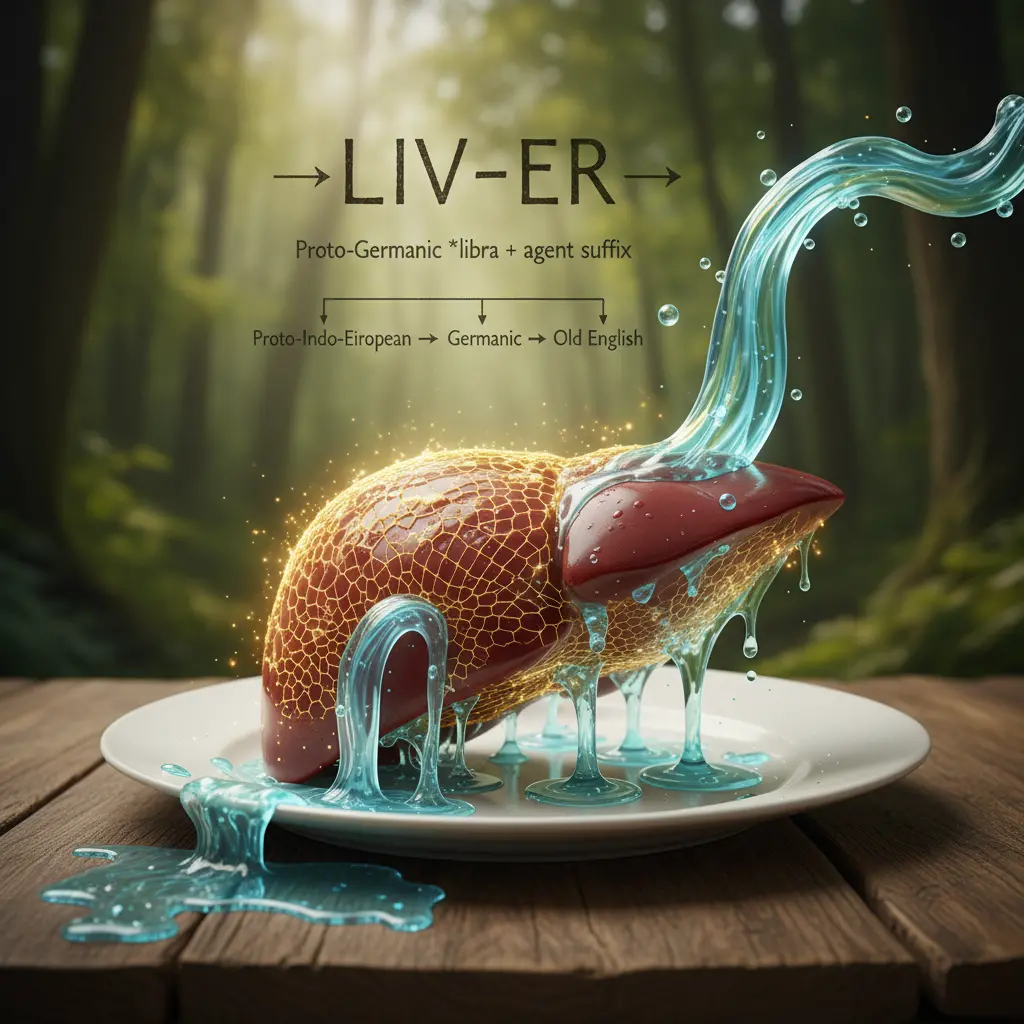
liver: liv- (from Proto-Germanic *libra) + -er (agent suffix). Historical origin: Proto-Indo-European → Germanic → Old English. Memory image: Imagine a large, healthy liver on a plate, symbolizing its function in filtering and cleansing, akin to its role in a healthy life.
Note 1: These definitions and etymologies are not standard dictionary definitions, but extended explanations provided to help with memorization and understanding of the actual application of words. Through this background information, we strive to make words more vivid and easier to understand, and help you remember their meanings in real life.
Note 2: LexiTalk designs the learning flow around the linguistics principle of “Comprehensible Input.” When learners encounter material that is slightly above their level but still understandable from context, the brain naturally absorbs the language. That’s why we keep every word inside authentic contexts, using examples and associations to help you understand it and use it flexibly.
Read the FAQ explanation of Comprehensible InputI place a hand on my side, set my breath, and bring the liver into the foreground of my attention. I move my awareness to that warm, busy space under the ribs and feel a quiet, steady push and pull there. I adjust my stance and hold the image, letting a sense of work rise as if inside a little factory. Letting the idea settle, I carry this feeling into real life moments—meals, talk, and actions where the body keeps balance and energy moving.
Liver is a large reddish-brown organ located in the upper right side of the abdomen. In humans it performs many vital tasks, such as producing bile to digest fats, filtering toxins from the bloodstream, storing vitamins, and supporting metabolism. The word also appears in culinary contexts: many people eat liver as food, in dishes like liver and onions or pâté. In biology texts you will see it described as a durable metabolic organ. In everyday conversation, liver can refer to either the organ itself or the edible meat, and the plural livers may be used when talking about multiple animals.
English tends to separate organ and culinary meat contexts clearly; learners often mix medical discussions with recipes and may misinterpret liver when hearing liver pâté or liver disease.
What does the word 'liver' refer to in the human body?
Which of the following sentences uses 'liver' correctly?
What is a synonym for 'liver'?
What is the opposite of 'liver' in terms of placement in the body?
How is the word 'liver' relevant in the context of healthy living?
Download LexiTalk app for personalized learning experience
Download AppCookies
We use cookies for essential site functions, analytics, and ads. You can accept, reject, or manage preferences. Privacy Policy