loses - Master This Word
Master this word with our 5-step learning method – Learn English in English
Train English Through Brain Routes, Not Translation.
This page helps you stop memorizing isolated translations and start understanding a word through its shared mental image, native-style thinking, and practical training steps.
Master this word with our 5-step learning method – Learn English in English
Example sentences are the start of understanding. Don't rush to memorize. First feel how the word works in a sentence.
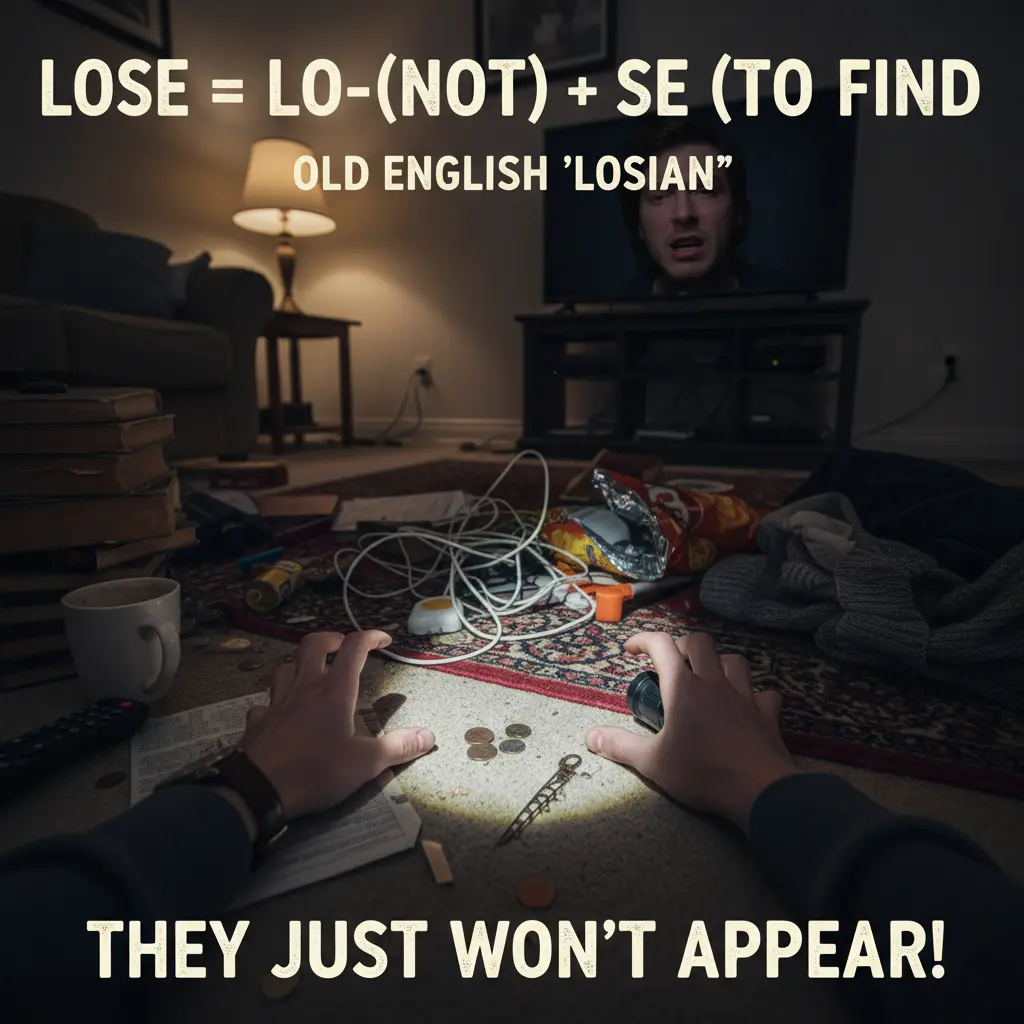
lose = lo- (not) + se (to find); Old English 'losian', from Proto-Germanic. Imagine misplacing your keys and searching everywhere; they just won't appear!
Note 1: These definitions and etymologies are not standard dictionary definitions, but extended explanations provided to help with memorization and understanding of the actual application of words. Through this background information, we strive to make words more vivid and easier to understand, and help you remember their meanings in real life.
Note 2: LexiTalk designs the learning flow around the linguistics principle of “Comprehensible Input.” When learners encounter material that is slightly above their level but still understandable from context, the brain naturally absorbs the language. That’s why we keep every word inside authentic contexts, using examples and associations to help you understand it and use it flexibly.
Read the FAQ explanation of Comprehensible InputWith my hand on the mug, I move it toward the edge and give it a small forward push. The cup wobbles, so I tighten my grip and adjust my wrist, trying to keep it level. But the edge comes fast and it slips away, and I realize I have lost it. The little hiss of liquid reminds me of what’s gone, and I laugh at how quickly control can turn to loss. In a moment I steady myself, let go of the worry, and think about what I’ll hold onto next time.
Lose is a versatile verb that covers several everyday ideas. You can lose something by misplacing it or failing to keep it, like losing your keys, a wallet, or your patience. You also use lose to describe not winning a contest or game, as in losing a match or a race. Finally, lose can mean a general decline or absence of something, such as losing your nerve, losing weight, or losing touch with friends. The key is to pair lose with a direct object or a situation to show what goes away or what you fail to achieve. In English we often use lose with prepositions like 'lose out on' or 'lose to' in comparisons.
Lose is used with concrete objects or outcomes; English learners often mix it with miss (opportunity) or leave (to depart) and forget about the child of structures like lose to, lose out on, or lose weight.
Parenting & Education
Listen NowDownload LexiTalk app for personalized learning experience
Download AppCookies
We use cookies for essential site functions, analytics, and ads. You can accept, reject, or manage preferences. Privacy Policy