
maglev - Master This Word
Master this word with our 5-step learning method – Learn English in English
Train English Through Brain Routes, Not Translation.
This page helps you stop memorizing isolated translations and start understanding a word through its shared mental image, native-style thinking, and practical training steps.
Master this word with our 5-step learning method – Learn English in English
Example sentences are the start of understanding. Don't rush to memorize. First feel how the word works in a sentence.
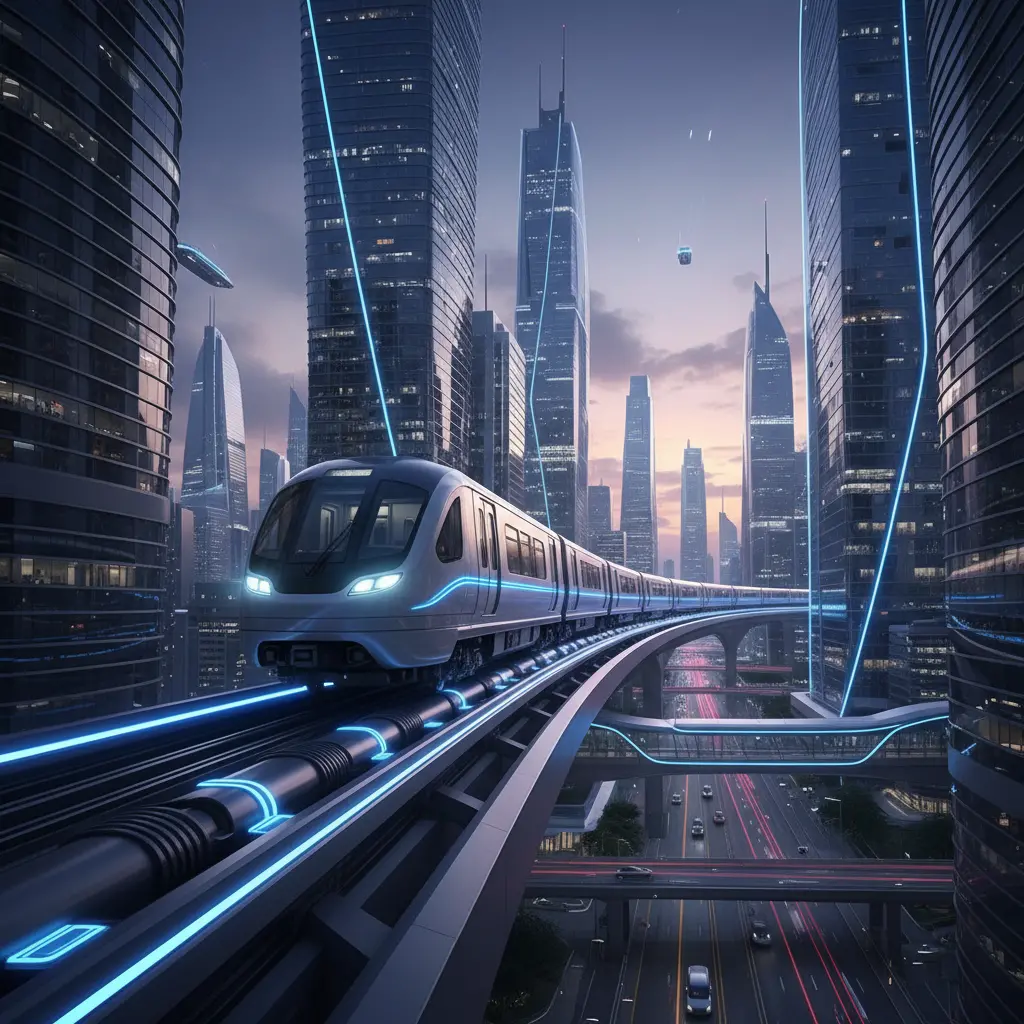
(magnet + levitate) - The term 'maglev' combines 'magnet', from Latin 'magnes', meaning 'magnet', and 'levitate', from Latin 'levitas', meaning 'lightness'. Imagine a futuristic train floating effortlessly above the tracks due to powerful magnets, a sight of elegance and speed.
Note 1: These definitions and etymologies are not standard dictionary definitions, but extended explanations provided to help with memorization and understanding of the actual application of words. Through this background information, we strive to make words more vivid and easier to understand, and help you remember their meanings in real life.
Note 2: LexiTalk designs the learning flow around the linguistics principle of “Comprehensible Input.” When learners encounter material that is slightly above their level but still understandable from context, the brain naturally absorbs the language. That’s why we keep every word inside authentic contexts, using examples and associations to help you understand it and use it flexibly.
Read the FAQ explanation of Comprehensible InputMaglev is a type of train that uses magnetic levitation to float above its track, which dramatically reduces friction and enables very high speeds. The basic idea is that powerful magnets in the train interact with magnets in the guideway to lift and stabilize the car, while a propulsion system—often a linear motor—pushes it forward. Because the train does not physically touch the guideway, maintenance can be different and noise can be lower, though infrastructure costs are high. In operation, maglev lines such as the Shanghai Maglev and various test tracks in Japan and Germany demonstrate speeds well beyond traditional rail, while many countries explore hybrid designs that balance speed, safety, and cost. Maglev competes with high‑speed rail by offering smooth rides at fast velocities.
For English learners, maglev is a compact term (magnetic levitation) that combines two ideas into one word; learners often assume it refers to any fast train or use it as a verb. Emphasize its fixed noun usage and its need for dedicated tracks.
What is the definition of 'maglev'?
Which sentence correctly uses the word 'maglev'?
Which word is most similar to 'maglev'?
What is the opposite of 'maglev'?
Can you think of a real-life scenario involving maglev?
Download LexiTalk app for personalized learning experience
Download AppCookies
We use cookies for essential site functions, analytics, and ads. You can accept, reject, or manage preferences. Privacy Policy