smooth - Master This Word
Master this word with our 5-step learning method – Learn English in English
Train English Through Brain Routes, Not Translation.
This page helps you stop memorizing isolated translations and start understanding a word through its shared mental image, native-style thinking, and practical training steps.
Master this word with our 5-step learning method – Learn English in English
Example sentences are the start of understanding. Don't rush to memorize. First feel how the word works in a sentence.
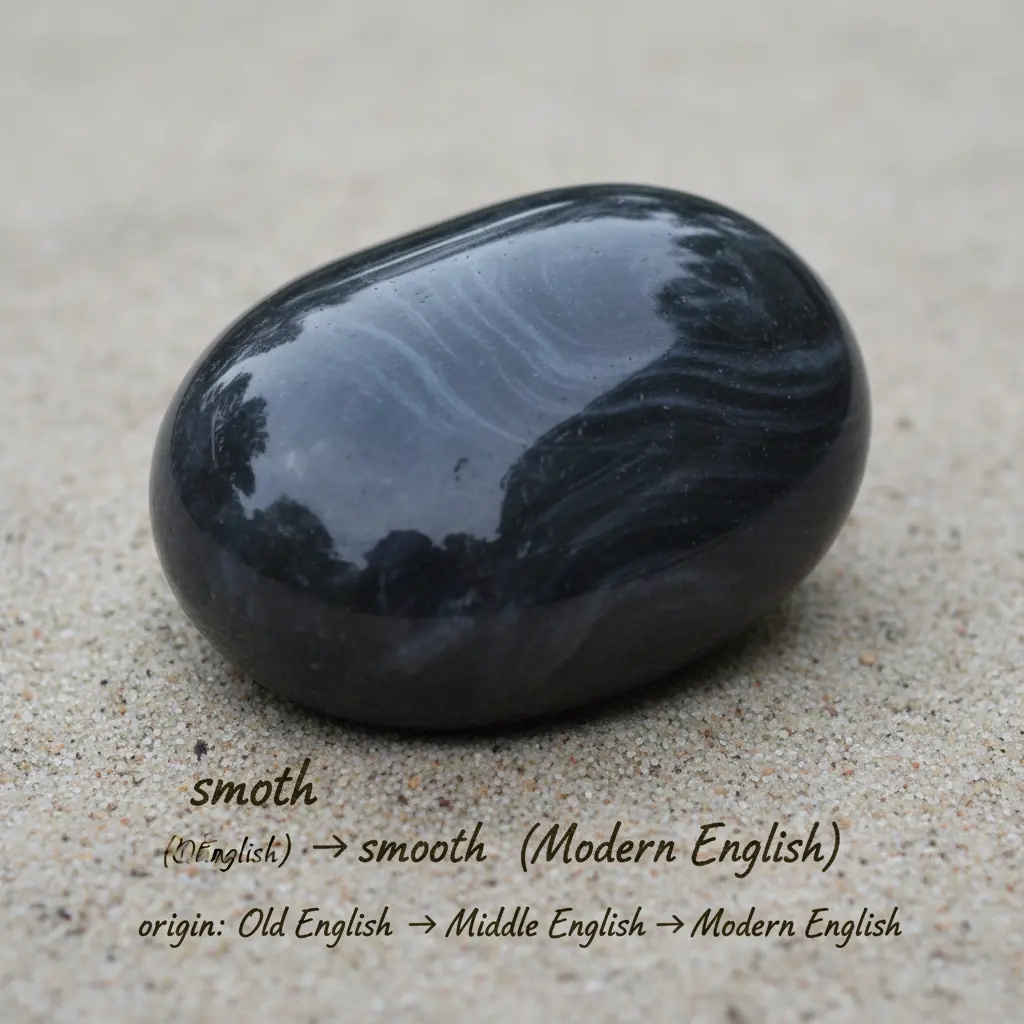
smooth = smoth (Old English); origin: Old English → Middle English → Modern English. Imagine a polished stone, shiny and even, representing something made smooth, like emotions or surfaces.
Note 1: These definitions and etymologies are not standard dictionary definitions, but extended explanations provided to help with memorization and understanding of the actual application of words. Through this background information, we strive to make words more vivid and easier to understand, and help you remember their meanings in real life.
Note 2: LexiTalk designs the learning flow around the linguistics principle of “Comprehensible Input.” When learners encounter material that is slightly above their level but still understandable from context, the brain naturally absorbs the language. That’s why we keep every word inside authentic contexts, using examples and associations to help you understand it and use it flexibly.
Read the FAQ explanation of Comprehensible InputI grip a sandpaper block and move it along the wood, letting my wrist adjust as I press lightly and then ease off. I shift the angle a notch, pull back when the grain bites, and push forward again to smooth out the rough patches. The effort slows me down just enough, a small change that teaches me to keep control and not rush. When the surface feels even, I feel the task quiet and my mind settle.
Smooth as a verb means making something even or less rough, but it also extends to easing processes and calming people. When you smooth a surface, you remove bumps or irregularities; when you smooth a plan, you reduce obstacles so things fit together more easily; and when you smooth someone's nerves, you calm them. Learners often confuse smooth with soft or gentle, or treat it as a generic filler verb. Common collocations include smooth out a problem, smooth over a disagreement, and a smoother path ahead. The idiom smooth sailing describes a situation proceeding without trouble, even though that phrase is not about physically smoothing something. Remember the context to choose the right sense.
In English, smooth covers both tangible surfaces and abstract improvements, plus calm of emotions; learners often mix up physical smoothing with easing or comforting, and overuse it in non-idiomatic ways.
In which sentence is the word 'smooth' used correctly?
Which word is similar to 'smooth'?
What is the opposite of 'smooth'?
Can you think of a real-life context where something is described as 'smooth'?
Download LexiTalk app for personalized learning experience
Download AppCookies
We use cookies for essential site functions, analytics, and ads. You can accept, reject, or manage preferences. Privacy Policy