makeup - Master This Word
Master this word with our 5-step learning method – Learn English in English
Train English Through Brain Routes, Not Translation.
This page helps you stop memorizing isolated translations and start understanding a word through its shared mental image, native-style thinking, and practical training steps.
Master this word with our 5-step learning method – Learn English in English
Example sentences are the start of understanding. Don't rush to memorize. First feel how the word works in a sentence.
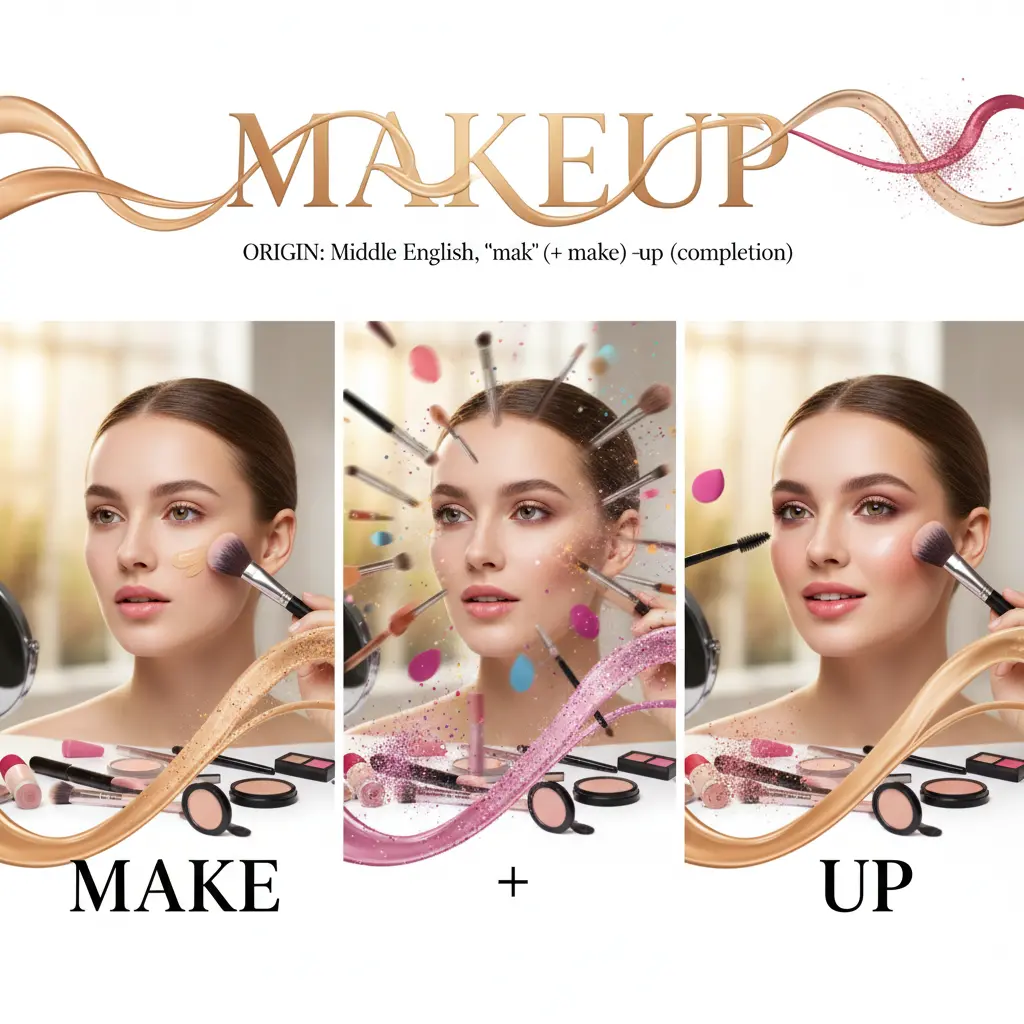
make + up: 'make' means to form, 'up' implies completion. Origin: Middle English, 'mak' (to make) + 'up' (completion). Memory image: envision applying makeup to enhance one's face and complete the look.
Note 1: These definitions and etymologies are not standard dictionary definitions, but extended explanations provided to help with memorization and understanding of the actual application of words. Through this background information, we strive to make words more vivid and easier to understand, and help you remember their meanings in real life.
Note 2: LexiTalk designs the learning flow around the linguistics principle of “Comprehensible Input.” When learners encounter material that is slightly above their level but still understandable from context, the brain naturally absorbs the language. That’s why we keep every word inside authentic contexts, using examples and associations to help you understand it and use it flexibly.
Read the FAQ explanation of Comprehensible InputI lift the compact and tilt it toward my face, watching the light shift on my skin. I move a brush across my cheeks, picking a shade and pushing against the morning tiredness. I adjust the balance, hold the gaze steady in the mirror, and set the final touch. By the end, the look feels like a small makeup of a moment, a way to present what I am to the world.
Makeup has two core uses in English. First, it refers to cosmetics worn on the face or body to enhance appearance, color, and expression. Second, makeup can describe the components that form a whole, as in the makeup of a group, plan, or story. The verb sense make up means to form or create something, or to reconcile and restore relationships by resolving differences. Etymology links makeup to make and up, signaling completion or assembly. Historically, cosmetics have ancient origins in many cultures, while the metaphorical sense of makeup emphasizes how parts join to produce a unified result. This blend of concrete and abstract meanings makes makeup versatile in everyday speech.
English speakers often separate cosmetics from general composition in daily talk, so learners must watch for the switch between makeup as a cosmetic noun and makeup as a metaphor for parts forming a whole or a verb meaning to reconcile.
What does the word 'makeup' refer to?
In which of the following scenarios would someone typically use makeup?
Which word is similar to 'makeup'?
What is the opposite of 'makeup'?
How do you feel about using makeup in your daily routine?
Download LexiTalk app for personalized learning experience
Download AppCookies
We use cookies for essential site functions, analytics, and ads. You can accept, reject, or manage preferences. Privacy Policy