
malfeasance - Master This Word
Master this word with our 5-step learning method – Learn English in English
Train English Through Brain Routes, Not Translation.
This page helps you stop memorizing isolated translations and start understanding a word through its shared mental image, native-style thinking, and practical training steps.
Master this word with our 5-step learning method – Learn English in English
Example sentences are the start of understanding. Don't rush to memorize. First feel how the word works in a sentence.
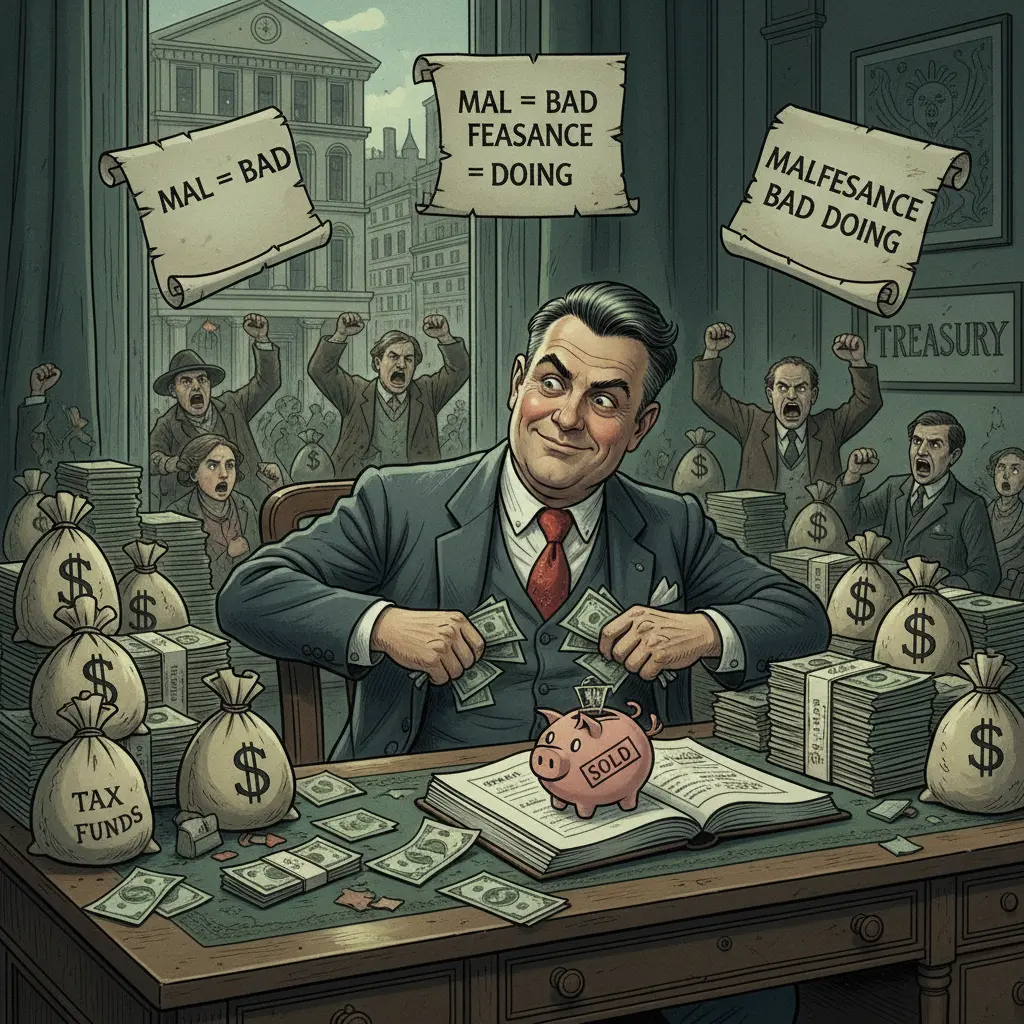
mal- = bad + feasance = doing. Originated from Latin through Old French into English. Imagine a corrupt official pocketing tax money, representing the 'bad doing' of malfeasance.
Note 1: These definitions and etymologies are not standard dictionary definitions, but extended explanations provided to help with memorization and understanding of the actual application of words. Through this background information, we strive to make words more vivid and easier to understand, and help you remember their meanings in real life.
Note 2: LexiTalk designs the learning flow around the linguistics principle of “Comprehensible Input.” When learners encounter material that is slightly above their level but still understandable from context, the brain naturally absorbs the language. That’s why we keep every word inside authentic contexts, using examples and associations to help you understand it and use it flexibly.
Read the FAQ explanation of Comprehensible InputMalfeasance refers to wrongdoing or illegal activity, especially by a public official who abuses power for personal gain. It emphasizes misconduct that breaks the law or ethical norms, not just minor errors. In law and policy, malfeasance is contrasted with misfeasance (faulty performance) and nonfeasance (failure to act). The word carries a formal, sometimes accusatory tone, and is common in news reporting about corruption, embezzlement, or abuse of office. Etymology: mal- = bad, feasance = doing. Origin traced from Latin through Old French into English.
English speakers often view malfeasance as a formal, legalistic label reserved for serious acts by public officials; it emphasizes intentional wrongdoing beyond simple mistakes. Learners should note its contrast with misfeasance and nonfeasance and avoid applying it to private-sector errors.
What is the meaning of the word 'malfeasance'?
In which of the following sentences is 'malfeasance' used correctly?
Which word is most similar to 'malfeasance'?
What would be the opposite of 'malfeasance'?
In what real-life scenario would 'malfeasance' be a cause for legal action?
Download LexiTalk app for personalized learning experience
Download AppCookies
We use cookies for essential site functions, analytics, and ads. You can accept, reject, or manage preferences. Privacy Policy