maybe - Master This Word
Master this word with our 5-step learning method – Learn English in English
Train English Through Brain Routes, Not Translation.
This page helps you stop memorizing isolated translations and start understanding a word through its shared mental image, native-style thinking, and practical training steps.
Master this word with our 5-step learning method – Learn English in English
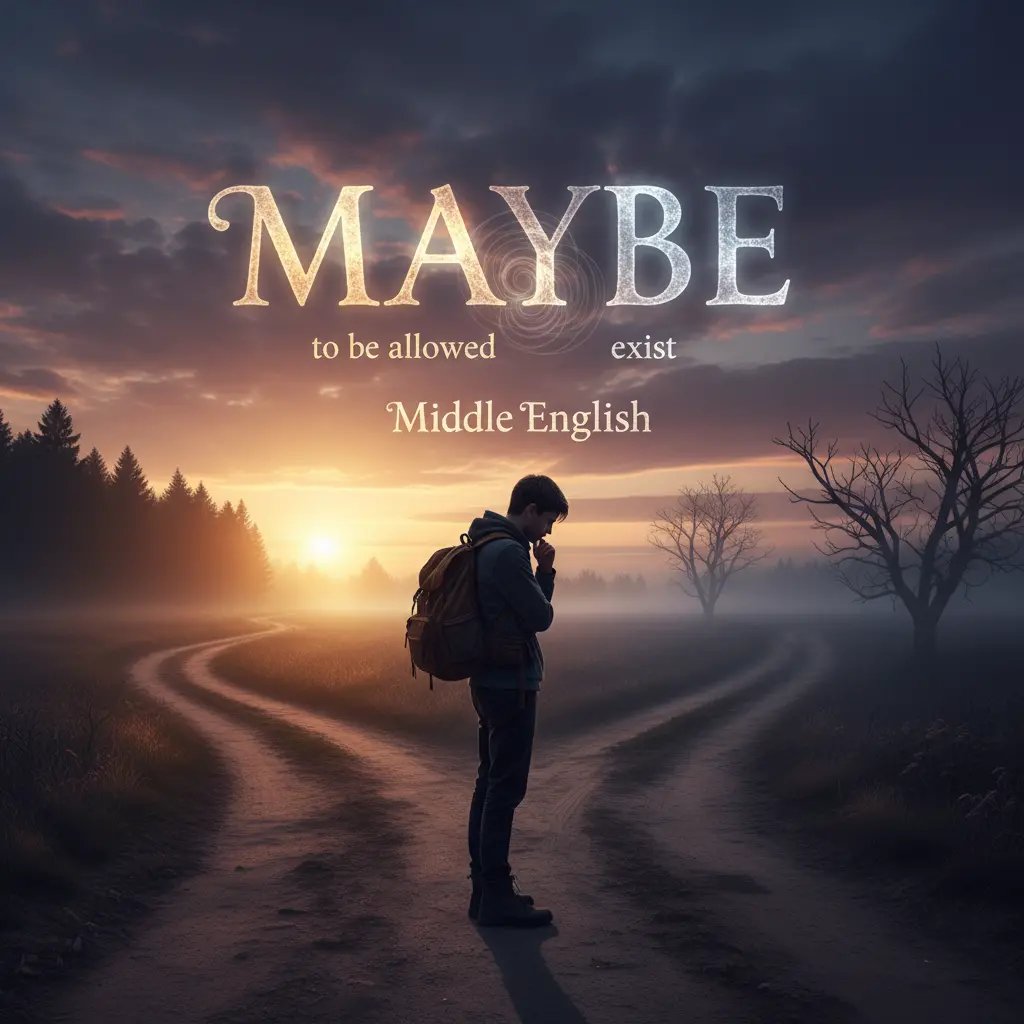
Example sentences are the start of understanding. Don't rush to memorize. First feel how the word works in a sentence.
The word 'maybe' is a combination of 'may' (to be allowed) and 'be' (exist). It originated from Middle English, and has evolved through different forms. Imagine someone standing at a crossroads, pondering whether to go left or right, symbolizing uncertainty.
Note 1: These definitions and etymologies are not standard dictionary definitions, but extended explanations provided to help with memorization and understanding of the actual application of words. Through this background information, we strive to make words more vivid and easier to understand, and help you remember their meanings in real life.
Note 2: LexiTalk designs the learning flow around the linguistics principle of “Comprehensible Input.” When learners encounter material that is slightly above their level but still understandable from context, the brain naturally absorbs the language. That’s why we keep every word inside authentic contexts, using examples and associations to help you understand it and use it flexibly.
Read the FAQ explanation of Comprehensible InputI reach for the pen, hover over the page, and move the line a notch to the right. A tiny doubt shifts in, I hold back a bold decision and let options breathe. I turn the idea around in my mind, adjust the pace of my thoughts, and push a path forward. By the time I write maybe, the meaning sits softly between yes and no, a doorway opening to possibilities.
Maybe is a casual adverb meaning perhaps or possibly. It softens statements, signals uncertainty, or introduces options. It can appear at the start of a sentence: 'Maybe we should try this.' It can come before the main verb or the auxiliary: 'Maybe I will go,' or 'We may go, maybe not.' It is less formal than 'perhaps' and is common in speech and informal writing. It expresses tentative plans or guesses about the future: 'Maybe I'll call you later.' In negatives, 'maybe not' expresses doubt about an outcome. It does not itself carry a future tense; you still use will or may with the main verb. Learners often overgeneralize with 'maybe' as a substitute for uncertain verbs or mix it with 'perhaps.'
English speakers often use maybe to hedge statements and to suggest options with a casual tone; learners should note its flexible placement and how it differs from the more formal perhaps. Mistakes include overusing it in formal writing or placing it where a stronger certainty would be inappropriate.
What is the meaning of the word 'maybe'?
Which sentence below uses the word 'maybe' correctly?
Which word is most similar to 'maybe'?
What is the opposite of 'maybe'?
Can you think of a real-life scenario for the word 'maybe'?
Download LexiTalk app for personalized learning experience
Download AppCookies
We use cookies for essential site functions, analytics, and ads. You can accept, reject, or manage preferences. Privacy Policy