
methane - Master This Word
Master this word with our 5-step learning method – Learn English in English
Train English Through Brain Routes, Not Translation.
This page helps you stop memorizing isolated translations and start understanding a word through its shared mental image, native-style thinking, and practical training steps.
Master this word with our 5-step learning method – Learn English in English
Example sentences are the start of understanding. Don't rush to memorize. First feel how the word works in a sentence.
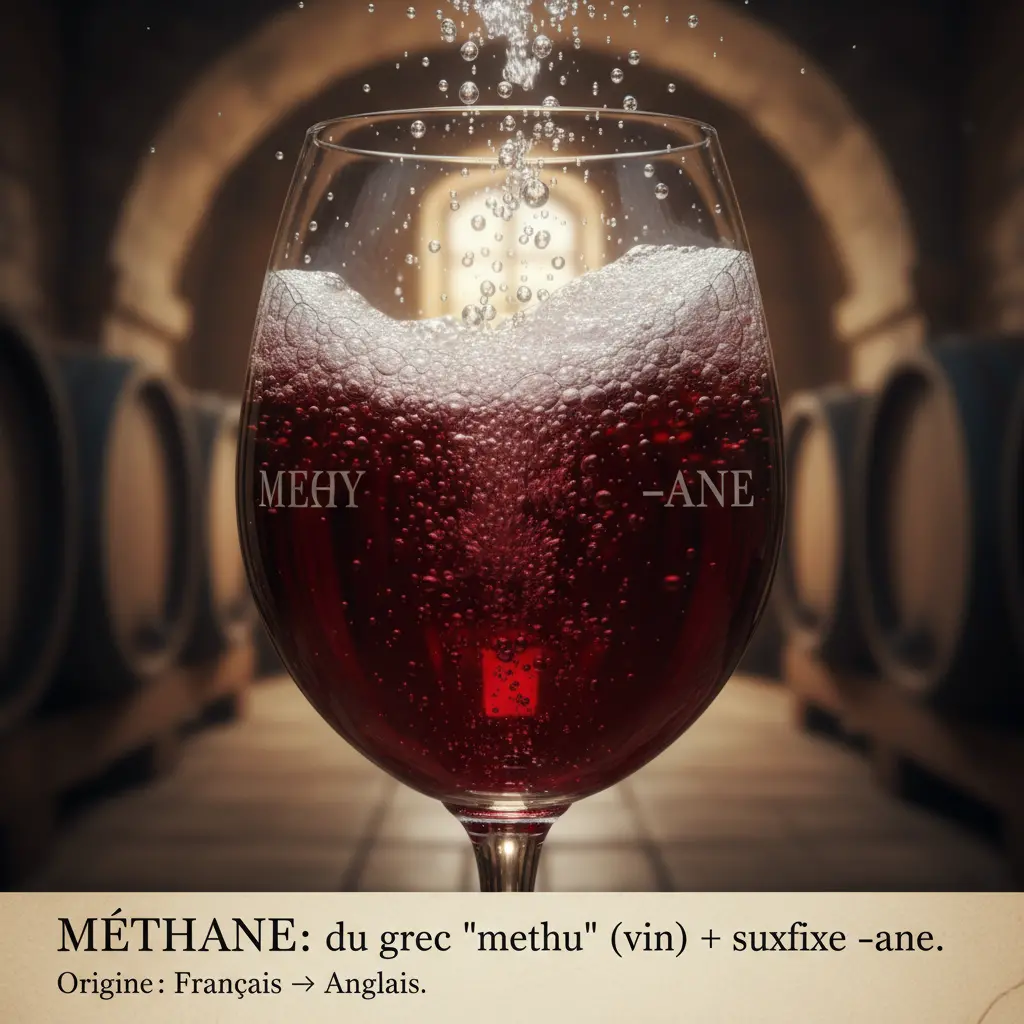
methane: meth- (from Greek 'methu' = wine) + -ane (chemical suffix indicating hydrocarbons). Origin: French 'méthane' → English. Imagine a bubbling glass of wine, the bubbles representing methane gas escaping during fermentation.
Note 1: These definitions and etymologies are not standard dictionary definitions, but extended explanations provided to help with memorization and understanding of the actual application of words. Through this background information, we strive to make words more vivid and easier to understand, and help you remember their meanings in real life.
Note 2: LexiTalk designs the learning flow around the linguistics principle of “Comprehensible Input.” When learners encounter material that is slightly above their level but still understandable from context, the brain naturally absorbs the language. That’s why we keep every word inside authentic contexts, using examples and associations to help you understand it and use it flexibly.
Read the FAQ explanation of Comprehensible InputMethane is a colorless, odorless gas that is widely used as a fuel and is a major component of natural gas. It is produced when organic matter decomposes in the absence of oxygen, and it also forms during fermentation. Because methane burns with a blue flame and releases a lot of energy, it powers heating, cooking, and electricity generation in many regions. The word methane traces to meth- from Greek methu, meaning wine, and the chemical suffix -ane; imagining bubbles rising from a bubbling glass of wine can help remember its origin and behavior in fermentation. Methane is also a potent greenhouse gas, so monitoring leaks is important.
Methane is a core scientific term in English, so learners often mix it up with other gases or with CO2. English tends to name the substance itself and then describe sources or uses, which may differ from learners' languages. Watch for pronunciation and for the distinction between 'gas' as a state vs a fuel. Emphasize context like 'natural gas' vs 'biogas' to avoid overgeneralizing.
What is the meaning of the word 'methane'?
Which of the following sentences uses 'methane' correctly?
Which of the following is an antonym of 'methane'?
In what real-life context would you encounter 'methane'?
Can you say a sentence using the word 'methane'?
Download LexiTalk app for personalized learning experience
Download AppCookies
We use cookies for essential site functions, analytics, and ads. You can accept, reject, or manage preferences. Privacy Policy