
microbiology - Master This Word
Master this word with our 5-step learning method – Learn English in English
Train English Through Brain Routes, Not Translation.
This page helps you stop memorizing isolated translations and start understanding a word through its shared mental image, native-style thinking, and practical training steps.
Master this word with our 5-step learning method – Learn English in English
Example sentences are the start of understanding. Don't rush to memorize. First feel how the word works in a sentence.
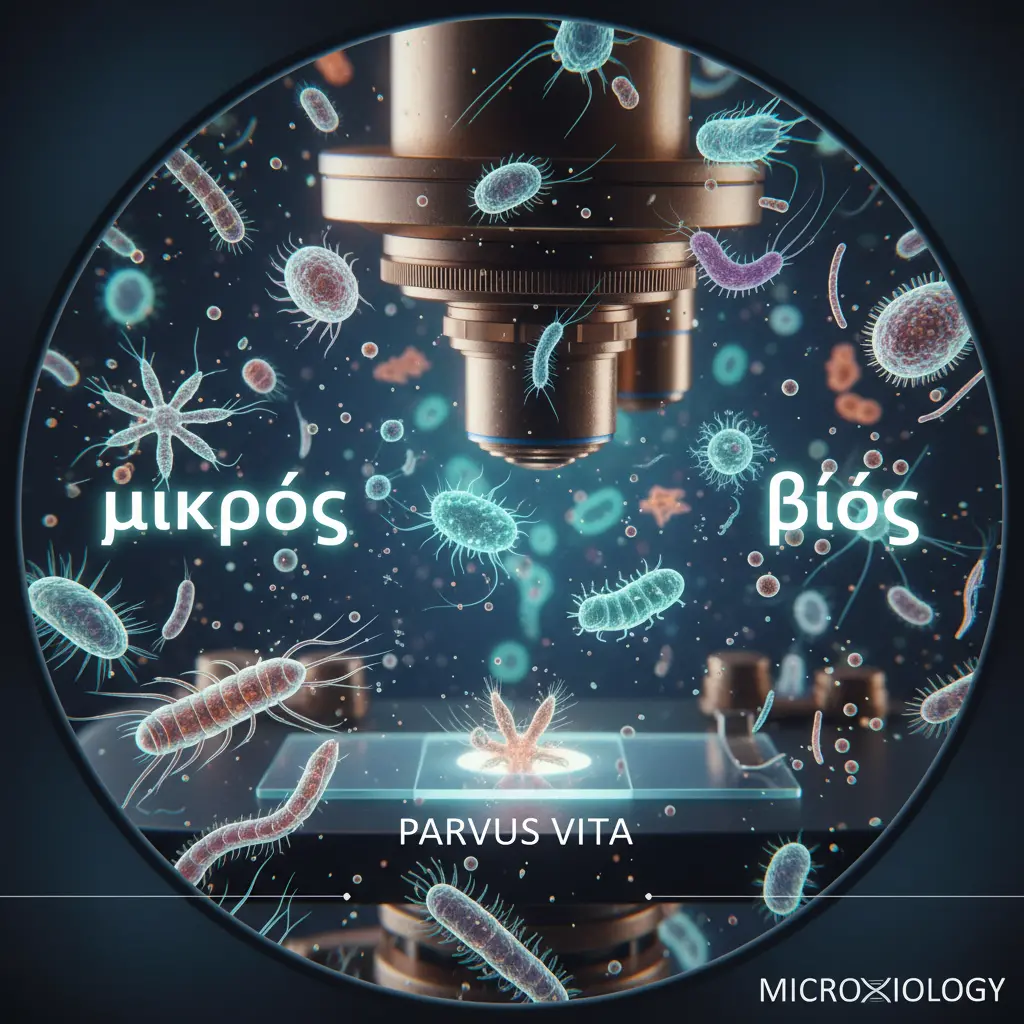
micro + biology (Greek: 'mikros' meaning 'small' + 'bios' meaning 'life'). Microbiology originates from Greek, passing through Latin, then adopted into English. Picture a tiny world under a microscope, full of vibrant, unseen life forms, showcasing the incredible diversity of life at a microscopic level.
Note 1: These definitions and etymologies are not standard dictionary definitions, but extended explanations provided to help with memorization and understanding of the actual application of words. Through this background information, we strive to make words more vivid and easier to understand, and help you remember their meanings in real life.
Note 2: LexiTalk designs the learning flow around the linguistics principle of “Comprehensible Input.” When learners encounter material that is slightly above their level but still understandable from context, the brain naturally absorbs the language. That’s why we keep every word inside authentic contexts, using examples and associations to help you understand it and use it flexibly.
Read the FAQ explanation of Comprehensible InputMicrobiology is the science that studies microscopic organisms and their life processes, from bacteria and viruses to fungi, protozoa, and other tiny life forms. It covers how microbes grow, interact with each other, and affect humans, animals, and the environment. Microbiology blends biology with chemistry, genetics, immunology, and molecular biology, and it relies on methods such as culturing, staining, microscopy, and genome sequencing to investigate disease mechanisms, vaccination development, food safety, environmental remediation, and industrial applications. The word itself comes from micro- meaning small and biology meaning life, with roots in Greek; thinking about a hidden world helps students appreciate the diversity and significance of life that operates at scales invisible to the naked eye.
Native English speakers typically frame microbiology as a broad, multidisciplinary science about tiny life forms, often separating it from medicine in everyday usage; learners may overemphasize pathogens or clinical topics and underappreciate ecology and industry.
What is the definition of 'microbiology'?
Identify the correct usage of 'microbiology' in a sentence.
Which word is most similar to 'microbiology'?
What is the opposite of 'microbiology'?
Can you think of a real-life context where 'microbiology' might be important?
Download LexiTalk app for personalized learning experience
Download AppCookies
We use cookies for essential site functions, analytics, and ads. You can accept, reject, or manage preferences. Privacy Policy