mine - Master This Word
Master this word with our 5-step learning method – Learn English in English
Train English Through Brain Routes, Not Translation.
This page helps you stop memorizing isolated translations and start understanding a word through its shared mental image, native-style thinking, and practical training steps.
Master this word with our 5-step learning method – Learn English in English
Example sentences are the start of understanding. Don't rush to memorize. First feel how the word works in a sentence.
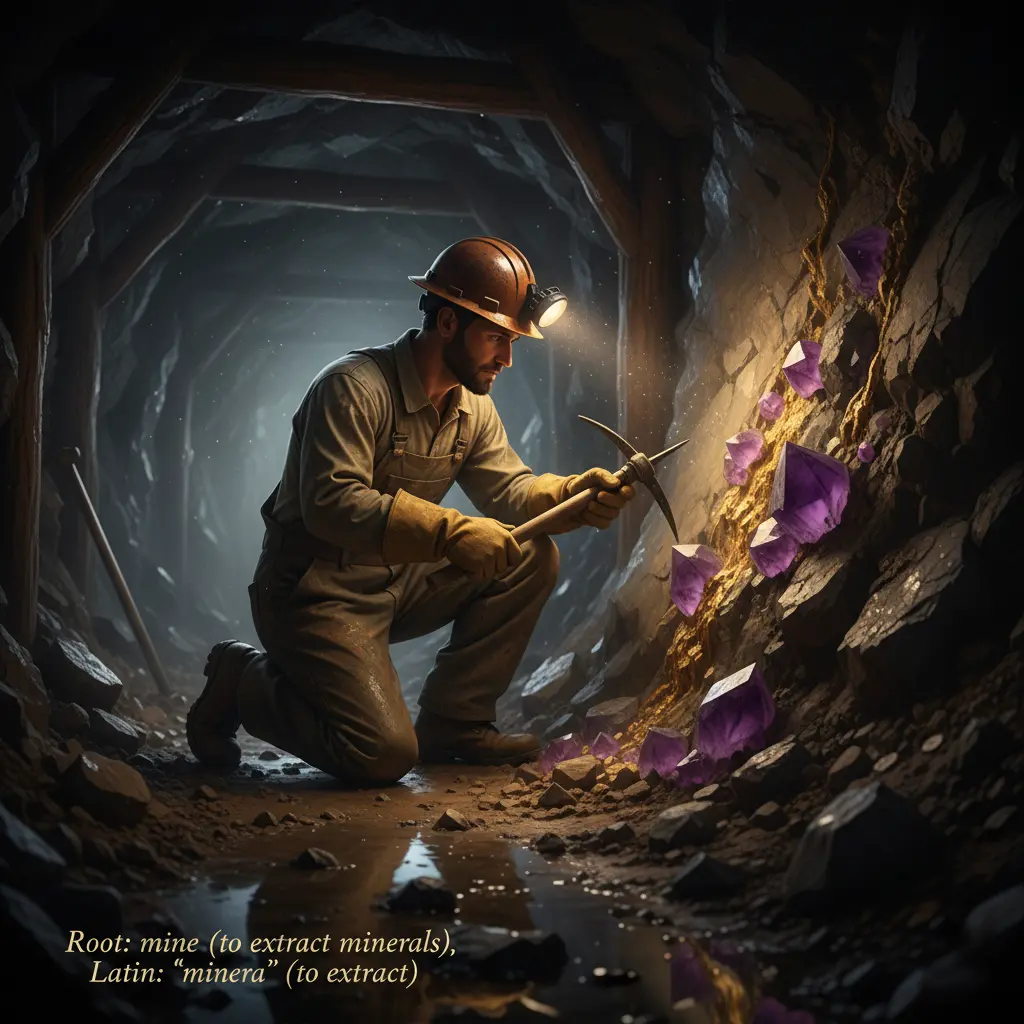
Root: mine (to extract minerals), Latin: 'minera' (to extract); Memory image: envision a miner in a dark, damp tunnel, carefully extracting shiny gems and precious metals from the rock.
Note 1: These definitions and etymologies are not standard dictionary definitions, but extended explanations provided to help with memorization and understanding of the actual application of words. Through this background information, we strive to make words more vivid and easier to understand, and help you remember their meanings in real life.
Note 2: LexiTalk designs the learning flow around the linguistics principle of “Comprehensible Input.” When learners encounter material that is slightly above their level but still understandable from context, the brain naturally absorbs the language. That’s why we keep every word inside authentic contexts, using examples and associations to help you understand it and use it flexibly.
Read the FAQ explanation of Comprehensible InputI push open a heavy door and step into a cool, dusty tunnel. I move slowly, my lamp tilting as I shift my grip on the pick and feel the air change around me. The rhythm of work is tangible: set my stance, adjust my pace, hold steady, and keep going. In that moment, the scene isn’t a place but a person—the mine worker—someone who digs for wealth beneath the earth, and the word mine lands in my mind as their role.
Mine as a noun here refers to a person who works in a mine, i. e., a miner. The job is to extract minerals from the earth, usually underground in tunnels and with safety gear. In everyday English, the standard noun for the worker is miner, while mine is more often used for the site or in historical texts. Learners often mix up miner and mine, or confuse mine with the possessive pronoun mine. Pronunciation also differs: mine rhymes with sign, while miner rhymes with diner. The plural is miners. This sense focuses on labor rather than ownership or location and contrasts with the separate sense of mine as a place.
English distinguishes mine (the place) from miner (the person) but in many languages the distinctions may rely on different word forms or suffixes; learners often see similar roots and assume they are interchangeable.
In which of the following sentences is 'mine' used correctly?
Which of the following is a similar word to 'mine'?
What is the opposite of 'mine'?
When someone says 'This notebook is mine', what are they expressing?
Download LexiTalk app for personalized learning experience
Download AppCookies
We use cookies for essential site functions, analytics, and ads. You can accept, reject, or manage preferences. Privacy Policy