mirror - Master This Word
Master this word with our 5-step learning method – Learn English in English
Train English Through Brain Routes, Not Translation.
This page helps you stop memorizing isolated translations and start understanding a word through its shared mental image, native-style thinking, and practical training steps.
Master this word with our 5-step learning method – Learn English in English
Example sentences are the start of understanding. Don't rush to memorize. First feel how the word works in a sentence.
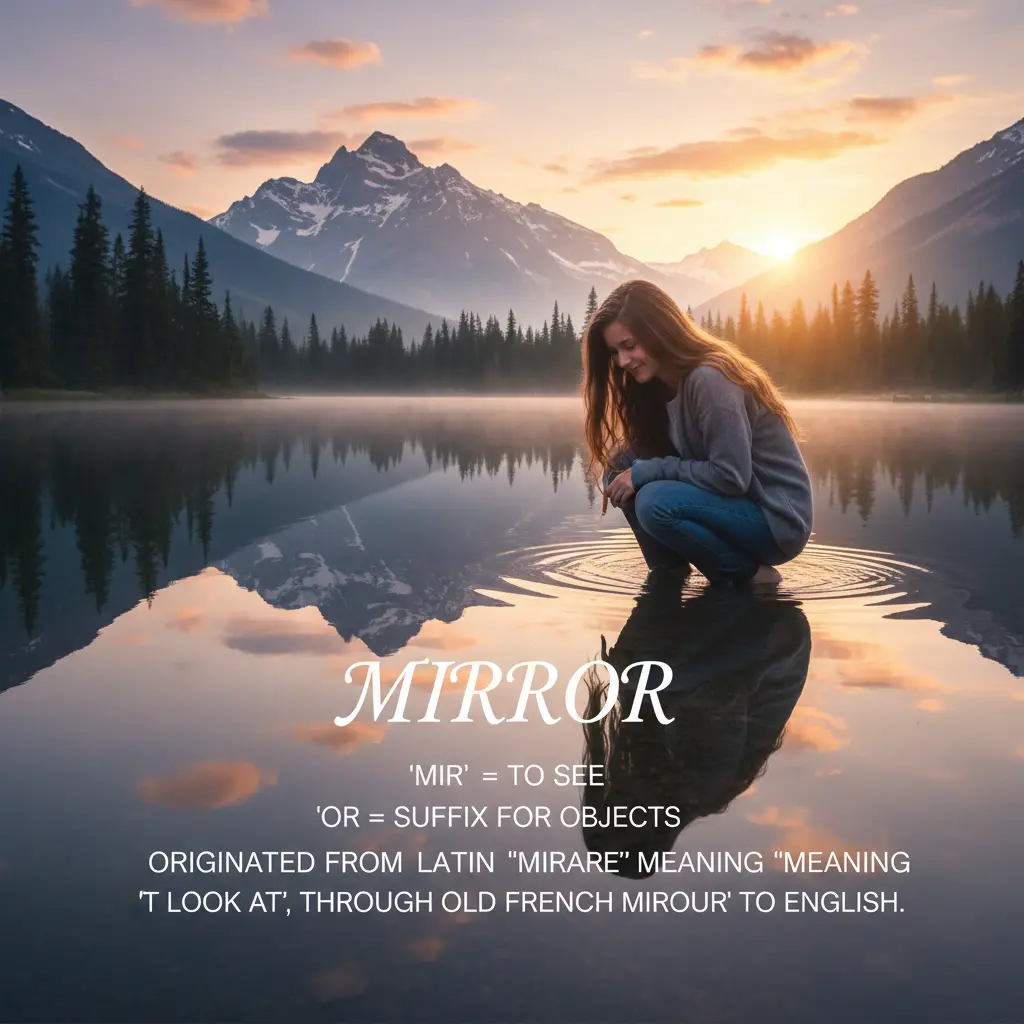
mirror: 'mir' = to see, 'or' = suffix for objects. Originated from Latin 'mirare' meaning 'to look at', through Old French 'mirour' to English. Imagine a person gazing into a crystal-clear lake, admiring their reflection, just like a mirror reflects one’s image.
Note 1: These definitions and etymologies are not standard dictionary definitions, but extended explanations provided to help with memorization and understanding of the actual application of words. Through this background information, we strive to make words more vivid and easier to understand, and help you remember their meanings in real life.
Note 2: LexiTalk designs the learning flow around the linguistics principle of “Comprehensible Input.” When learners encounter material that is slightly above their level but still understandable from context, the brain naturally absorbs the language. That’s why we keep every word inside authentic contexts, using examples and associations to help you understand it and use it flexibly.
Read the FAQ explanation of Comprehensible InputI pick up a small mirror and turn it toward the window, letting the light move across its surface. I adjust my grip, steady my breath, and tilt it just so. The face in the glass shifts with every tiny move I make, the image changing as I pull back or push closer. In that moment the reflection seems to hold a hint of what I’m about to do, a quiet sense of how things can resemble or mirror a plan.
Mirror is a common noun and verb describing a reflective surface and the act of showing a reflection. It traces its roots from Latin mirare meaning to look at, passing through Old French mirour into English as mirror. In daily use, people rely on mirrors to check appearance, to see a reversed image, or to symbolize self-awareness. The phrase mirror image appears in math and art to denote exact likeness, while to mirror something can also mean to imitate or reflect a situation closely. For learners, it’s useful to distinguish the literal object from the figurative verb and to note that some phrases (mirror, mirror on the wall) carry cultural nuances beyond a simple reflection.
English speakers often treat a mirror as both a simple object and a metaphor for self-reflection or imitation, so learners may mix literal and figurative uses. The noun-verb distinction is straightforward but the phrase mirror image appears across disciplines, requiring attention to context.
What is the meaning of the word 'mirror'?
How is the word 'mirror' used in a sentence?
Which word is most similar to 'mirror'?
Which word is the opposite of 'mirror'?
In what real-life context would you find a mirror?
Download LexiTalk app for personalized learning experience
Download AppCookies
We use cookies for essential site functions, analytics, and ads. You can accept, reject, or manage preferences. Privacy Policy