mob - Master This Word
Master this word with our 5-step learning method – Learn English in English
Train English Through Brain Routes, Not Translation.
This page helps you stop memorizing isolated translations and start understanding a word through its shared mental image, native-style thinking, and practical training steps.
Master this word with our 5-step learning method – Learn English in English
Example sentences are the start of understanding. Don't rush to memorize. First feel how the word works in a sentence.
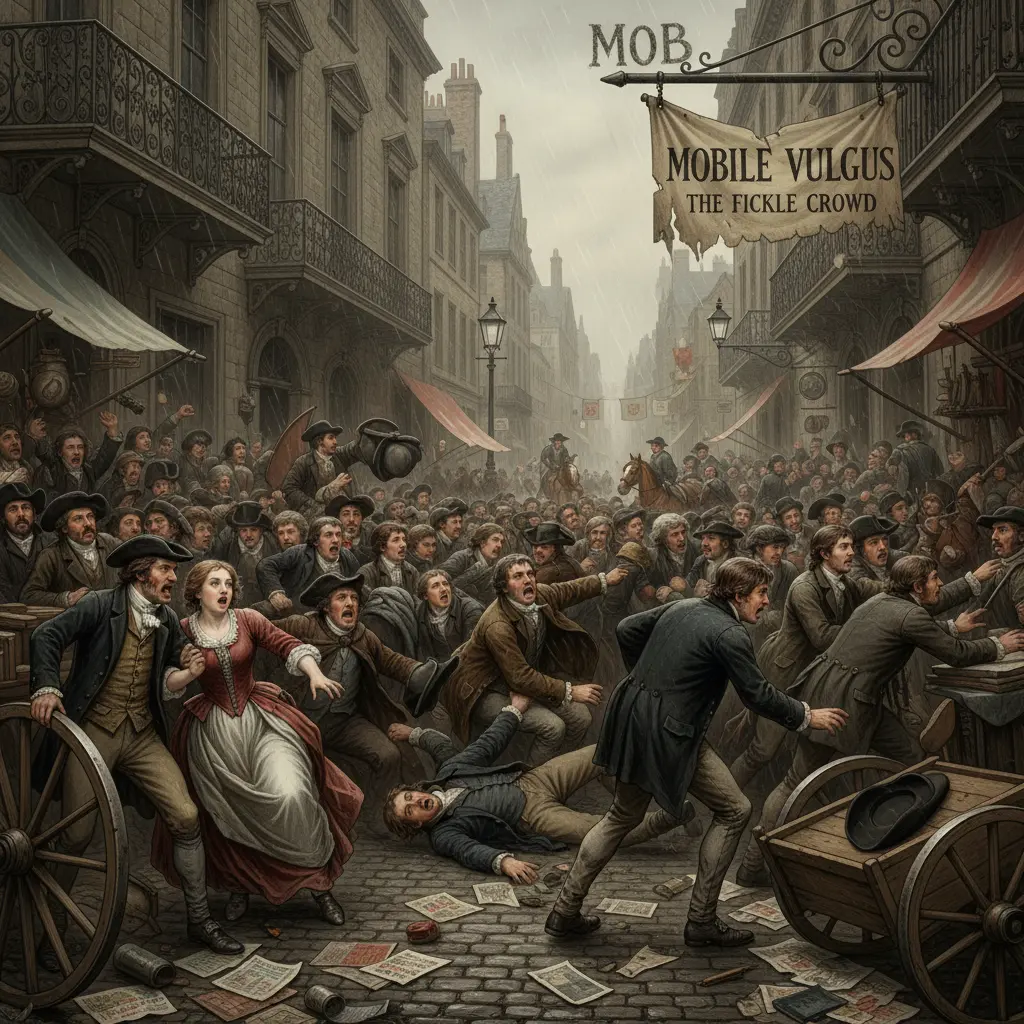
Mob comes from 'mobbe', a shortened form of 'mobile vulgus', meaning 'the fickle crowd' in Latin. The term has historical roots from Latin to English through Old French. Imagine a chaotic street scene, with a restless crowd pushing and shoving, embodying the unpredictable nature of a mob.
Note 1: These definitions and etymologies are not standard dictionary definitions, but extended explanations provided to help with memorization and understanding of the actual application of words. Through this background information, we strive to make words more vivid and easier to understand, and help you remember their meanings in real life.
Note 2: LexiTalk designs the learning flow around the linguistics principle of “Comprehensible Input.” When learners encounter material that is slightly above their level but still understandable from context, the brain naturally absorbs the language. That’s why we keep every word inside authentic contexts, using examples and associations to help you understand it and use it flexibly.
Read the FAQ explanation of Comprehensible InputI take a cautious step forward, then shift my weight as the crowd swells around me. I push gently against the flow, keeping my balance and letting others slip past. A murmur rises, someone changes lane, and I adjust my pace to stay with the current. Soon I realize the mob is less a plan and more a pulse you ride, a mass that can move together with rough, unspoken rhythm.
Mob refers to a large, unruly crowd, often volatile and difficult to control. In everyday use, it can describe both the crowd and the act of acting like a mob, as in mobbing a person or place. The term carries strong connotations of impulsive emotion, intimidation, and sometimes violence, so native speakers prefer terms like crowd over neutral contexts, and reserve mob for dramatic descriptions. Learners should note the verb form 'to mob' meaning to overwhelm or harass, and remember collocations like 'mob mentality' or 'beat back a mob' where the crowd poses a threat. Etymology traces to mobbe from mobile vulgus, signaling a fickle, shifting assembly.
Explain to an English speaker (meta, keep short)
What is the meaning of 'mob'?
In which sentence is 'mob' used correctly?
Which word is a synonym of 'mob'?
What is the opposite meaning of 'mob'?
In what real-life situation would you find a 'mob'?
Download LexiTalk app for personalized learning experience
Download AppCookies
We use cookies for essential site functions, analytics, and ads. You can accept, reject, or manage preferences. Privacy Policy