
mouse - Master This Word
Master this word with our 5-step learning method – Learn English in English
Train English Through Brain Routes, Not Translation.
This page helps you stop memorizing isolated translations and start understanding a word through its shared mental image, native-style thinking, and practical training steps.
Master this word with our 5-step learning method – Learn English in English
Example sentences are the start of understanding. Don't rush to memorize. First feel how the word works in a sentence.
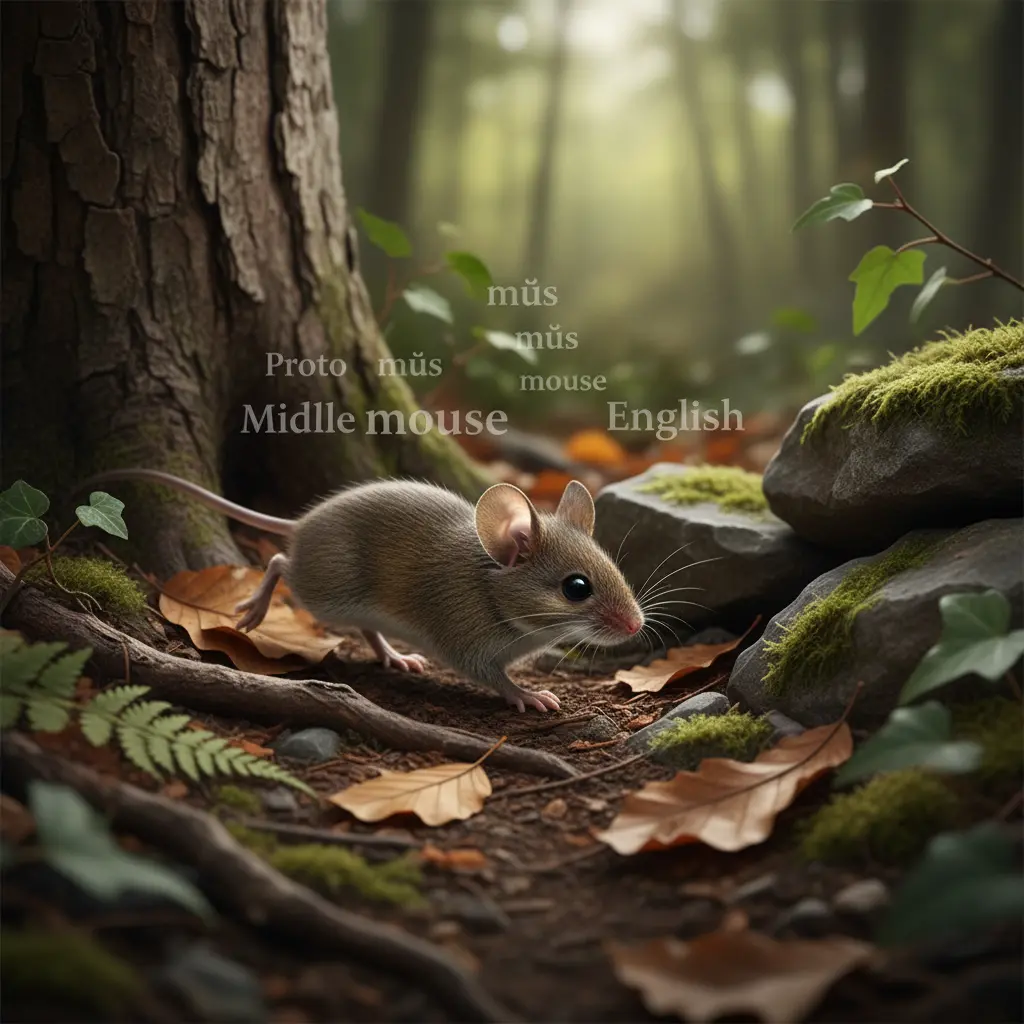
mouse = 'mūs' (Proto-Germanic) → Old English 'mūs' → Middle English 'mouse' → English. Visualize a small, timid animal scurrying across the ground, evoking images of stealthy movements.
Note 1: These definitions and etymologies are not standard dictionary definitions, but extended explanations provided to help with memorization and understanding of the actual application of words. Through this background information, we strive to make words more vivid and easier to understand, and help you remember their meanings in real life.
Note 2: LexiTalk designs the learning flow around the linguistics principle of “Comprehensible Input.” When learners encounter material that is slightly above their level but still understandable from context, the brain naturally absorbs the language. That’s why we keep every word inside authentic contexts, using examples and associations to help you understand it and use it flexibly.
Read the FAQ explanation of Comprehensible InputI grip the mouse and nudge it across the desk, watching the cursor answer every tiny move. I pause, adjust my grip, and keep my focus, feeling control tighten and loosen as I steer. A small change in speed makes the line on the screen track my intent. Placing my hand in a steady position, the act of moving becomes a habit I trust for wider tasks.
Pronounced like mūs in old Germanic roots, the word mouse evokes a tiny, timid animal scurrying across the ground. In modern English, it names both a small rodent and a common computer input device, whose smooth motion can mirror a creature's quick, careful scuttling. The verb sense, to move stealthily or quietly, extends the idea of unobtrusive movement to people in everyday speech. Learners should note that mouse can refer to three distinct ideas, with articles and plurals following standard English rules: a mouse, mice; a computer mouse; to mouse about.
English often uses a single word with three related but distinct senses; learners must rely on context, word order, and collocations to disambiguate. Common mistakes include assuming mouse always means the animal and overgeneralizing the device sense in non-technical texts.
What is the meaning of the word 'mouse'?
In which of the following scenarios would you likely encounter a mouse?
Which of the following is a similar word to 'mouse'?
What is the opposite of 'mouse'?
How would you use the word 'mouse' in a real-life context?
Download LexiTalk app for personalized learning experience
Download AppCookies
We use cookies for essential site functions, analytics, and ads. You can accept, reject, or manage preferences. Privacy Policy