mud - Master This Word
Master this word with our 5-step learning method – Learn English in English
Train English Through Brain Routes, Not Translation.
This page helps you stop memorizing isolated translations and start understanding a word through its shared mental image, native-style thinking, and practical training steps.
Master this word with our 5-step learning method – Learn English in English
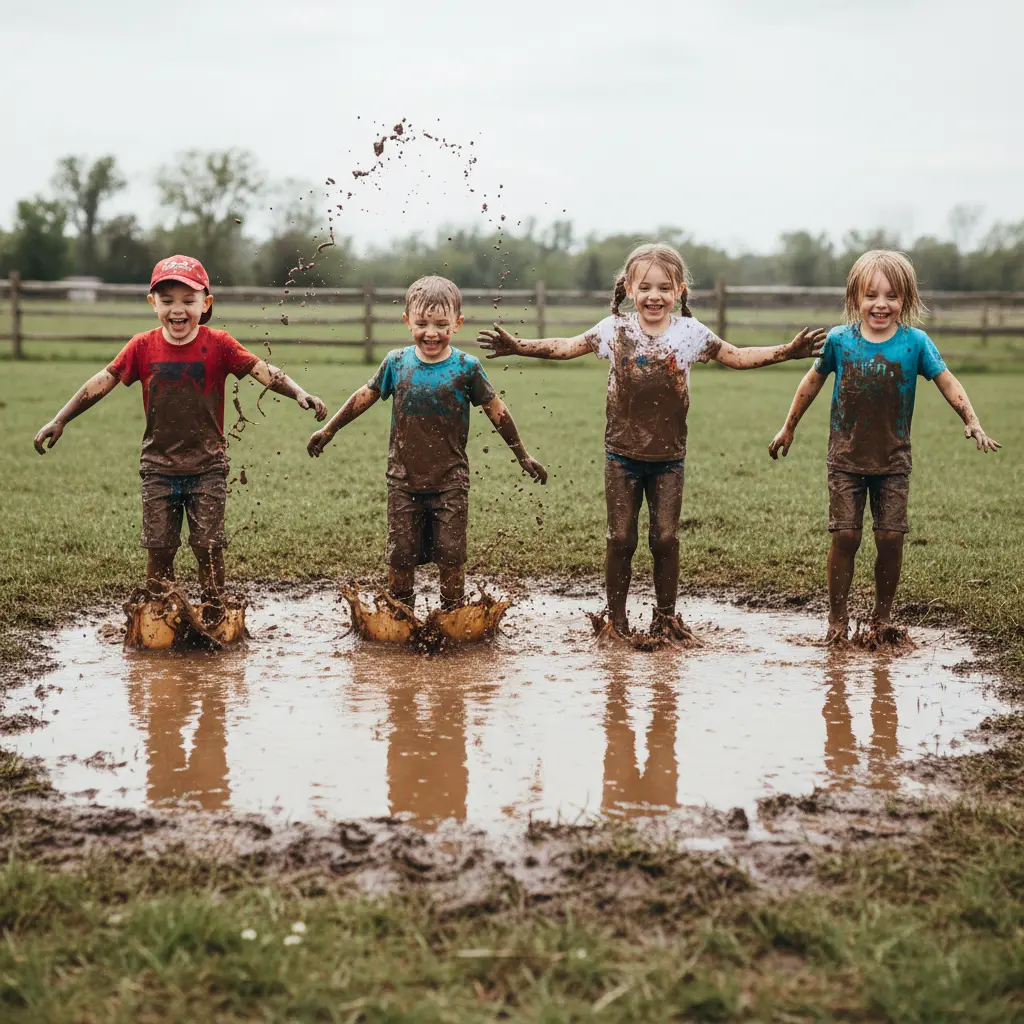
Example sentences are the start of understanding. Don't rush to memorize. First feel how the word works in a sentence.
mud (root: mud) → from Old English 'mudd', possibly related to Middle Dutch 'modde'. Memory image: envision a squishy mud puddle where kids jump and play, getting dirty but having fun.
Note 1: These definitions and etymologies are not standard dictionary definitions, but extended explanations provided to help with memorization and understanding of the actual application of words. Through this background information, we strive to make words more vivid and easier to understand, and help you remember their meanings in real life.
Note 2: LexiTalk designs the learning flow around the linguistics principle of “Comprehensible Input.” When learners encounter material that is slightly above their level but still understandable from context, the brain naturally absorbs the language. That’s why we keep every word inside authentic contexts, using examples and associations to help you understand it and use it flexibly.
Read the FAQ explanation of Comprehensible InputI move my weight forward and slide my foot into the mud, the sole sinking a little. I push down, then pull back to free the foot, adjusting my stance. The ground shifts under me as the mud grabs, and I change my balance to stay upright. The feel sticks to my mind like a muddy memory, and I keep moving, letting the scene teach me what mud can do.
Mud is the wet, soft earth that sticks to shoes and clothes after rain. It forms when water and dirt mix, creating a substance that can be thick, clingy, and hard to clean off. In everyday English, mud describes outdoor scenes from playgrounds to marshy paths, and it can be used figuratively for something dirty, unclear, or muddled. Nouns like mud and adjectives like muddy often pair with verbs such as splash, dig, or stomp. A memory image helps: a squishy mud puddle where children laugh, slip, and come away with dirty feet. The word also appears in fixed phrases, such as mud flat, muddy boots, or mud-slinging in political talk, where the sense shifts toward controversy instead of nature.
Mud is a concrete, tactile image in English; learners tend to separate dirt from mud, and may misplace it as negative or as a generic soil term. Remember mud often implies wetness and stickiness, and adjectives like muddy matter more for describing surfaces.
What is the meaning of the word 'mud'?
In which sentence is the word 'mud' used correctly?
Which of the following is a synonym for 'mud'?
What is the opposite of 'mud'?
In what real-life context would you typically encounter 'mud'?
Download LexiTalk app for personalized learning experience
Download AppCookies
We use cookies for essential site functions, analytics, and ads. You can accept, reject, or manage preferences. Privacy Policy