
musket - Master This Word
Master this word with our 5-step learning method – Learn English in English
Train English Through Brain Routes, Not Translation.
This page helps you stop memorizing isolated translations and start understanding a word through its shared mental image, native-style thinking, and practical training steps.
Master this word with our 5-step learning method – Learn English in English
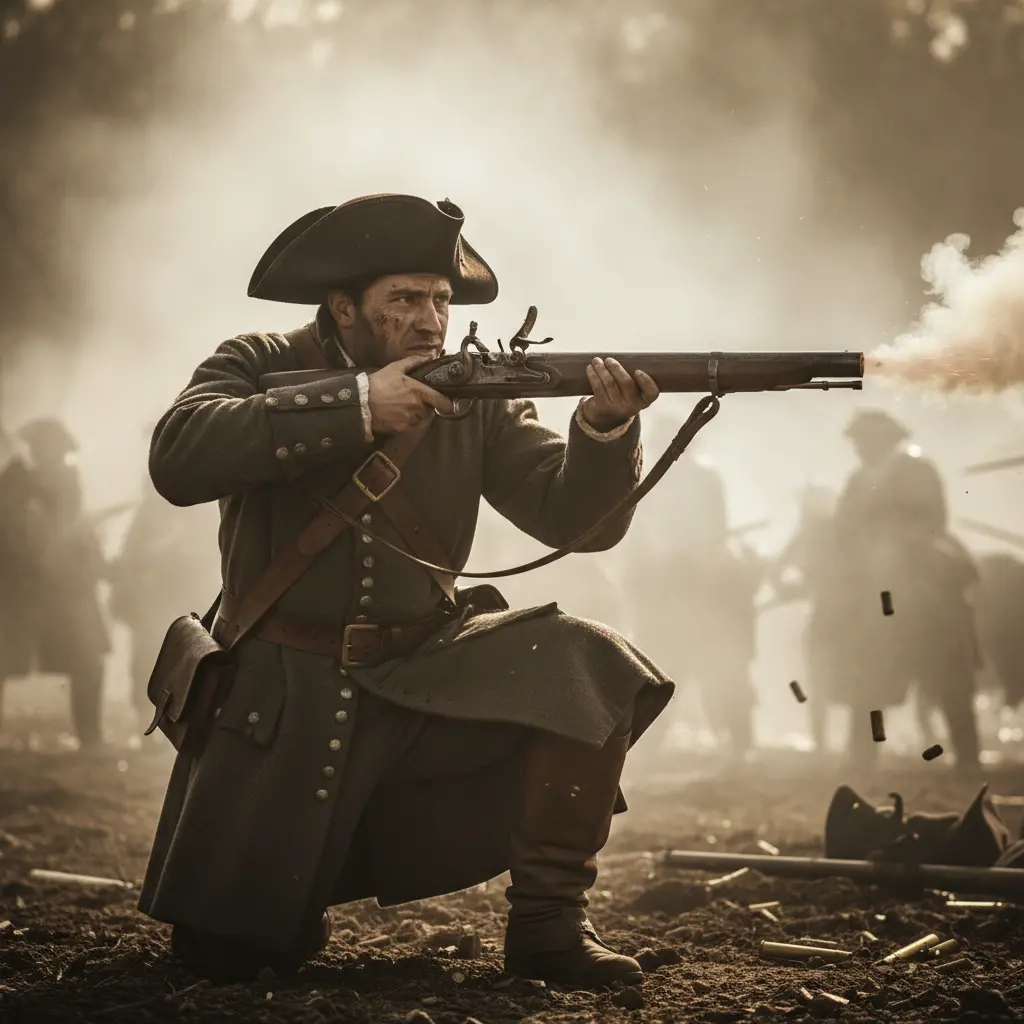
Example sentences are the start of understanding. Don't rush to memorize. First feel how the word works in a sentence.
(a) musk (scent) + et (diminutive), referring to the musket's small size relative to larger firearms. (b) The term evolved from the Middle French 'mousquet' in the 16th century, which itself comes from Old Italian 'moschetto.' (c) Imagine a soldier standing bravely on the battlefield, expertly firing a musket, evoking the smell of burning gunpowder and the sound of history being made.
Note 1: These definitions and etymologies are not standard dictionary definitions, but extended explanations provided to help with memorization and understanding of the actual application of words. Through this background information, we strive to make words more vivid and easier to understand, and help you remember their meanings in real life.
Note 2: LexiTalk designs the learning flow around the linguistics principle of “Comprehensible Input.” When learners encounter material that is slightly above their level but still understandable from context, the brain naturally absorbs the language. That’s why we keep every word inside authentic contexts, using examples and associations to help you understand it and use it flexibly.
Read the FAQ explanation of Comprehensible InputMusket is a historical long gun used by infantry in the early modern era. It fires lead balls loaded from the muzzle, originally with black powder, and later with percussion caps or flintlock mechanisms. Muskets were heavy and slow to reload compared with later rifles, which shaped battlefield tactics and formations such as line infantry and volley fire. The word evokes images of smoke, marching soldiers, and the rhythm of 16th through 19th century warfare. Today, musket is mainly encountered in historical writing, museum displays, and fiction set in those periods, where it stands in contrast to modern firearms.
Explain to an English speaker: Musket is a historical weapon and is not interchangeable with modern firearms; focus on muzzle-loading and line infantry usage to avoid mixing with rifles.
What is the definition of 'musket'?
Which sentence correctly uses the word 'musket'?
Which word is most similar to 'musket'?
What is the opposite of 'musket'?
Can you describe a context where a person might handle a musket?
Download LexiTalk app for personalized learning experience
Download AppCookies
We use cookies for essential site functions, analytics, and ads. You can accept, reject, or manage preferences. Privacy Policy