neutral - Master This Word
Master this word with our 5-step learning method – Learn English in English
Train English Through Brain Routes, Not Translation.
This page helps you stop memorizing isolated translations and start understanding a word through its shared mental image, native-style thinking, and practical training steps.
Master this word with our 5-step learning method – Learn English in English
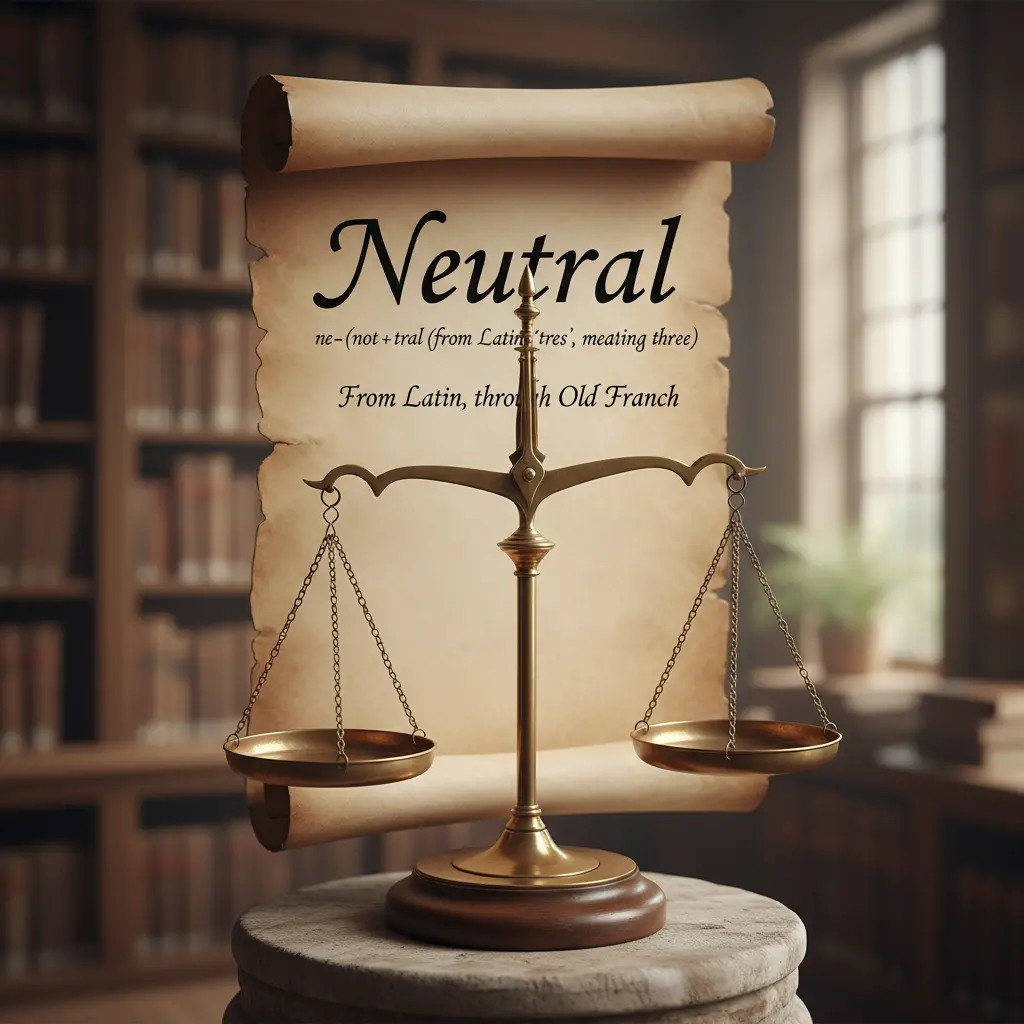
Example sentences are the start of understanding. Don't rush to memorize. First feel how the word works in a sentence.
Neutral = ne- (not) + tral (from Latin 'tres', meaning three). Came from Latin, passed through Old French to modern English. Picture a balance scale with nothing on either side, symbolizing neutrality.
Note 1: These definitions and etymologies are not standard dictionary definitions, but extended explanations provided to help with memorization and understanding of the actual application of words. Through this background information, we strive to make words more vivid and easier to understand, and help you remember their meanings in real life.
Note 2: LexiTalk designs the learning flow around the linguistics principle of “Comprehensible Input.” When learners encounter material that is slightly above their level but still understandable from context, the brain naturally absorbs the language. That’s why we keep every word inside authentic contexts, using examples and associations to help you understand it and use it flexibly.
Read the FAQ explanation of Comprehensible InputFirst I push two options toward the middle of the table, then I pull my hands back and center my gaze. I shift in my chair, resisting the urge to choose one side and staying even. I adjust my posture again and tell myself to hold steady, like a scale balancing between yes and no. In that moment the word neutral feels like a quiet space where no answer shouts louder, a calm balance you keep when a choice could tilt either way.
Neutral describes a stance, a color, or a quality of not taking sides. As an adjective it can refer to someone who is impartial, a place that is neither on one side nor the other, or a color that is not vivid. As a noun, 'neutral' can mean a person who keeps a non-aligned position, or a neutral item in a game or negotiation. The etymology traces back to Latin and Old French, meaning 'not taking sides' or 'center'. In everyday English you might hear phrases like 'neutral ground', 'remain neutral', or 'neutral party'. Use neutral to emphasize balance, even-handedness, or lack of strong characteristics.
In English, neutral is a flexible core concept used across law, color theory, and everyday talk; learners often mix it with indifferent or impartial. Keep in mind neutral can describe stance, tone, or color, and it appears in many set phrases.
What is the meaning of 'neutral'?
In which sentence is 'neutral' used correctly?
Which word is an antonym of 'neutral'?
In what real-life context would 'neutral' be relevant?
Reflect on how you can apply 'neutral' in a conversation or writing.
Technology & Social Media
Listen NowDownload LexiTalk app for personalized learning experience
Download AppCookies
We use cookies for essential site functions, analytics, and ads. You can accept, reject, or manage preferences. Privacy Policy