odd - Master This Word
Master this word with our 5-step learning method – Learn English in English
Train English Through Brain Routes, Not Translation.
This page helps you stop memorizing isolated translations and start understanding a word through its shared mental image, native-style thinking, and practical training steps.
Master this word with our 5-step learning method – Learn English in English
Example sentences are the start of understanding. Don't rush to memorize. First feel how the word works in a sentence.
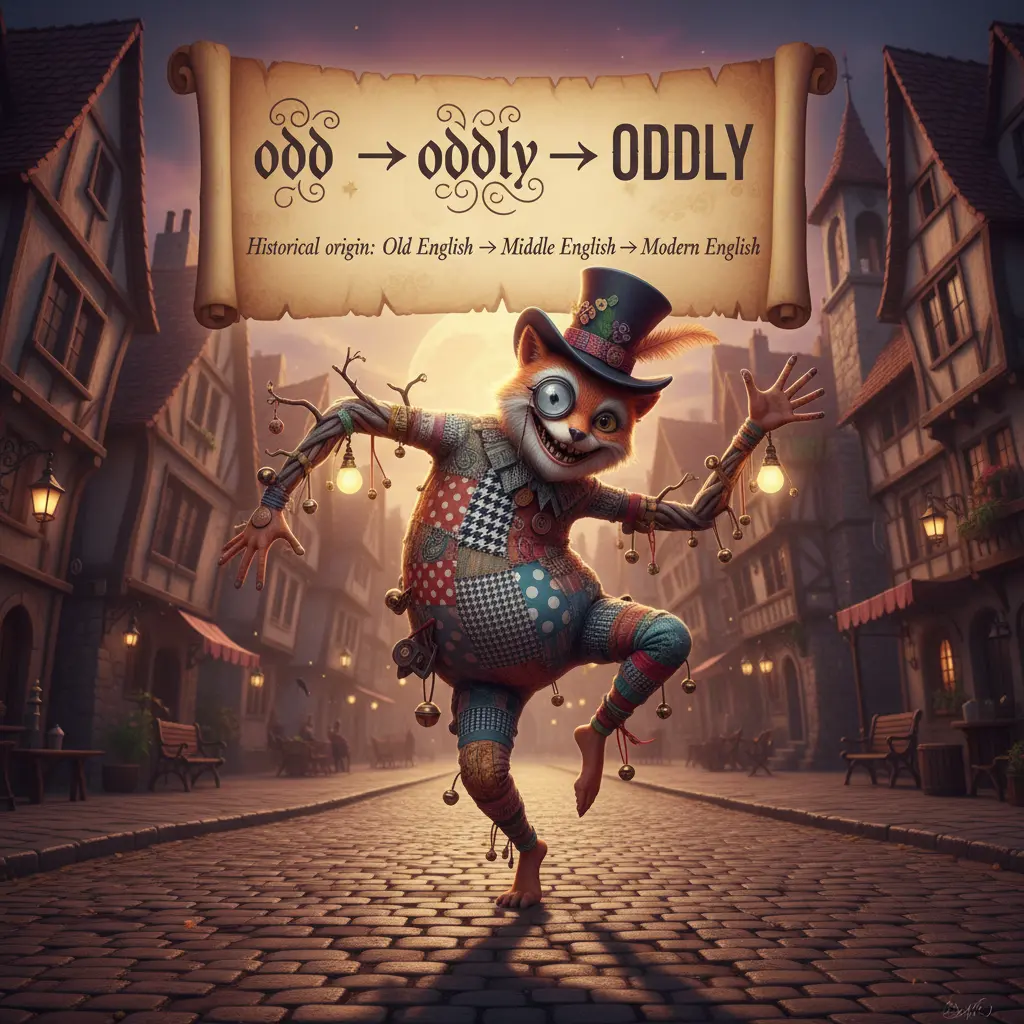
odd = odd + -ly; Historical origin: Old English 'odd' → Middle English → Modern English. Memory image: Imagine a quirky creature dancing strangely in an odd, whimsical outfit.
Note 1: These definitions and etymologies are not standard dictionary definitions, but extended explanations provided to help with memorization and understanding of the actual application of words. Through this background information, we strive to make words more vivid and easier to understand, and help you remember their meanings in real life.
Note 2: LexiTalk designs the learning flow around the linguistics principle of “Comprehensible Input.” When learners encounter material that is slightly above their level but still understandable from context, the brain naturally absorbs the language. That’s why we keep every word inside authentic contexts, using examples and associations to help you understand it and use it flexibly.
Read the FAQ explanation of Comprehensible InputI reach for my mug, push the lid a touch, and set it down with a careful grip. The kettle hisses, I shift my weight and adjust my pace, watching the steam curl. I turn the mug a fraction and hold the handle as the pattern changes. The whole moment feels oddly deliberate, as if my way of doing it is steering the scene.
Odd is most often used as an adjective meaning strange or unusual. As an adverb, though, its modern usage is rare; speakers usually prefer oddly to express 'in a strange or unusual way.' The meaning list includes peculiarly and bizarrely, and you may encounter fixed phrases like odd enough or oddly enough. The word comes from Old English odd, originally meaning out of the ordinary, and it later broadened into adjectives describing people, events, or things. Learners frequently confuse odd with oddly, placing -ly where it isn't needed or misusing it with verbs. Examples: She acted oddly at the party; That was an odd coincidence.
English marks adverbs with -ly and uses oddly for most manner descriptions; many learners default to adding -ly after adjectives like odd, which is not standard in modern usage.
Which of the following words is most similar in meaning to 'odd'?
How is the word 'odd' used in a sentence?
Which of the following words is most opposite in meaning to 'odd'?
Can you give a real-life example of something that can be described as 'odd'?
Explain what 'odd' means in your own words and use it in a sentence.
Download LexiTalk app for personalized learning experience
Download AppCookies
We use cookies for essential site functions, analytics, and ads. You can accept, reject, or manage preferences. Privacy Policy