
offence - Master This Word
Master this word with our 5-step learning method – Learn English in English
Train English Through Brain Routes, Not Translation.
This page helps you stop memorizing isolated translations and start understanding a word through its shared mental image, native-style thinking, and practical training steps.
Master this word with our 5-step learning method – Learn English in English
Example sentences are the start of understanding. Don't rush to memorize. First feel how the word works in a sentence.
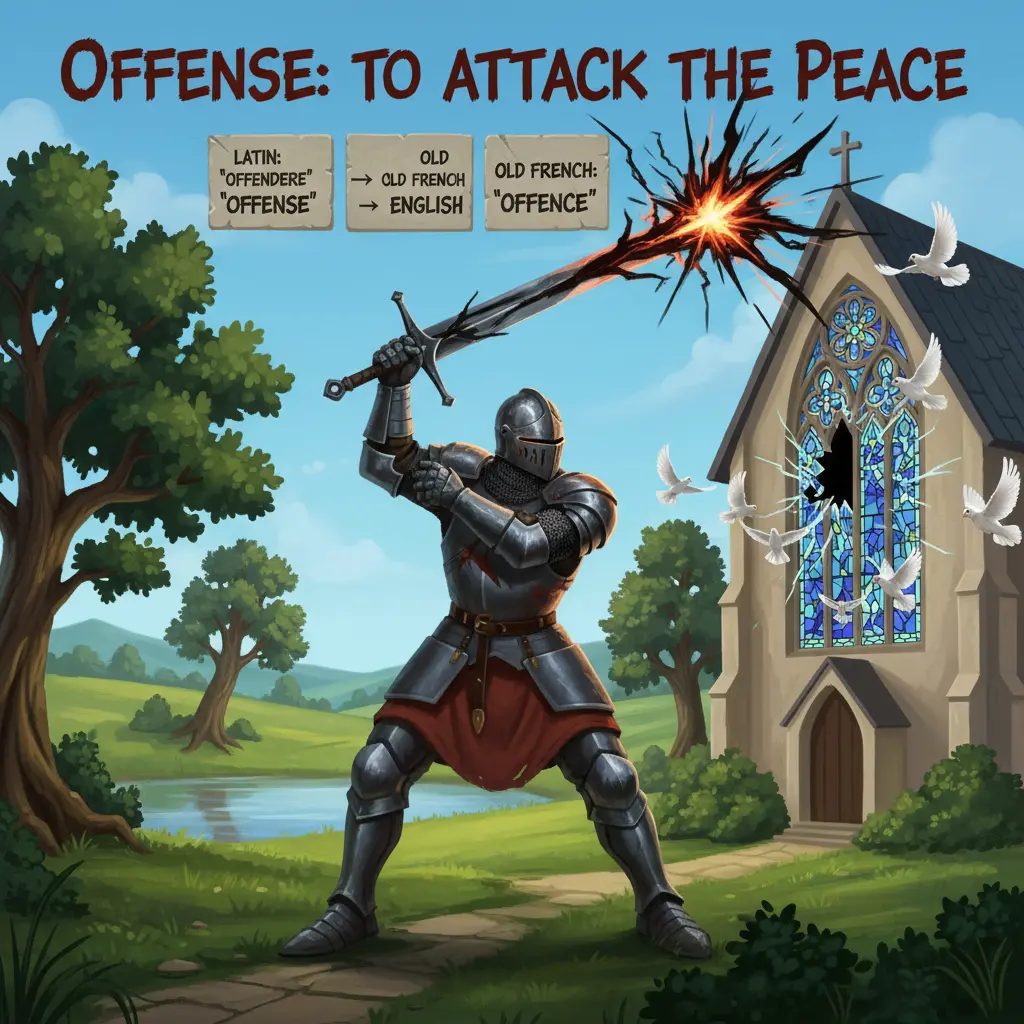
Root: 'offend' (to attack) + suffix '-ence' (state or quality). Originated from Latin 'offendere' (to strike against) -> Old French 'offense' -> English 'offence'. Memory image: Imagine a knight who 'offends' the peace by raising his sword to strike, creating a sense of trouble or harm.
Note 1: These definitions and etymologies are not standard dictionary definitions, but extended explanations provided to help with memorization and understanding of the actual application of words. Through this background information, we strive to make words more vivid and easier to understand, and help you remember their meanings in real life.
Note 2: LexiTalk designs the learning flow around the linguistics principle of “Comprehensible Input.” When learners encounter material that is slightly above their level but still understandable from context, the brain naturally absorbs the language. That’s why we keep every word inside authentic contexts, using examples and associations to help you understand it and use it flexibly.
Read the FAQ explanation of Comprehensible InputI push open a door, then pause as a word lands a sting. The room seems to tilt, a line is crossed, and I feel a shift in mood. I pull back a breath, hold my tongue, adjust my posture, and decide whether to let it slide or speak up. That moment of hurt or boundary sits there, and in everyday talk people sometimes call it offence, turning a simple exchange into something personal.
An offence is a violation of a law or rule, or an act that causes hurt or harm to someone. The word has two main senses in English: a legal wrongdoing and a social hurt. In legal use, an offence is a specific crime or offense punishable by penalties; in everyday speech, people talk about taking offence, meaning they feel insulted or upset by something said or done. The concept emphasizes impact and intent, but the boundaries between minor and serious offences vary by country. The British spelling offence is common in many Commonwealth countries, while American English prefers offense.
In English, offence often covers both law-breaking and social irritation, which can confuse learners who assume one word fits only crime or only insult. Brits lean toward treating legal and moral boundaries with a pluralistic mindset; Americans separate offense/ offense and might reserve offence for social hurt more often.
What is the meaning of 'offence'?
How is 'offence' used in a sentence?
Which word is most similar to 'offence'?
What is the opposite of 'offence'?
Can you think of a real-life context where someone might feel offended?
Download LexiTalk app for personalized learning experience
Download AppCookies
We use cookies for essential site functions, analytics, and ads. You can accept, reject, or manage preferences. Privacy Policy