
ostriches - Master This Word
Master this word with our 5-step learning method – Learn English in English
Train English Through Brain Routes, Not Translation.
This page helps you stop memorizing isolated translations and start understanding a word through its shared mental image, native-style thinking, and practical training steps.
Master this word with our 5-step learning method – Learn English in English
Example sentences are the start of understanding. Don't rush to memorize. First feel how the word works in a sentence.
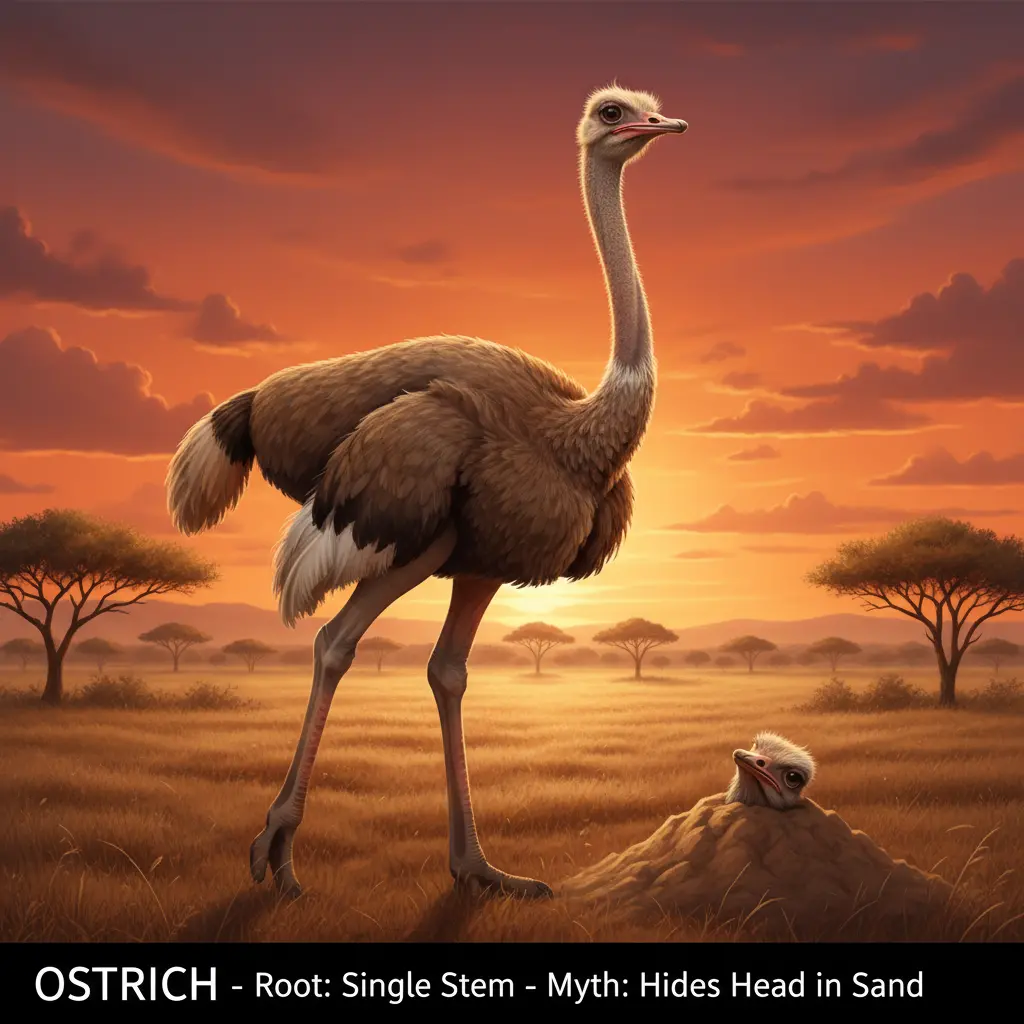
Root decomposition: the word is a single stem with no productive prefixes or suffixes. Historical origin: from Old French ostrice/ostriche, from Latin struthio via Greek strouthion. Memory image: picture a large African flightless bird striding across the savannah; the myth that it hides its head in the sand echoes the idea of avoiding reality.
Note 1: These definitions and etymologies are not standard dictionary definitions, but extended explanations provided to help with memorization and understanding of the actual application of words. Through this background information, we strive to make words more vivid and easier to understand, and help you remember their meanings in real life.
Note 2: LexiTalk designs the learning flow around the linguistics principle of “Comprehensible Input.” When learners encounter material that is slightly above their level but still understandable from context, the brain naturally absorbs the language. That’s why we keep every word inside authentic contexts, using examples and associations to help you understand it and use it flexibly.
Read the FAQ explanation of Comprehensible InputAn ostrich is a large, flightless bird native to Africa. In everyday English, the word also appears in a figurative sense to describe a person who ignores reality or avoids dealing with a problem, as in 'he keeps his head in the sand.' The animal is famous for its long legs and speed, yet it cannot fly, which makes it a useful image for stubborn avoidance or denial. People who refuse to face bad news may be said to act like an ostrich, though obviously no one actually buries their head in the sand. The etymology traces to Old French ostrice/ostriche, from Latin struthio via Greek strouthion.
English uses a concrete animal image to convey a behavioral stereotype: avoidance or denial. Learners often assume a direct moral judgment and may overgeneralize to people who simply avoid minor tasks, or misinterpret it as cowardice in all contexts.
Download LexiTalk app for personalized learning experience
Download AppCookies
We use cookies for essential site functions, analytics, and ads. You can accept, reject, or manage preferences. Privacy Policy