ought - Master This Word
Master this word with our 5-step learning method – Learn English in English
Train English Through Brain Routes, Not Translation.
This page helps you stop memorizing isolated translations and start understanding a word through its shared mental image, native-style thinking, and practical training steps.
Master this word with our 5-step learning method – Learn English in English
Example sentences are the start of understanding. Don't rush to memorize. First feel how the word works in a sentence.
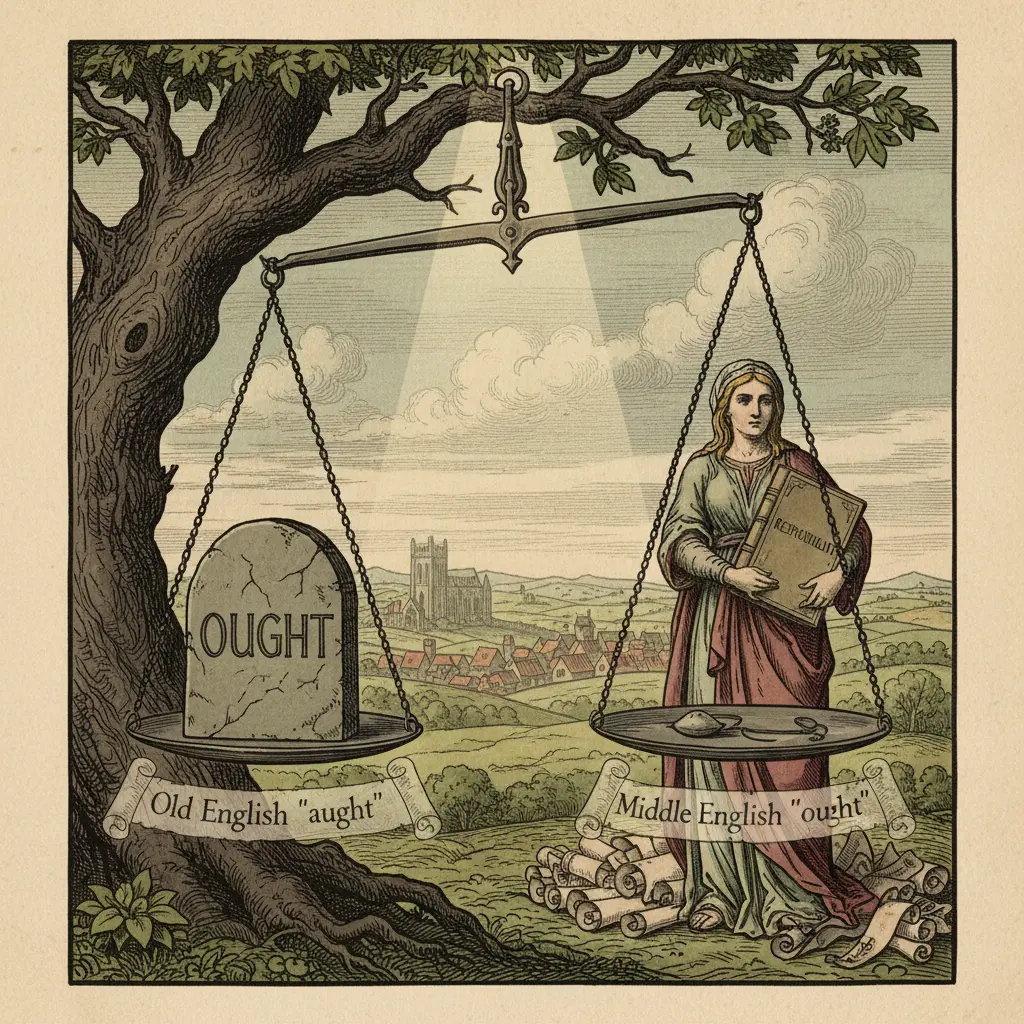
ought = aan + gam; Historical origin: Old English 'aught' (meaning 'anything') → Middle English 'oght' → Modern English 'ought'. Memory image: Imagine a scale of duty, where 'ought' balances on the weight of responsibility.
Note 1: These definitions and etymologies are not standard dictionary definitions, but extended explanations provided to help with memorization and understanding of the actual application of words. Through this background information, we strive to make words more vivid and easier to understand, and help you remember their meanings in real life.
Note 2: LexiTalk designs the learning flow around the linguistics principle of “Comprehensible Input.” When learners encounter material that is slightly above their level but still understandable from context, the brain naturally absorbs the language. That’s why we keep every word inside authentic contexts, using examples and associations to help you understand it and use it flexibly.
Read the FAQ explanation of Comprehensible InputI reach for the kettle and move it closer to the burner, feeling heat rise at the rim of the cup. I adjust the flame and set my grip, letting the routine sharpen my attention. A small question arrives, what should I do now, what would be right or advisable in this moment. I keep the pace steady, and the sense of duty grows into a quiet, practical choice.
Ought is a modal verb signaling duty or obligation, but it also covers what is right or advisable and, in some contexts, a probable consequence. It is softer than must and more formal than should in many uses. Ought to + base verb marks behavior that seems appropriate given the circumstances or a moral duty. It appears in formal writing and moral argumentation, as in you ought to tell the truth or we ought to be more careful. Contractions like ought not are rare in everyday speech, and many speakers prefer should not or must not in negative contexts.
English tends to distinguish ought from should by tone: ought signals a moral or situational obligation rather than casual advice. Learners often swap it with should or must, missing the nuance of formality and moral weight. In informal speech, you may hear should most often, while ought to appears in careful writing or moral arguments.
Which sentence uses 'ought' correctly?
Which word is most similar to 'ought'?
What is the opposite of 'ought'?
Can you think of a real-life context for 'ought'?
Download LexiTalk app for personalized learning experience
Download AppCookies
We use cookies for essential site functions, analytics, and ads. You can accept, reject, or manage preferences. Privacy Policy