overslept - Master This Word
Master this word with our 5-step learning method – Learn English in English
Train English Through Brain Routes, Not Translation.
This page helps you stop memorizing isolated translations and start understanding a word through its shared mental image, native-style thinking, and practical training steps.
Master this word with our 5-step learning method – Learn English in English
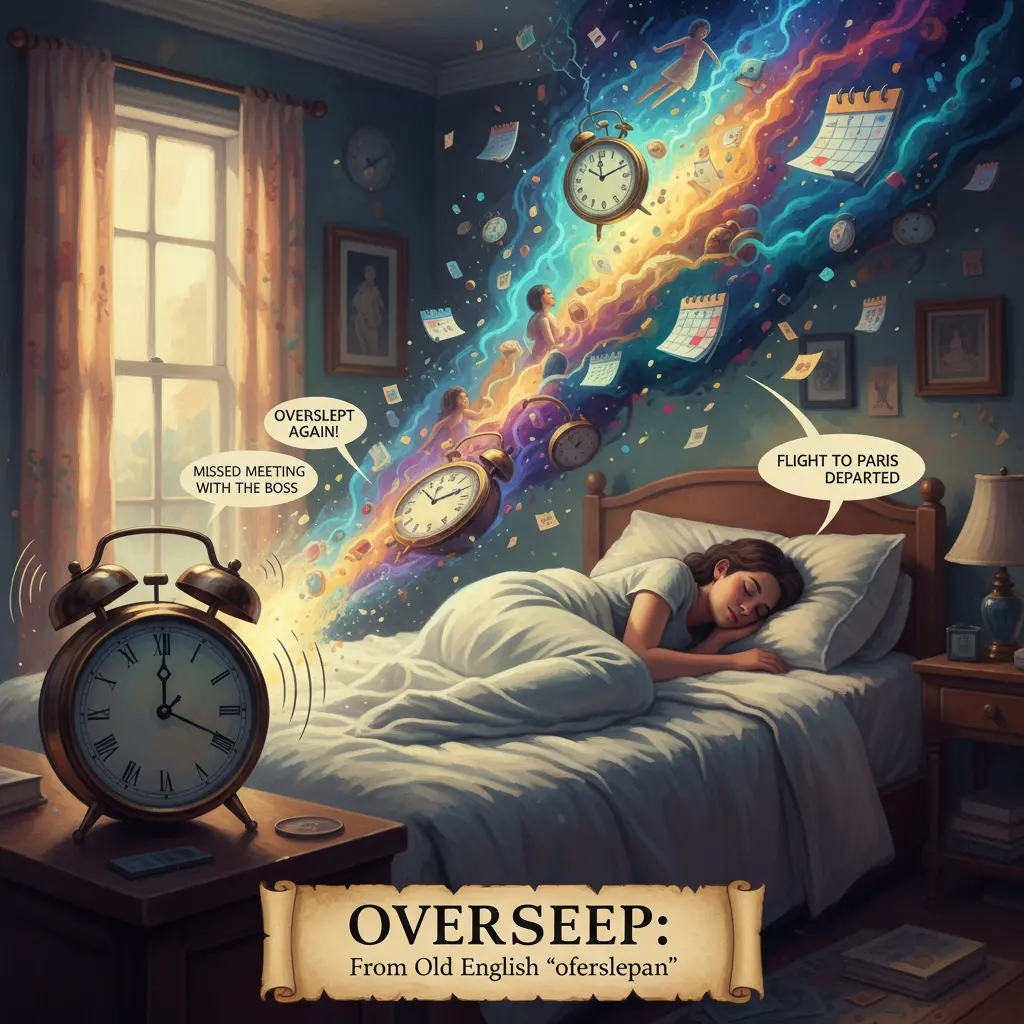
Example sentences are the start of understanding. Don't rush to memorize. First feel how the word works in a sentence.
(a) 'over' (excess) + 'sleep' (to rest). (b) Origin: Middle English, from Old English 'oferslepan', from 'over' + 'slope' (to sleep). (c) Imagine someone so deeply asleep that even a loud alarm can't wake them, causing them to 'oversleep' into a dream world, missing important appointments.
Note 1: These definitions and etymologies are not standard dictionary definitions, but extended explanations provided to help with memorization and understanding of the actual application of words. Through this background information, we strive to make words more vivid and easier to understand, and help you remember their meanings in real life.
Note 2: LexiTalk designs the learning flow around the linguistics principle of “Comprehensible Input.” When learners encounter material that is slightly above their level but still understandable from context, the brain naturally absorbs the language. That’s why we keep every word inside authentic contexts, using examples and associations to help you understand it and use it flexibly.
Read the FAQ explanation of Comprehensible InputOversleep means sleeping longer than you intended, usually because you fail to wake up on time. It happens when an alarm fails to wake you, you drift back to sleep after a brief waking, or your schedule is disrupted by fatigue. In everyday speech people say they overslept after missing a class, a meeting, or a commute. The term is informal and common in both American and British English, and it covers both a one-time lapse and a pattern of waking late. The opposite would be waking up on time, ideally with reliable alarms and a regular bedtime.
Explain to an English speaker: Oversleep focuses on failing to wake up at the planned time, not just staying in bed late; some cultures emphasize the act of going back to sleep differently. Learners often confuse oversleep with simply staying up late or with snoozing, so practice with alarms and time concepts.
Download LexiTalk app for personalized learning experience
Download AppCookies
We use cookies for essential site functions, analytics, and ads. You can accept, reject, or manage preferences. Privacy Policy