palace - Master This Word
Master this word with our 5-step learning method – Learn English in English
Train English Through Brain Routes, Not Translation.
This page helps you stop memorizing isolated translations and start understanding a word through its shared mental image, native-style thinking, and practical training steps.
Master this word with our 5-step learning method – Learn English in English
Example sentences are the start of understanding. Don't rush to memorize. First feel how the word works in a sentence.
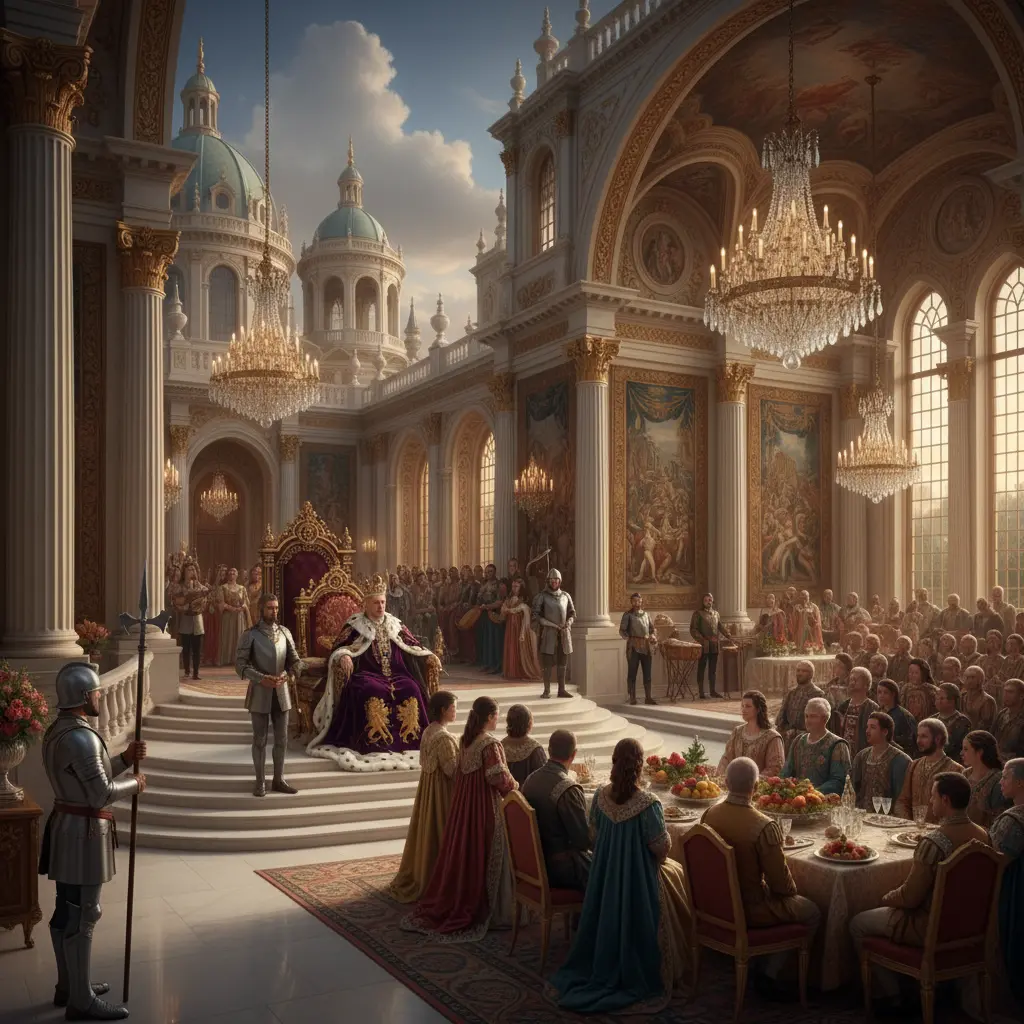
From Latin 'palatium' (palace, lofty building) + old French 'palais' (palace). Picture a magnificent royal residence where the king holds court and entertains guests amidst luxurious decor.
Note 1: These definitions and etymologies are not standard dictionary definitions, but extended explanations provided to help with memorization and understanding of the actual application of words. Through this background information, we strive to make words more vivid and easier to understand, and help you remember their meanings in real life.
Note 2: LexiTalk designs the learning flow around the linguistics principle of “Comprehensible Input.” When learners encounter material that is slightly above their level but still understandable from context, the brain naturally absorbs the language. That’s why we keep every word inside authentic contexts, using examples and associations to help you understand it and use it flexibly.
Read the FAQ explanation of Comprehensible InputPush a heavy door and step into a vast, quiet hall. The space swells as lamps glow and people in rich clothes glide along marble floors. I adjust my pace, hold my breath a moment, and let the room's scale press against my ordinary sense. It begins to feel like a living stage for rulers and their guests, a place built for living, ruling, and grand public moments.
Palace is a large, grand residence typically associated with royalty or heads of state, and it also refers to any splendid, impressive building used for official functions. In everyday English, you might hear about a palace being the seat of a monarchy, a venue for state events, or a tourist attraction. The word carries connotations of luxury, power, and ceremonial life, while a smaller building named palace may be used for ceremonial purposes or even as a hotel or museum. When describing architecture, think of imposing façades, long courtyards, and lavish interiors that announce authority and heritage.
Palace in English signals royal authority and public ceremonials. Learners should note that not every grand building is a palace; ownership and function matter. In many languages, a direct equivalent may be a stately or royal building, but nuance differs.
What is the meaning of the word 'palace'?
In which of the following sentences is 'palace' used correctly?
Which word is most similar to 'palace'?
What is the opposite of 'palace'?
In what real-life context might you see a palace?
Download LexiTalk app for personalized learning experience
Download AppCookies
We use cookies for essential site functions, analytics, and ads. You can accept, reject, or manage preferences. Privacy Policy