
parody - Master This Word
Master this word with our 5-step learning method – Learn English in English
Train English Through Brain Routes, Not Translation.
This page helps you stop memorizing isolated translations and start understanding a word through its shared mental image, native-style thinking, and practical training steps.
Master this word with our 5-step learning method – Learn English in English
Example sentences are the start of understanding. Don't rush to memorize. First feel how the word works in a sentence.
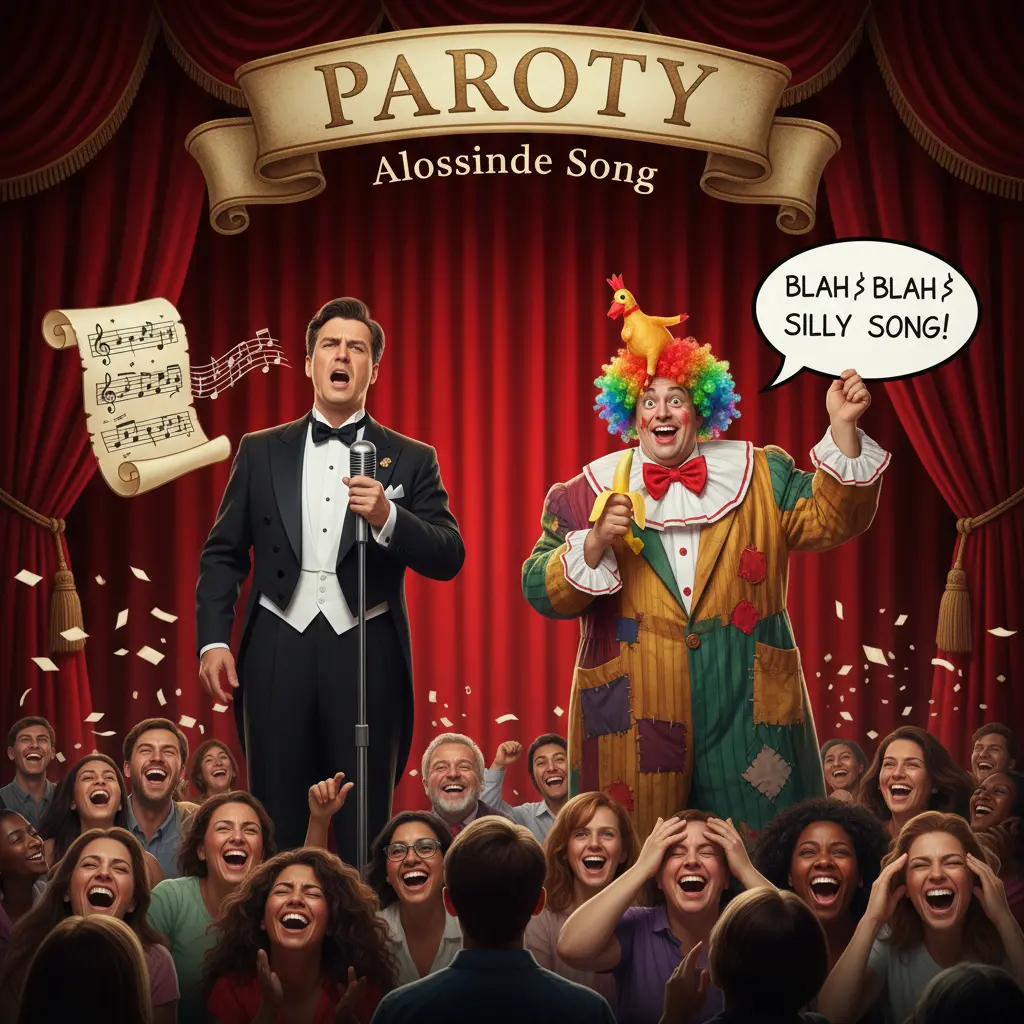
Root: para- = alongside, ode = song. Historical origin: Greek → Latin → English. Memory image: Imagine a funny performance where someone sings a silly song alongside the original, highlighting its flaws and making everyone laugh.
Note 1: These definitions and etymologies are not standard dictionary definitions, but extended explanations provided to help with memorization and understanding of the actual application of words. Through this background information, we strive to make words more vivid and easier to understand, and help you remember their meanings in real life.
Note 2: LexiTalk designs the learning flow around the linguistics principle of “Comprehensible Input.” When learners encounter material that is slightly above their level but still understandable from context, the brain naturally absorbs the language. That’s why we keep every word inside authentic contexts, using examples and associations to help you understand it and use it flexibly.
Read the FAQ explanation of Comprehensible InputA parody is a humorous imitation of a serious work or public figure that exaggerates distinctive features to comment on it or entertain. Parodies mimic style, tone, or content—often exaggerating vocabulary, rhythm, or visual cues—to reveal absurdities or critique ideas. They rely on audience recognition of the source, so timing and specificity matter. The goal can be affectionate or cutting; some parodies are light-hearted spoofs, others are sharper satire that aims to provoke thought. The noun and verb senses cover both the act of creating a parody and the result itself: a parody of a novel, a film, a politician, or a music video. The etymology traces to para- 'alongside' and ode 'song'.
English learners often rely on a broad sense of humor words; they may mix up parody with spoof or satire, and prefer 'parody of' to link to the source. Learners sometimes treat it as simply copying, missing the mimetic, tone-driven aspect that carries meaning.
What is the meaning of 'parody'?
In which sentence is 'parody' used correctly?
Which word is a synonym of 'parody'?
What would be an opposite of 'parody'?
In what real-life context might you encounter a parody?
Download LexiTalk app for personalized learning experience
Download AppCookies
We use cookies for essential site functions, analytics, and ads. You can accept, reject, or manage preferences. Privacy Policy