peoples - Master This Word
Master this word with our 5-step learning method – Learn English in English
Train English Through Brain Routes, Not Translation.
This page helps you stop memorizing isolated translations and start understanding a word through its shared mental image, native-style thinking, and practical training steps.
Master this word with our 5-step learning method – Learn English in English
Example sentences are the start of understanding. Don't rush to memorize. First feel how the word works in a sentence.
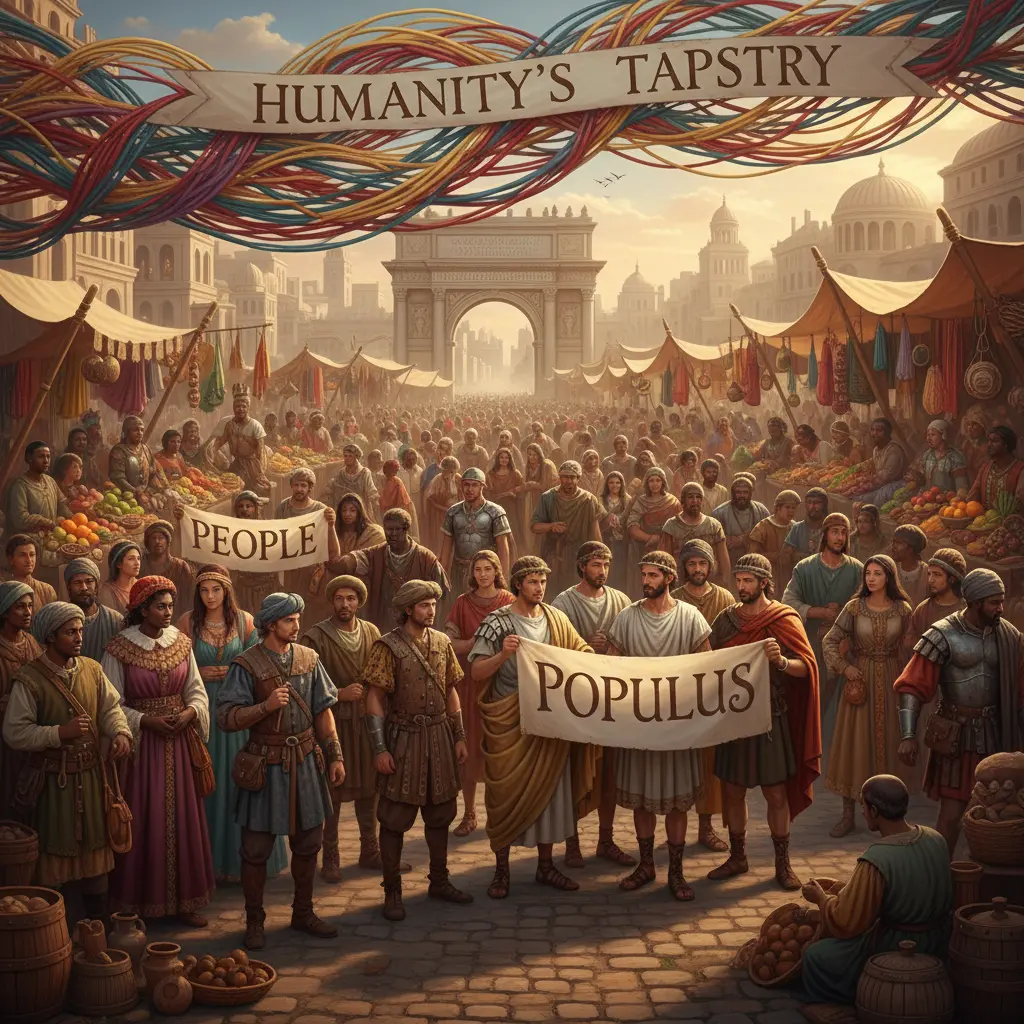
Root decomposition: 'people' from Latin 'populus' (people). Historical origin: Latin → Old French 'pople' → English. Memory image: Imagine a vibrant marketplace filled with diverse groups of people, each representing their unique culture, symbolizing the richness of humanity's tapestry.
Note 1: These definitions and etymologies are not standard dictionary definitions, but extended explanations provided to help with memorization and understanding of the actual application of words. Through this background information, we strive to make words more vivid and easier to understand, and help you remember their meanings in real life.
Note 2: LexiTalk designs the learning flow around the linguistics principle of “Comprehensible Input.” When learners encounter material that is slightly above their level but still understandable from context, the brain naturally absorbs the language. That’s why we keep every word inside authentic contexts, using examples and associations to help you understand it and use it flexibly.
Read the FAQ explanation of Comprehensible InputI step into a crowded hallway and push gently to find a small space among the people. Keeping my balance, I move with the flow, watching how the people turn and settle into the rhythm. I adjust my stance, and I let the voices and laughter fill the car as I hold my course. By the time we reach the next stop, the people around me feel less like faces and more like a shared moment we all move through.
People is a plural noun that refers to human beings in general, but it is also used to name the members of a nation or ethnic group. You can say 'the American people' or 'the people of Japan' to refer to a national or cultural community, not to a single person. In everyday talk, 'people' can describe individuals in a community: 'Many people enjoy walking in the park.' The plural form is already 'people' (the singular is 'person'). When you want to highlight multiple distinct groups, you may use 'peoples' to refer to several nations or cultures, as in 'the peoples of Africa and Europe.' Etymology: from Latin populus, via Old French 'pople' to English.
English often treats people as a general, countable crowd in everyday speech, while many languages mark collective groups differently. Learners may over- or under- count, confuse 'people' with 'person', or skip the 'peoples' distinction when listing multiple nations.
What is the definition of 'peoples'?
Which of the following sentences uses 'peoples' correctly?
Which word is most similar to 'peoples'?
What is the opposite of 'peoples'?
Can you think of a real-life context where the term 'peoples' might be used?
Download LexiTalk app for personalized learning experience
Download AppCookies
We use cookies for essential site functions, analytics, and ads. You can accept, reject, or manage preferences. Privacy Policy