perfect - Master This Word
Master this word with our 5-step learning method – Learn English in English
Train English Through Brain Routes, Not Translation.
This page helps you stop memorizing isolated translations and start understanding a word through its shared mental image, native-style thinking, and practical training steps.
Master this word with our 5-step learning method – Learn English in English
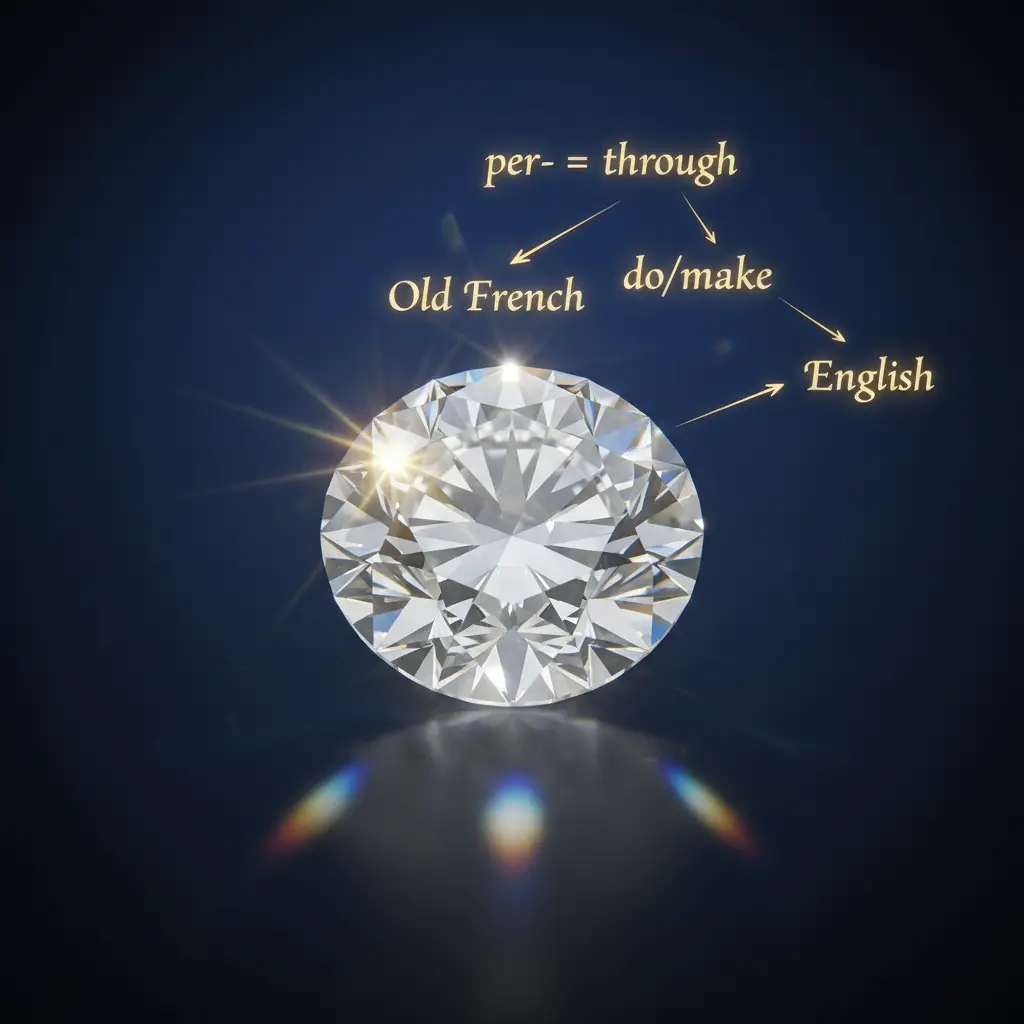
Example sentences are the start of understanding. Don't rush to memorize. First feel how the word works in a sentence.
per- = through, fact = do/make; Latin → Old French → English. Imagine a flawless diamond, shining brightly with no imperfections.
Note 1: These definitions and etymologies are not standard dictionary definitions, but extended explanations provided to help with memorization and understanding of the actual application of words. Through this background information, we strive to make words more vivid and easier to understand, and help you remember their meanings in real life.
Note 2: LexiTalk designs the learning flow around the linguistics principle of “Comprehensible Input.” When learners encounter material that is slightly above their level but still understandable from context, the brain naturally absorbs the language. That’s why we keep every word inside authentic contexts, using examples and associations to help you understand it and use it flexibly.
Read the FAQ explanation of Comprehensible InputHands steady, I move the pencil across the page, tracing a straight line. I adjust my grip, change the pressure, and push a bit more where the edge wants to be true. The space tightens, the line holds its place, and I keep watching for the smallest wobble. When the edge finally sits even and clean, I feel a quiet sense of finish, like a small victory earned through careful control.
Perfect is a flexible English word with three main uses: as an adjective meaning without flaws, as a verb meaning to improve something until it is flawless, and as an intensifier in phrases like 'perfectly clear' or 'perfect timing.' It often signals a high standard, but learners may overstate its reach or apply it to everything from a repaired car to an ordinary meal. Native speakers choose collocations carefully: 'perfect match,' 'perfect weather,' 'perfect timing.' Remember that 'perfect' is not always the best choice for everyday praise; alternatives like 'excellent' or 'great' can be more natural, while 'to perfect' implies a process of gradual improvement.
English blends adjective, verb, and intensifier uses; learners often overextend perfect to describe everything or rely on it where a simpler praise like excellent would be more natural.
In which of the following sentences is the word 'perfect' used correctly?
Which word is similar to 'perfect'?
What is the opposite of 'perfect'?
Can you think of a real-life situation where something can be described as 'perfect'?
Download LexiTalk app for personalized learning experience
Download AppCookies
We use cookies for essential site functions, analytics, and ads. You can accept, reject, or manage preferences. Privacy Policy