
petals - Master This Word
Master this word with our 5-step learning method – Learn English in English
Train English Through Brain Routes, Not Translation.
This page helps you stop memorizing isolated translations and start understanding a word through its shared mental image, native-style thinking, and practical training steps.
Master this word with our 5-step learning method – Learn English in English
Example sentences are the start of understanding. Don't rush to memorize. First feel how the word works in a sentence.
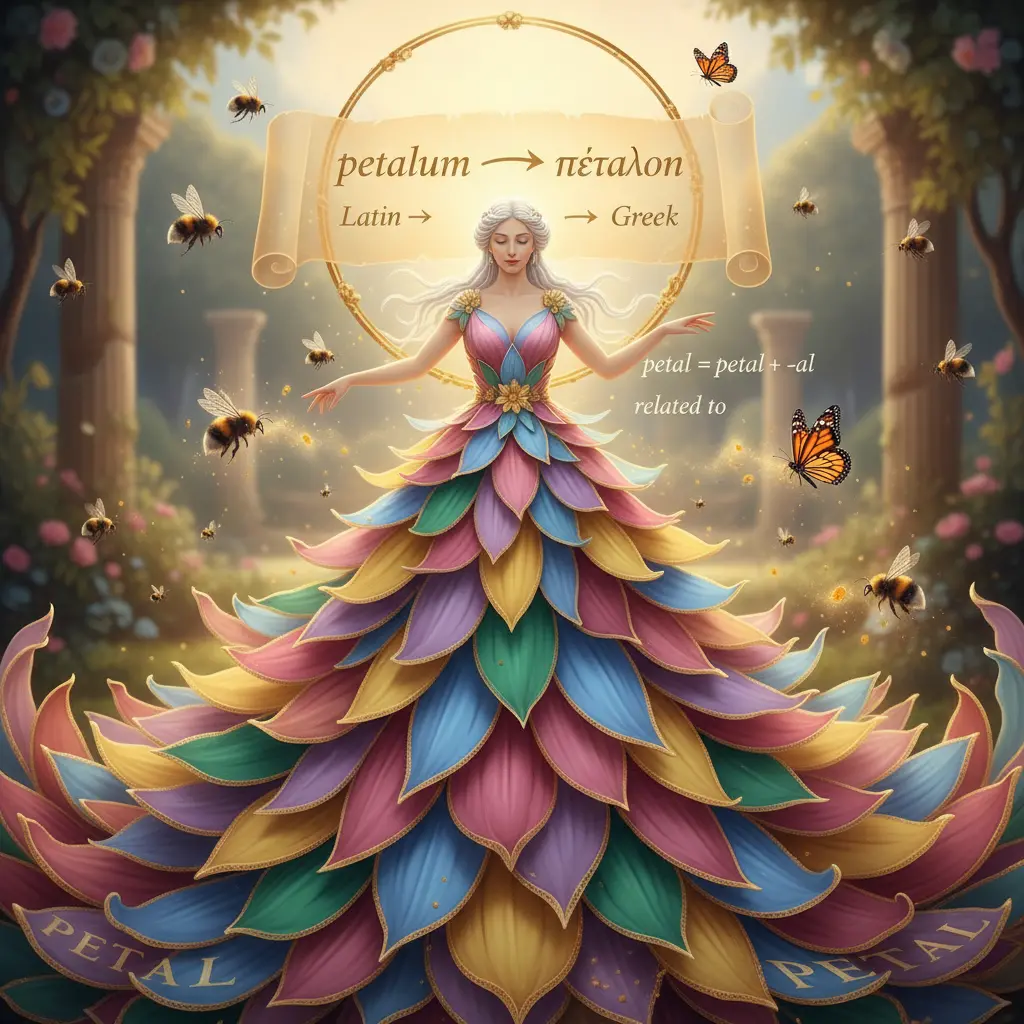
petal = petal + -al (related to), deriving from the Latin 'petalum', which came from Greek 'petalon'. Memory image: envision a colorful and delicate flower, with each petal gently cascading like a dress, attracting bees and butterflies.
Note 1: These definitions and etymologies are not standard dictionary definitions, but extended explanations provided to help with memorization and understanding of the actual application of words. Through this background information, we strive to make words more vivid and easier to understand, and help you remember their meanings in real life.
Note 2: LexiTalk designs the learning flow around the linguistics principle of “Comprehensible Input.” When learners encounter material that is slightly above their level but still understandable from context, the brain naturally absorbs the language. That’s why we keep every word inside authentic contexts, using examples and associations to help you understand it and use it flexibly.
Read the FAQ explanation of Comprehensible InputPetal is the colorful leaf-like part of a flower, usually several surround the center and give the bloom its form. Each petal can be a different color and shape, helping attract pollinators such as bees and butterflies. Petals are part of the perianth, and they are often arranged in a ring or spiral around the reproductive organs. They are distinct from sepals, which protect the bud, and from the stamens and pistils inside the bloom. When you describe flowers, you might refer to a single petal, a row of petals, or a cluster of many petals. Think of petals as the flower's dress, designed to catch the eye and invite pollinators to visit.
Petal is a specific part of a flower, not a general leaf or the whole plant. English learners often confuse petals with leaves or with the flower as a whole. Remember the plural 'petals' for more than one and pair it with nouns like 'red petals' or 'rounded petals'.
Download LexiTalk app for personalized learning experience
Download AppCookies
We use cookies for essential site functions, analytics, and ads. You can accept, reject, or manage preferences. Privacy Policy