
placebo - Master This Word
Master this word with our 5-step learning method – Learn English in English
Train English Through Brain Routes, Not Translation.
This page helps you stop memorizing isolated translations and start understanding a word through its shared mental image, native-style thinking, and practical training steps.
Master this word with our 5-step learning method – Learn English in English
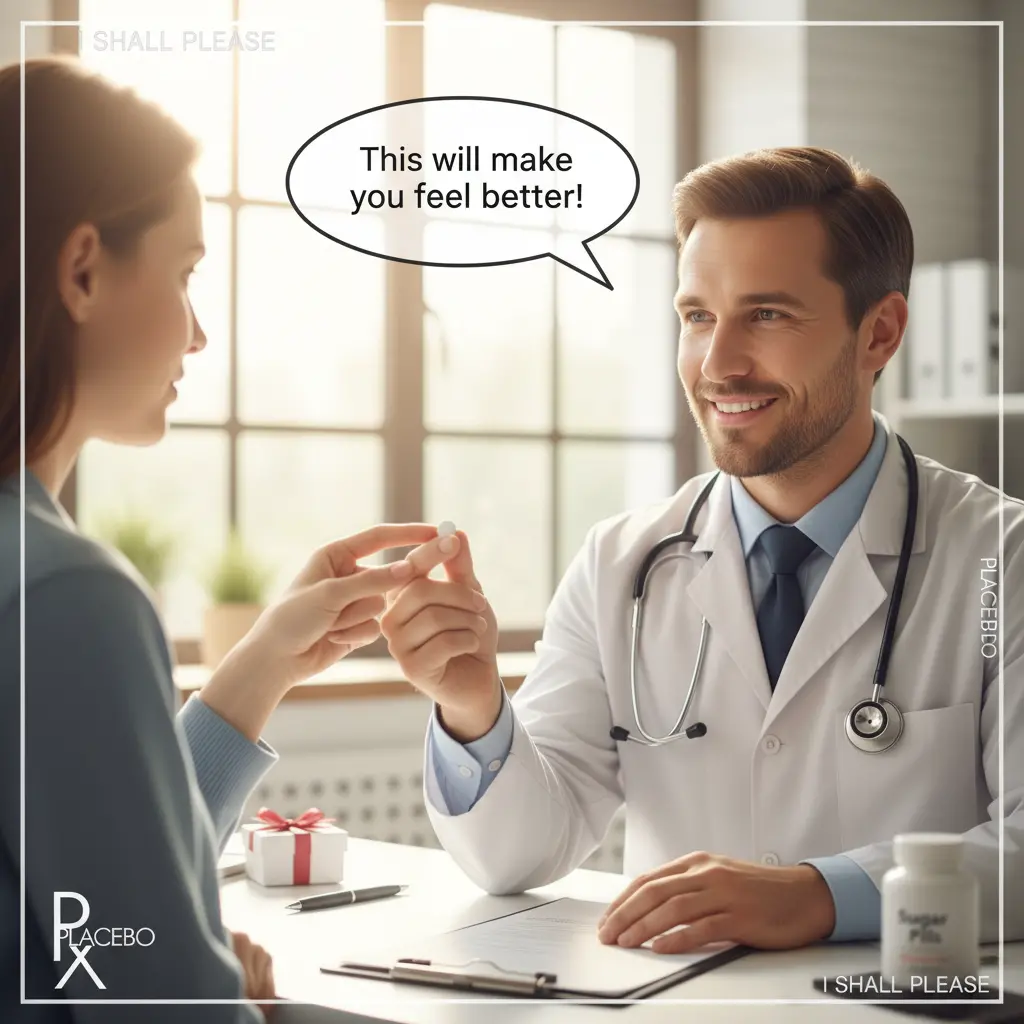
Example sentences are the start of understanding. Don't rush to memorize. First feel how the word works in a sentence.
placebo = 'I shall please'; Latin 'placere' = to please + 'bo' = 1st person future indicative. Placebo's extension to refer to treatments merely intended to please fits with its root idea of pleasing others. Imagine a doctor offering a sugar pill and saying, 'This will make you feel better!', as if it were a gift just to reassure.
Note 1: These definitions and etymologies are not standard dictionary definitions, but extended explanations provided to help with memorization and understanding of the actual application of words. Through this background information, we strive to make words more vivid and easier to understand, and help you remember their meanings in real life.
Note 2: LexiTalk designs the learning flow around the linguistics principle of “Comprehensible Input.” When learners encounter material that is slightly above their level but still understandable from context, the brain naturally absorbs the language. That’s why we keep every word inside authentic contexts, using examples and associations to help you understand it and use it flexibly.
Read the FAQ explanation of Comprehensible InputPlacebo is a noun meaning a substance with no therapeutic effect used as a control in experiments, or a treatment that has no active therapeutic effect, or something meant to please or reassure rather than cure. In clinical trials, a placebo helps compare a new drug against an inert reference, revealing true drug effects apart from expectations, mood, or natural disease progression. The term derives from Latin placere, to please, and it is closely tied to the placebo effect: people improve because they expect to feel better, not because of the medicine. The word can also describe gestures or assurances offered to comfort patients without real healing.
English speakers often link placebo primarily to clinical trials and the idea of a control; learners may overgeneralize to everyday medicine or misinterpret 'placebo effect' as a guaranteed cure.
What is the meaning of 'placebo'?
In which of the following scenarios would a placebo be commonly used?
Which is a synonym for 'placebo'?
What is the opposite of 'placebo'?
How is the concept of 'placebo' often used in medical research?
Download LexiTalk app for personalized learning experience
Download AppCookies
We use cookies for essential site functions, analytics, and ads. You can accept, reject, or manage preferences. Privacy Policy