plump - Master This Word
Master this word with our 5-step learning method – Learn English in English
Train English Through Brain Routes, Not Translation.
This page helps you stop memorizing isolated translations and start understanding a word through its shared mental image, native-style thinking, and practical training steps.
Master this word with our 5-step learning method – Learn English in English
Example sentences are the start of understanding. Don't rush to memorize. First feel how the word works in a sentence.
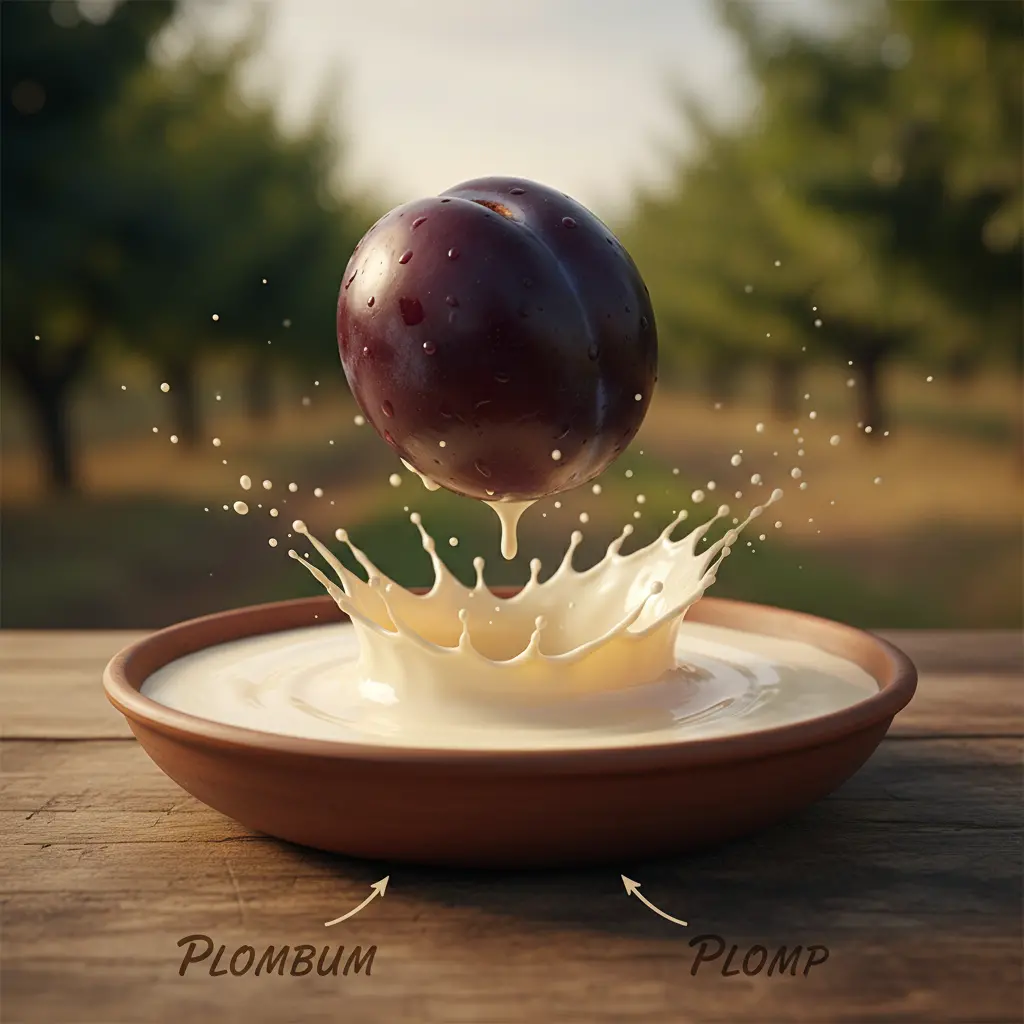
From Old French 'plomp' (soft, fat), rooted in Latin 'plumbum' (lead, heavy). Imagine a heavy plum falling down and landing with a satisfying plop, representing fullness.
Note 1: These definitions and etymologies are not standard dictionary definitions, but extended explanations provided to help with memorization and understanding of the actual application of words. Through this background information, we strive to make words more vivid and easier to understand, and help you remember their meanings in real life.
Note 2: LexiTalk designs the learning flow around the linguistics principle of “Comprehensible Input.” When learners encounter material that is slightly above their level but still understandable from context, the brain naturally absorbs the language. That’s why we keep every word inside authentic contexts, using examples and associations to help you understand it and use it flexibly.
Read the FAQ explanation of Comprehensible InputPlump is a versatile English word with two main uses. As an adjective, it describes something that is short and round in shape or a person with a pleasantly full, slightly soft body. As a verb, to plump something means to make it fuller or rounder, for example by stuffing or padding, or to fall heavily or with a thudding sound, as when a soft bag plops onto the floor. The word carries a gentle, friendly tone when talking about babies, cheeks, fruit, or cushions, but it can sound blunt or rude if used about a person’s body weight. Its core idea is fullness and weight.
Plump is a friendly, nonjudgmental term in English that comfortably describes fullness in both people and objects; learners often over- or under-apply it, especially mixing up with heavier-weight words like fat or overweight. Emphasize context (food vs body) and prefer softer contexts for body descriptions.
In which sentence is the word 'plump' used correctly?
What is a synonym for 'plump'?
What is an antonym for 'plump'?
In what real-life context would you describe something as 'plump'?
English Learning Listening Content
Listen NowDownload LexiTalk app for personalized learning experience
Download AppCookies
We use cookies for essential site functions, analytics, and ads. You can accept, reject, or manage preferences. Privacy Policy