
priggish - Master This Word
Master this word with our 5-step learning method – Learn English in English
Train English Through Brain Routes, Not Translation.
This page helps you stop memorizing isolated translations and start understanding a word through its shared mental image, native-style thinking, and practical training steps.
Master this word with our 5-step learning method – Learn English in English
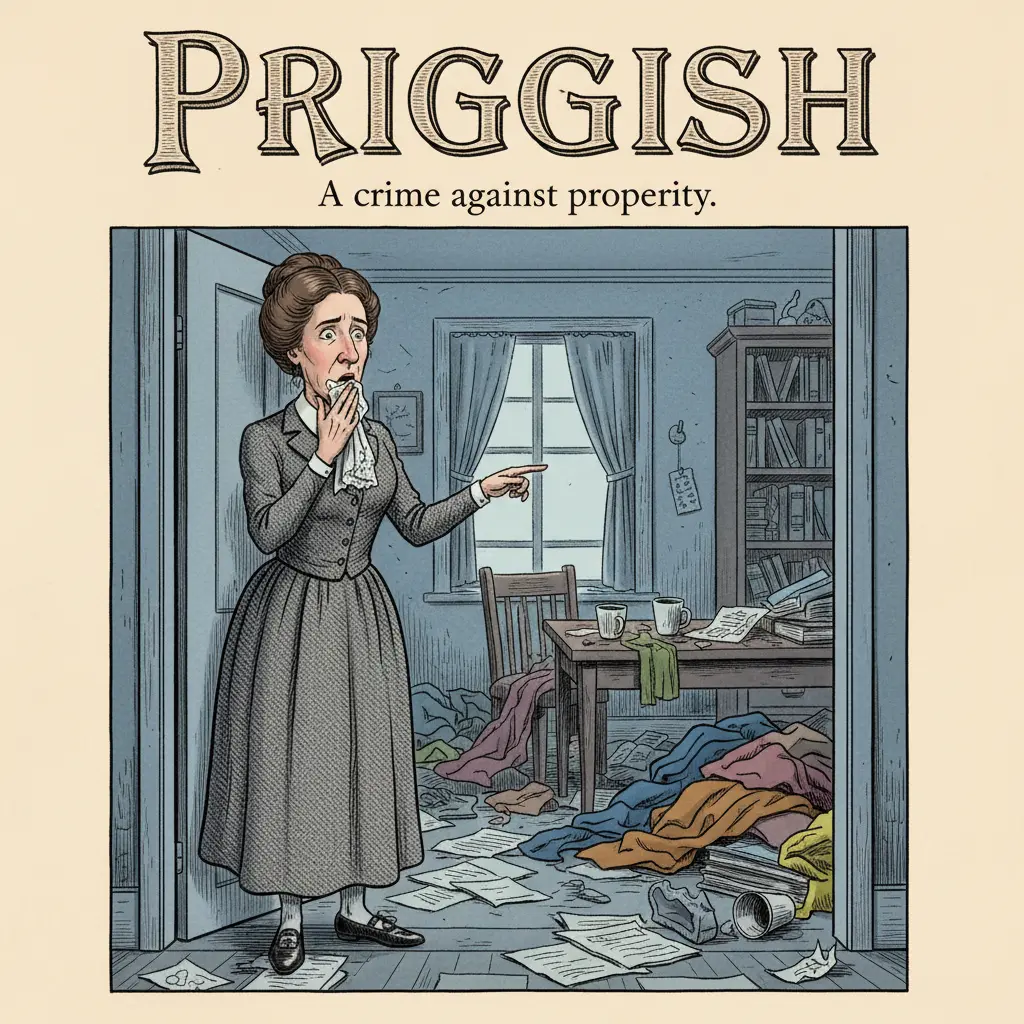
Example sentences are the start of understanding. Don't rush to memorize. First feel how the word works in a sentence.
The root 'prig' (to steal or to behave in a priggish manner) plus the suffix '-ish' indicating 'having the qualities of'. Originated from Old French and Middle English, tracing back to late 17th century usage. Imagine a person turning their nose up at a messy room, enforcing an overzealous sense of order as though it were a crime against propriety.
Note 1: These definitions and etymologies are not standard dictionary definitions, but extended explanations provided to help with memorization and understanding of the actual application of words. Through this background information, we strive to make words more vivid and easier to understand, and help you remember their meanings in real life.
Note 2: LexiTalk designs the learning flow around the linguistics principle of “Comprehensible Input.” When learners encounter material that is slightly above their level but still understandable from context, the brain naturally absorbs the language. That’s why we keep every word inside authentic contexts, using examples and associations to help you understand it and use it flexibly.
Read the FAQ explanation of Comprehensible InputPriggish describes a person who is excessively proper, prim, and morally judgmental, often turning small lapses in behavior into offenses against propriety. A priggish individual may insist on spotless habits, correct others' grammar, and scoff at informal ease in favor of rigid rules. The term carries a hint of self-satisfaction, as if virtue requires constant surveillance of others. In everyday life you might encounter a coworker who fusses about coffee cups left in the sink, or a host who surveys guests' attire with a disapproving eye. It is a pejorative label, not a neutral descriptor, and using it implies disapproval of a kind of moralizing affectation more than mere fussiness.
To English speakers, priggish centers on a moralizing tone about social proprieties rather than on mere neatness; learners often confuse it with being pedantic or fastidious.
What is the definition of 'priggish'?
Choose the correct usage of 'priggish' in a sentence.
Which word is most similar to 'priggish'?
What is the opposite of 'priggish'?
Can you think of a scenario where someone might be described as 'priggish'?
Download LexiTalk app for personalized learning experience
Download AppCookies
We use cookies for essential site functions, analytics, and ads. You can accept, reject, or manage preferences. Privacy Policy