protesting - Master This Word
Master this word with our 5-step learning method – Learn English in English
Train English Through Brain Routes, Not Translation.
This page helps you stop memorizing isolated translations and start understanding a word through its shared mental image, native-style thinking, and practical training steps.
Master this word with our 5-step learning method – Learn English in English
Example sentences are the start of understanding. Don't rush to memorize. First feel how the word works in a sentence.
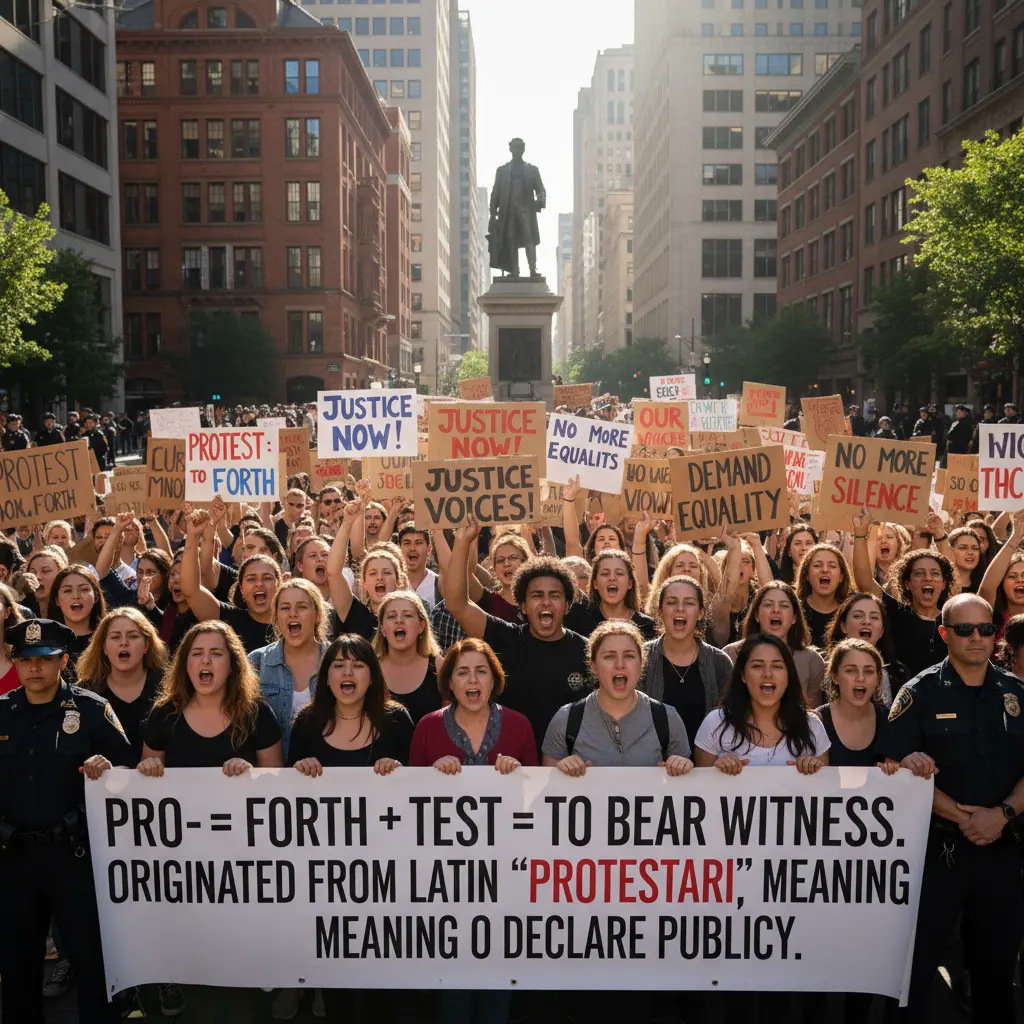
pro- = forth + test = to bear witness. Originated from Latin 'protestari', meaning to declare publicly. Imagine a multitude of people holding signs and shouting in unison, making their voices heard for justice.
Note 1: These definitions and etymologies are not standard dictionary definitions, but extended explanations provided to help with memorization and understanding of the actual application of words. Through this background information, we strive to make words more vivid and easier to understand, and help you remember their meanings in real life.
Note 2: LexiTalk designs the learning flow around the linguistics principle of “Comprehensible Input.” When learners encounter material that is slightly above their level but still understandable from context, the brain naturally absorbs the language. That’s why we keep every word inside authentic contexts, using examples and associations to help you understand it and use it flexibly.
Read the FAQ explanation of Comprehensible InputI plant my feet, take a deep breath, and push through the crowd toward the line of speakers. I lift my voice with the others, move in time with the drumbeat, and let my message rise clearly. The sign in my hand shifts as I adjust my stance so it stays visible and steady. That moment is a protest: a felt urge to speak up, to turn a corner from private doubt to public conversation.
Protest is a flexible word in English that covers both the action and the event. As a verb, protest means to express disagreement or disapproval, often by speaking out, signing petitions, or speaking at meetings. As a noun, a protest is a public demonstration, where people gather to voice objections and advocate for change. Protests can be peaceful marches, sit-ins, or online campaigns, and they frequently aim to influence policy, public opinion, or the behavior of leaders. You can say, 'They protested the new policy' or 'a peaceful protest drew thousands to the city center'.
Protest exists in both action (verb) and event (noun) senses; learners often mix up 'protest against' vs 'protest to/for' and confuse protest with riot or demonstration.
English Learning Listening Content
Listen NowEnglish Learning Listening Content
Listen NowDownload LexiTalk app for personalized learning experience
Download AppCookies
We use cookies for essential site functions, analytics, and ads. You can accept, reject, or manage preferences. Privacy Policy