pulse - Master This Word
Master this word with our 5-step learning method – Learn English in English
Train English Through Brain Routes, Not Translation.
This page helps you stop memorizing isolated translations and start understanding a word through its shared mental image, native-style thinking, and practical training steps.
Master this word with our 5-step learning method – Learn English in English
Example sentences are the start of understanding. Don't rush to memorize. First feel how the word works in a sentence.
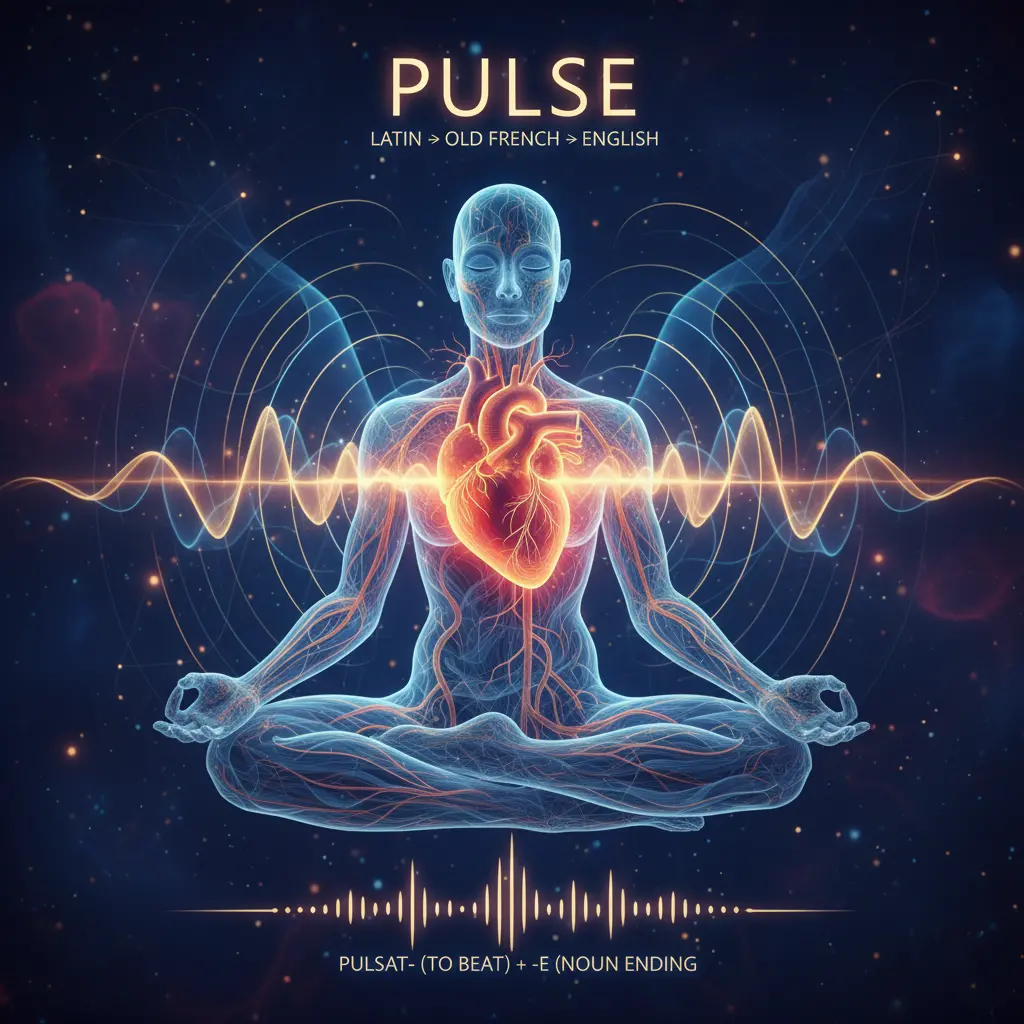
pulse = pulsat- (to beat) + -e (noun ending); Latin → Old French → English. Imagine your heart rhythmically beating, sending waves of energy through your body, just like a pulse in music.
Note 1: These definitions and etymologies are not standard dictionary definitions, but extended explanations provided to help with memorization and understanding of the actual application of words. Through this background information, we strive to make words more vivid and easier to understand, and help you remember their meanings in real life.
Note 2: LexiTalk designs the learning flow around the linguistics principle of “Comprehensible Input.” When learners encounter material that is slightly above their level but still understandable from context, the brain naturally absorbs the language. That’s why we keep every word inside authentic contexts, using examples and associations to help you understand it and use it flexibly.
Read the FAQ explanation of Comprehensible InputI set a finger to my wrist and press lightly, watching a small rhythm rise under the skin. The pulse shifts with my breath, changing as I move, then settles as I slow down. I adjust my grip and keep the pace steady, letting the beat push and pull in sync with my thoughts. In that moment the sense of energy spreads through my chest and I know what to do next: hold steady or turn to the next task.
Pulse is a core English word tied to rhythm and energy. As a noun, it usually refers to the rhythmic beating of the heart or a visible vibration, and it can describe a wave of energy or signal in technology or communication. As a verb, to pulse means to beat or throb with a steady, regular rhythm, or for a light or display to glow with a repeating pulse. People talk about the 'pulse of life' in a person or place, or the tempo in music or sports. Learners should note that pulse and beat are related but not always interchangeable, and context often decides which sense fits.
For English learners, pulse often covers both the physical heartbeat and figurative uses (pulse of life, city pulse). Learners may over-rely on translating pulse as 'heartbeat' in all contexts and miss technical senses like a signal in electronics.
What is the meaning of 'pulse'?
In which sentence is 'pulse' used correctly?
Which word is a synonym of 'pulse'?
What is the opposite of 'pulse'?
How is 'pulse' relevant in everyday life?
Download LexiTalk app for personalized learning experience
Download AppCookies
We use cookies for essential site functions, analytics, and ads. You can accept, reject, or manage preferences. Privacy Policy