
radiation - Master This Word
Master this word with our 5-step learning method – Learn English in English
Train English Through Brain Routes, Not Translation.
This page helps you stop memorizing isolated translations and start understanding a word through its shared mental image, native-style thinking, and practical training steps.
Master this word with our 5-step learning method – Learn English in English
Example sentences are the start of understanding. Don't rush to memorize. First feel how the word works in a sentence.
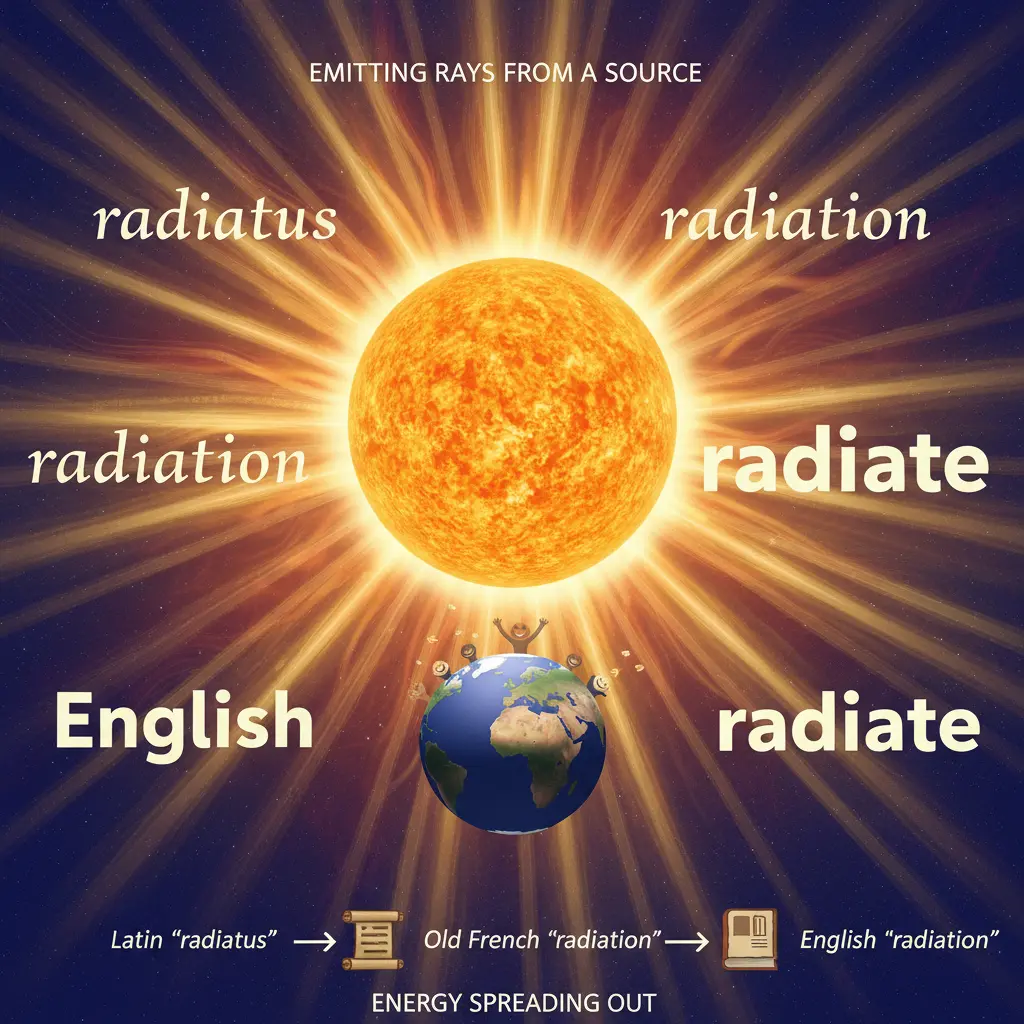
The root 'radiate' means to emit rays. Historical origin: Latin 'radiatus' → Old French 'radiation' → English 'radiation'. Memory image: Picture the sun radiating warmth and light in all directions, akin to how energy spreads out from a source.
Note 1: These definitions and etymologies are not standard dictionary definitions, but extended explanations provided to help with memorization and understanding of the actual application of words. Through this background information, we strive to make words more vivid and easier to understand, and help you remember their meanings in real life.
Note 2: LexiTalk designs the learning flow around the linguistics principle of “Comprehensible Input.” When learners encounter material that is slightly above their level but still understandable from context, the brain naturally absorbs the language. That’s why we keep every word inside authentic contexts, using examples and associations to help you understand it and use it flexibly.
Read the FAQ explanation of Comprehensible InputI move my hand on a switch, push it, and the room light blooms. A thin ribbon of radiation slides through the air, warming my cheeks as colors shift. I adjust my stance, hold the panel steady, and keep watching until the glow sits still. It isn’t a rule I’m learning; it’s the feel of control in action, the sense that what I move now will change what I can do next in the real world.
Radiation, as a noun, refers to the emission of energy as electromagnetic waves or moving subatomic particles from a source. It also describes a process by which energy spreads outward from a center, often with diminishing intensity. In everyday science writing, you might hear about solar radiation warming the planet, or about radio waves used in communication. A third common sense is medical radiation, where carefully measured doses are employed to diagnose or treat illness, such as X-ray imaging or radiation therapy. Understanding the word involves noting the energy source, the medium of transmission, and the level of potential risk associated with exposure.
For English speakers, radiation is often learned with technical roots (radiare, radiant) and common phrases about sun exposure, medical imaging, and safety regulations.
What is the meaning of the word 'radiation'?
In which sentence is the word 'radiation' used correctly?
Which word is an antonym of 'radiation'?
In what real-life context would you encounter 'radiation'?
Reflect on why understanding 'radiation' is important in today's world.
Download LexiTalk app for personalized learning experience
Download AppCookies
We use cookies for essential site functions, analytics, and ads. You can accept, reject, or manage preferences. Privacy Policy