recovery - Master This Word
Master this word with our 5-step learning method – Learn English in English
Train English Through Brain Routes, Not Translation.
This page helps you stop memorizing isolated translations and start understanding a word through its shared mental image, native-style thinking, and practical training steps.
Master this word with our 5-step learning method – Learn English in English
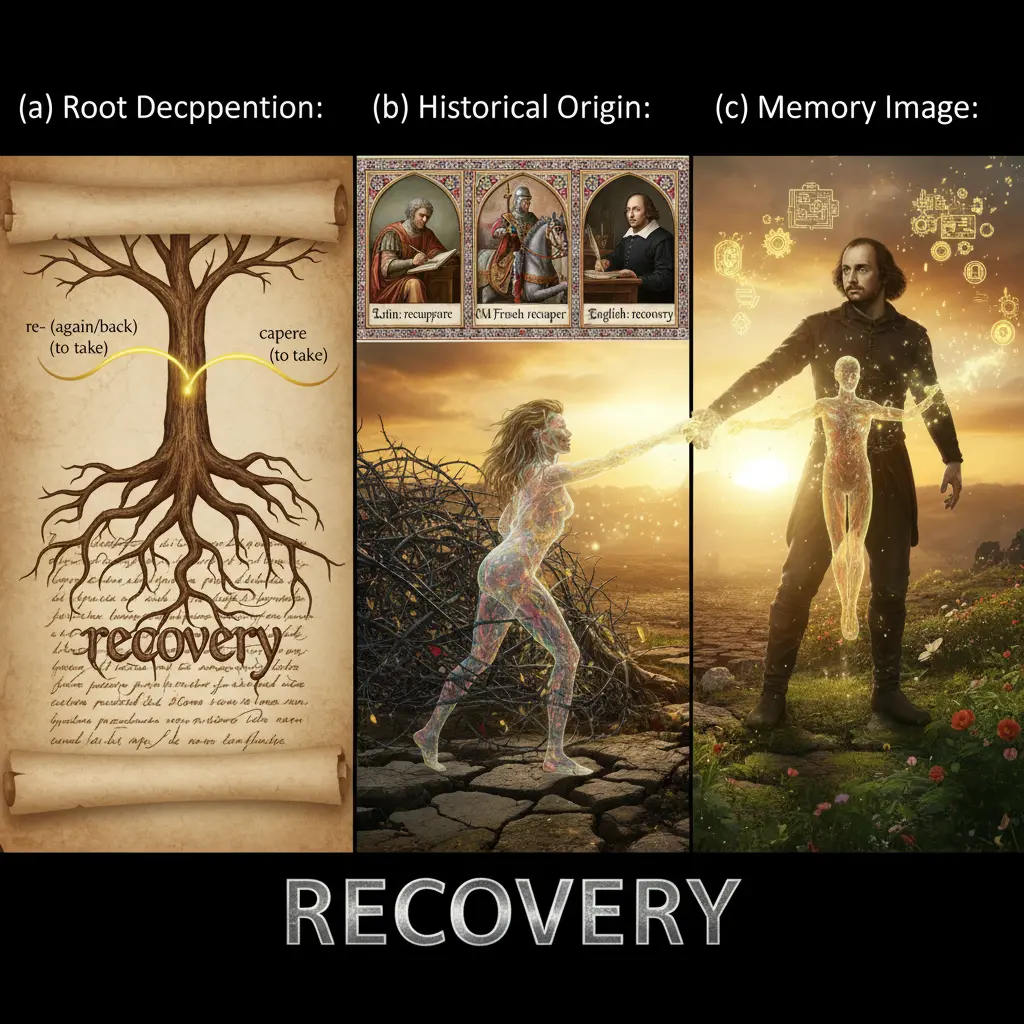
Example sentences are the start of understanding. Don't rush to memorize. First feel how the word works in a sentence.
(a) Root decomposition: prefix re- meaning again/back + capere (to take). (b) Historical origin: from Latin recuperare, via Old French recuperer, into English as recovery. (c) Memory image: picture pulling yourself back to health, taking back what illness took; extended senses like data recovery or economic recovery grow from that same core idea of taking back.
Note 1: These definitions and etymologies are not standard dictionary definitions, but extended explanations provided to help with memorization and understanding of the actual application of words. Through this background information, we strive to make words more vivid and easier to understand, and help you remember their meanings in real life.
Note 2: LexiTalk designs the learning flow around the linguistics principle of “Comprehensible Input.” When learners encounter material that is slightly above their level but still understandable from context, the brain naturally absorbs the language. That’s why we keep every word inside authentic contexts, using examples and associations to help you understand it and use it flexibly.
Read the FAQ explanation of Comprehensible InputFirst I push up from the bed, hands gripping the edge, then I pull in a deep breath and hold it for a beat. I watch my energy shift as tiny steps, like stretches or a walk, begin to move me toward ease. The feeling is a careful change, a sense that the body and routine are inching back to what they were. I set a small goal for the day, let go of yesterday's doubt, and keep going, knowing recovery means both health and the chance to reclaim a steadier rhythm after the downturn.
Recovery is a noun that describes the process of returning to a normal state after illness, injury, or hardship. It also refers to reclaiming something that was lost or damaged, such as data, time, or trust, and it can be used to discuss improvements after a downturn in health, economy, or personal life. In everyday speech, people talk about physical recovery, mental recovery, and economic recovery, as well as shorter-term recoveries like recovering a password or recovering a deleted file. The word carries the idea of taking back what was put at risk and implies time, effort, and gradual progress rather than an instant fix. It spans medical, legal, and everyday contexts.
Recovery in English is commonly a broad noun for health, data, or economy and often pairs with phrases like on the road to recovery; learners may mistake it for cure or confuse with repair.
What is the meaning of 'recovery'?
Which sentence uses 'recovery' correctly?
What is the most similar word to 'recovery'?
What is the opposite of 'recovery'?
Can you give an example of a real-life scenario of 'recovery'?
Download LexiTalk app for personalized learning experience
Download AppCookies
We use cookies for essential site functions, analytics, and ads. You can accept, reject, or manage preferences. Privacy Policy