rejection - Master This Word
Master this word with our 5-step learning method – Learn English in English
Train English Through Brain Routes, Not Translation.
This page helps you stop memorizing isolated translations and start understanding a word through its shared mental image, native-style thinking, and practical training steps.
Master this word with our 5-step learning method – Learn English in English
Example sentences are the start of understanding. Don't rush to memorize. First feel how the word works in a sentence.
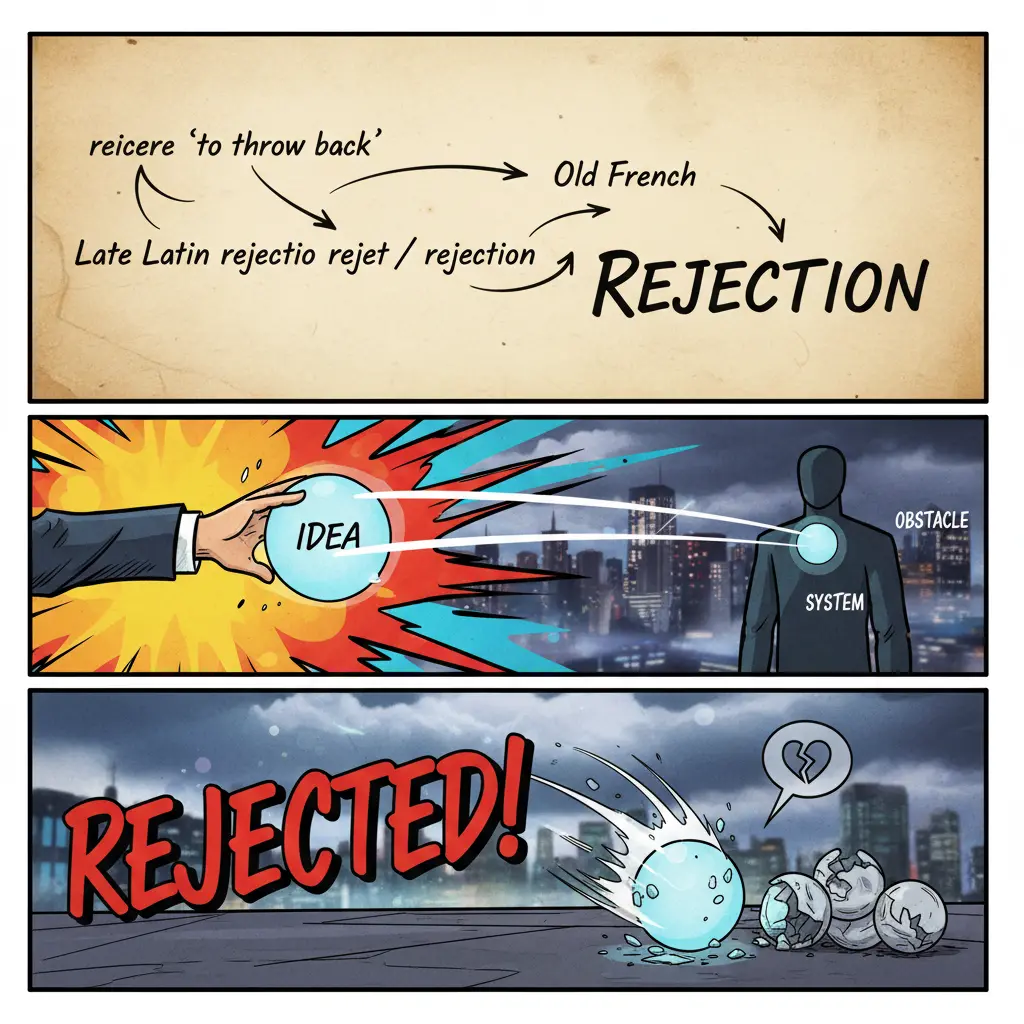
Root decomposition: prefix re- (back/again) + root -ject (to throw) + suffix -ion to form a noun. Historical origin: from Latin reicere ‘to throw back’ → Late Latin reiectio → Old French rejet / rejection → English. Memory image: imagine a ball tossed back to you and discarded, as if your idea is thrown back and refused.
Note 1: These definitions and etymologies are not standard dictionary definitions, but extended explanations provided to help with memorization and understanding of the actual application of words. Through this background information, we strive to make words more vivid and easier to understand, and help you remember their meanings in real life.
Note 2: LexiTalk designs the learning flow around the linguistics principle of “Comprehensible Input.” When learners encounter material that is slightly above their level but still understandable from context, the brain naturally absorbs the language. That’s why we keep every word inside authentic contexts, using examples and associations to help you understand it and use it flexibly.
Read the FAQ explanation of Comprehensible InputI start by letting my shoulders settle, my eyes hovering over a message. I push the idea aside, then shift my focus to what is offered. A quiet pressure grows as I change course, and I pull back from agreement, choosing not to say yes. The act of rejection feels like a small move, a bit of control that keeps space for something else to fit.
Rejection is a noun describing two broad ideas: the act of not accepting something offered or proposed, and the feeling of being shut out or turned down by others. In medicine, it also refers to the body's immune response rejecting a transplanted organ. The word comes from Latin reicere, meaning to throw back, with the -ject root meaning throw, and the suffix -ion to form a noun. People talk about rejection in contexts like job offers, proposals, and social situations, as well as in clinical settings when a transplant fails. Understanding its nuances helps distinguish it from simple refusal, sarcasm, or mere disappointment.
English tends to separate the act of rejecting from the emotional experience; learners often confuse the noun with feelings and confuse with other verbs like refuse.
What is the meaning of the word 'rejection'?
Which sentence uses 'rejection' correctly?
What is a synonym for 'rejection'?
What is the opposite of 'rejection'?
In what situation might you experience rejection?
Download LexiTalk app for personalized learning experience
Download AppCookies
We use cookies for essential site functions, analytics, and ads. You can accept, reject, or manage preferences. Privacy Policy