relatively - Master This Word
Master this word with our 5-step learning method – Learn English in English
Train English Through Brain Routes, Not Translation.
This page helps you stop memorizing isolated translations and start understanding a word through its shared mental image, native-style thinking, and practical training steps.
Master this word with our 5-step learning method – Learn English in English
Example sentences are the start of understanding. Don't rush to memorize. First feel how the word works in a sentence.
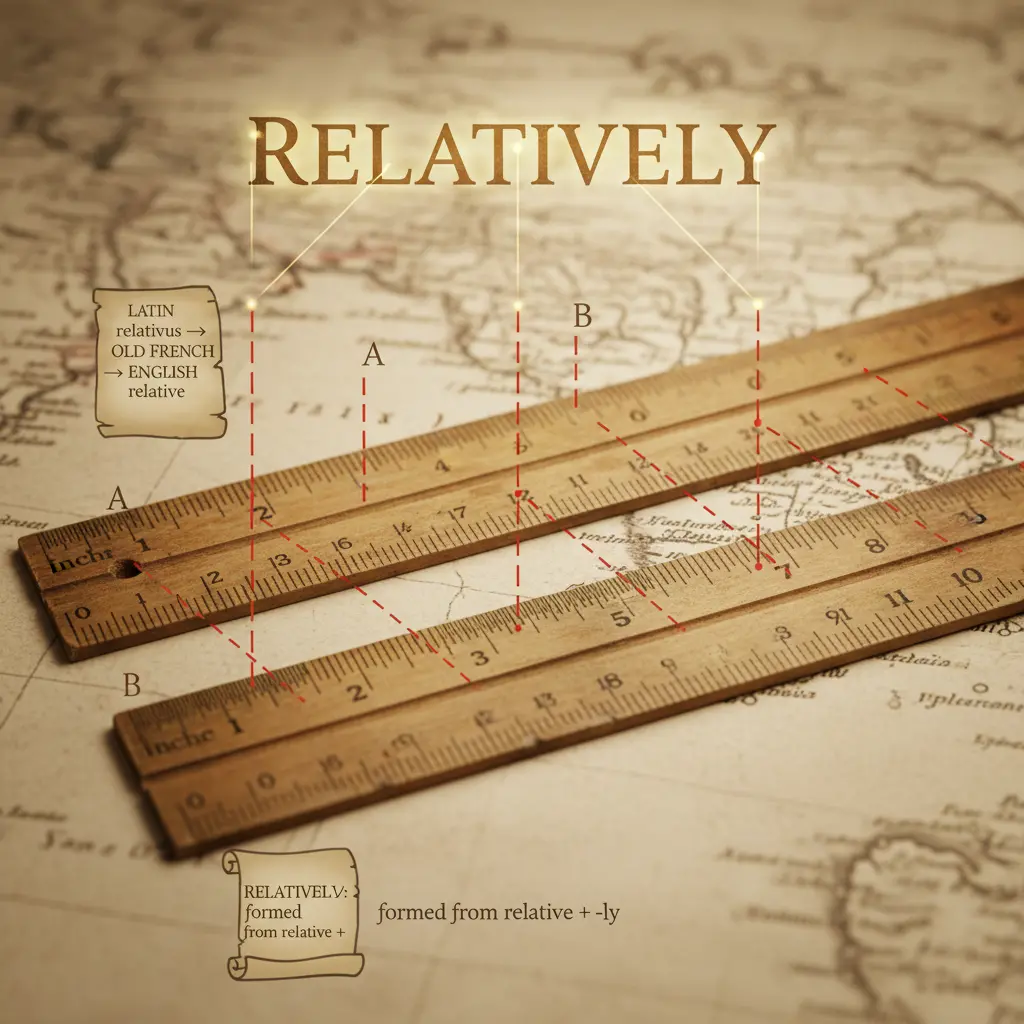
Root decomposition: the base is relative with the adverb suffix -ly; relative itself comes from Latin relativus, from referre meaning to bring back, with re- indicating back. Historical origin: Latin relativus → Old French relatif → English relative; relatively is formed from relative. Memory image: imagine two rulers laid side by side to measure how one distance relates to the other, illustrating relative position.
Note 1: These definitions and etymologies are not standard dictionary definitions, but extended explanations provided to help with memorization and understanding of the actual application of words. Through this background information, we strive to make words more vivid and easier to understand, and help you remember their meanings in real life.
Note 2: LexiTalk designs the learning flow around the linguistics principle of “Comprehensible Input.” When learners encounter material that is slightly above their level but still understandable from context, the brain naturally absorbs the language. That’s why we keep every word inside authentic contexts, using examples and associations to help you understand it and use it flexibly.
Read the FAQ explanation of Comprehensible InputI set my cup on the desk and push the chair back to stretch. I move the screen a few inches, shift my gaze, and adjust my notes. It feels like keeping a tiny balance, a moment of effort and control as ideas rise. When I compare this pace to yesterday, the progress feels relatively quick and the word starts to sit in my mind as a tool for talking about things in relation to others.
Relatively is an adverb used to soften or qualify a statement by comparing it to a reference point, another object, or a baseline. It signals that the extent, degree, or quality is not absolute but is in relation to something else. It often appears before adjectives or adverbs (relatively easy, relatively speaking) and invites the listener to consider context, exceptions, or uncertainty. You can use it with numbers, measurements, or comparisons to show partial evaluation rather than a fixed judgment. Remember that relatively can shift meaning when the reference point changes, so be clear about what you are comparing. In everyday speech, it helps avoid overstatement while keeping nuance.
English learners often treat relatively as softening a claim; stress the reference point and ensure the comparison is explicit.
What does the word 'relatively' mean?
In which of the following sentences is 'relatively' used correctly?
Which of the following words is similar to 'relatively'?
What is the opposite of 'relatively'?
Can you give an example of a real-life situation where 'relatively' would be used?
Download LexiTalk app for personalized learning experience
Download AppCookies
We use cookies for essential site functions, analytics, and ads. You can accept, reject, or manage preferences. Privacy Policy