
republics - Master This Word
Master this word with our 5-step learning method – Learn English in English
Train English Through Brain Routes, Not Translation.
This page helps you stop memorizing isolated translations and start understanding a word through its shared mental image, native-style thinking, and practical training steps.
Master this word with our 5-step learning method – Learn English in English
Example sentences are the start of understanding. Don't rush to memorize. First feel how the word works in a sentence.
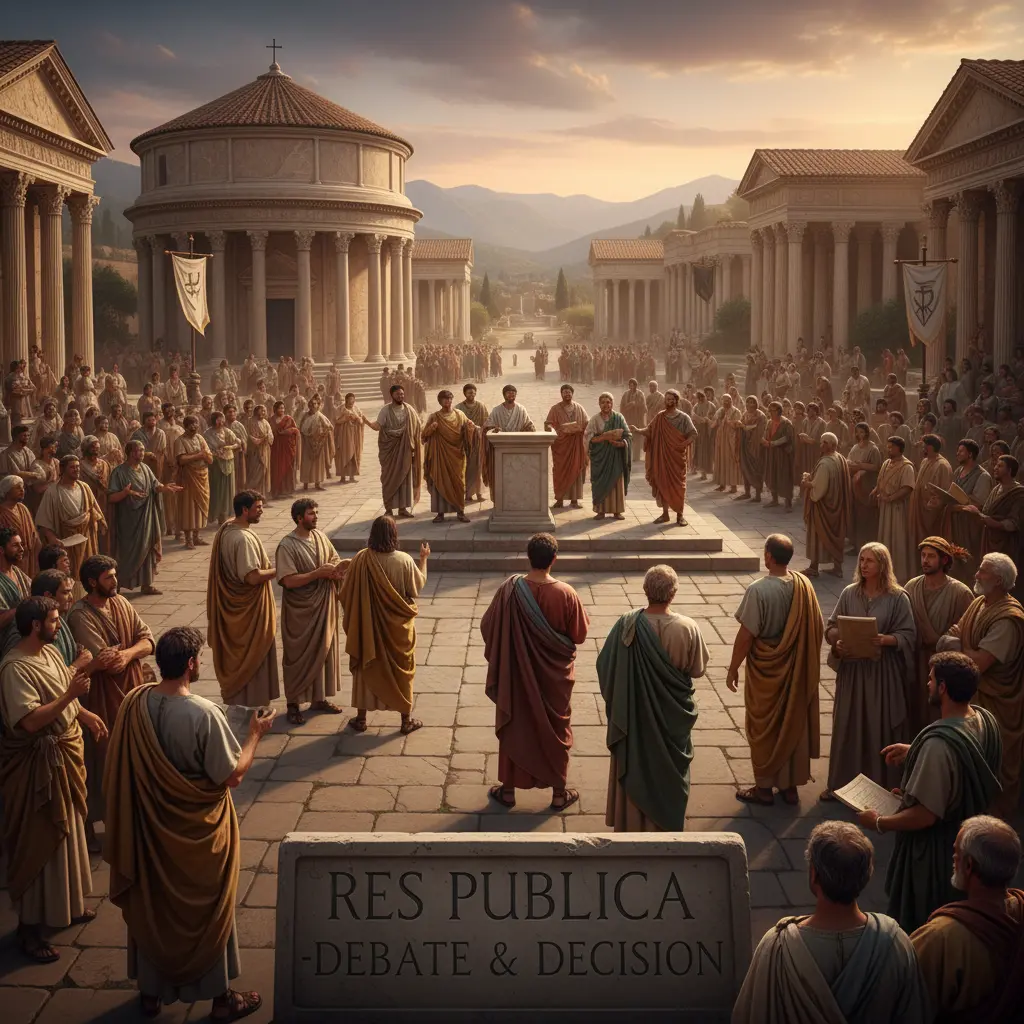
re- = back, public = people; historically originated from Latin 'res publica' meaning 'public matter'; visualize a public square where citizens gather to debate and decide the fate of their community.
Note 1: These definitions and etymologies are not standard dictionary definitions, but extended explanations provided to help with memorization and understanding of the actual application of words. Through this background information, we strive to make words more vivid and easier to understand, and help you remember their meanings in real life.
Note 2: LexiTalk designs the learning flow around the linguistics principle of “Comprehensible Input.” When learners encounter material that is slightly above their level but still understandable from context, the brain naturally absorbs the language. That’s why we keep every word inside authentic contexts, using examples and associations to help you understand it and use it flexibly.
Read the FAQ explanation of Comprehensible InputI push a heavy door and step into a meeting room, the air buzzing with voices. People take turns speaking, and ideas shift like cards in a hand. I adjust my posture, listen closely, and keep my attention on what's being said. The sense that power belongs to the people grows here, and the room begins to hint at what a republic can be.
A republic is a form of government in which the people do not rule directly but elect representatives to make policy and govern on their behalf. The core idea is that political power rests with the citizens and is exercised under a system of laws, checks and balances, and constitutional limits that protect individual rights. In practice, republics vary: some maintain strong parliamentary systems, others rely on a strong executive; most publish official accounts, hold regular elections, and allow peaceful change of government. The term emphasizes accountability, rule of law, and the idea that rulers derive authority from the people, not from birth or force.
Explain to an English speaker: The republic concept in English emphasizes legal limits and representation, but other languages may translate 'republic' as 'commonwealth' or treat it differently; learners often assume all republics are democracies, or confuse with 'republican' as a political party.
Download LexiTalk app for personalized learning experience
Download AppCookies
We use cookies for essential site functions, analytics, and ads. You can accept, reject, or manage preferences. Privacy Policy