ripple - Master This Word
Master this word with our 5-step learning method – Learn English in English
Train English Through Brain Routes, Not Translation.
This page helps you stop memorizing isolated translations and start understanding a word through its shared mental image, native-style thinking, and practical training steps.
Master this word with our 5-step learning method – Learn English in English
Example sentences are the start of understanding. Don't rush to memorize. First feel how the word works in a sentence.
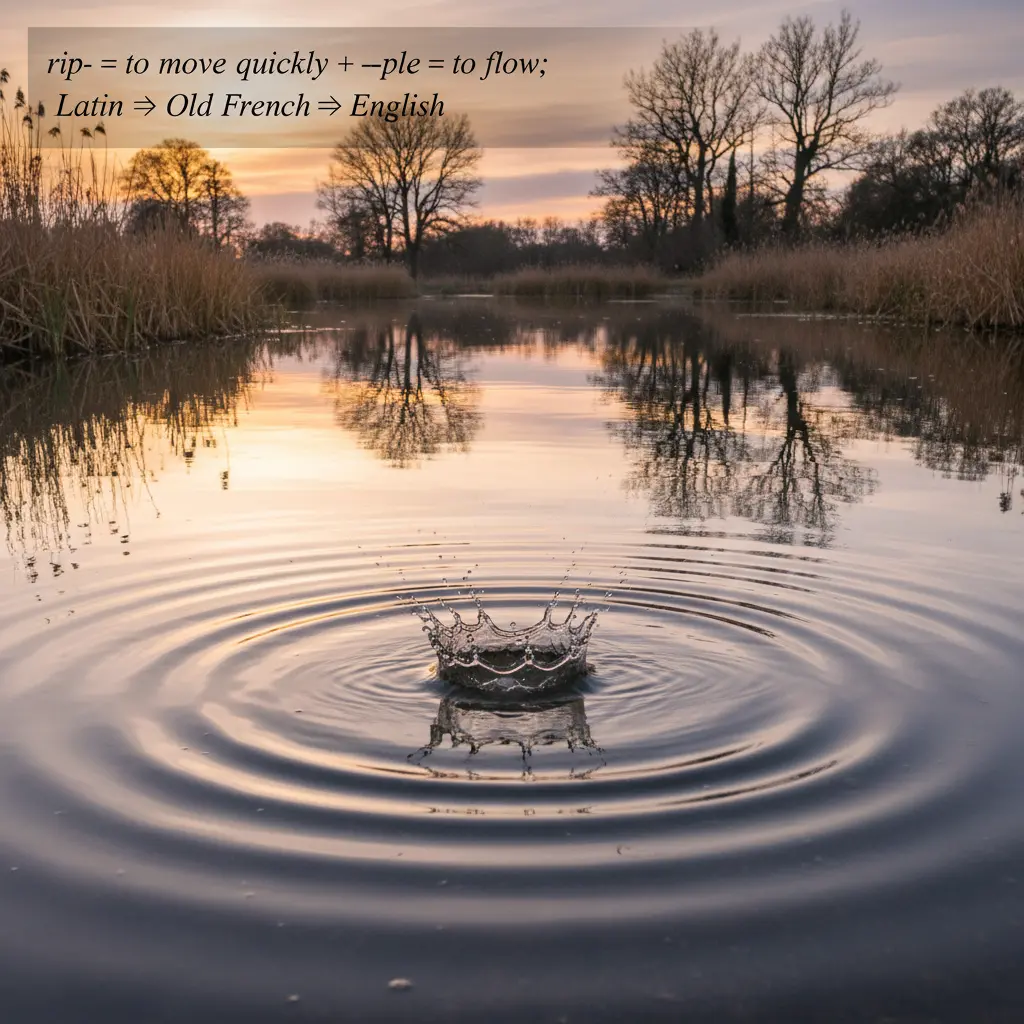
rip- = to move quickly + -ple = to flow; Latin → Old French → English. Imagine throwing a stone into a still pond, creating ripples that spread outward, illustrating movement and effect.
Note 1: These definitions and etymologies are not standard dictionary definitions, but extended explanations provided to help with memorization and understanding of the actual application of words. Through this background information, we strive to make words more vivid and easier to understand, and help you remember their meanings in real life.
Note 2: LexiTalk designs the learning flow around the linguistics principle of “Comprehensible Input.” When learners encounter material that is slightly above their level but still understandable from context, the brain naturally absorbs the language. That’s why we keep every word inside authentic contexts, using examples and associations to help you understand it and use it flexibly.
Read the FAQ explanation of Comprehensible InputRipple is both a verb and a noun that describes a small wave or undulation on a surface, usually water. When you drop a stone in a pond, the impact creates concentric ripples that travel outward, illustrating how a single action can affect a larger area. As a verb, to ripple means to move with shallow, regular waves or to cause these waves to spread, often across a surface or through a crowd or system. The metaphorical use, as in 'the rumor rippled through the town,' highlights how ideas or effects can travel quickly and become widespread. In everyday speech, you can say 'a gentle ripple' or 'ripples across the lake' for vivid imagery.
English typically treats ripple as both a literal surface movement and a broader metaphor for spreading effects; learners often mix up 'ripple' with bigger waves or overheat its metaphor with 'wave' in all contexts.
What is the meaning of the word 'ripple'?
Which sentence uses 'ripple' correctly?
What is a synonym for 'ripple'?
What is an antonym for 'ripple'?
In what real-life context might you observe a 'ripple'?
English Learning Listening Content
Listen NowDownload LexiTalk app for personalized learning experience
Download AppCookies
We use cookies for essential site functions, analytics, and ads. You can accept, reject, or manage preferences. Privacy Policy