rubbish - Master This Word
Master this word with our 5-step learning method – Learn English in English
Train English Through Brain Routes, Not Translation.
This page helps you stop memorizing isolated translations and start understanding a word through its shared mental image, native-style thinking, and practical training steps.
Master this word with our 5-step learning method – Learn English in English
Example sentences are the start of understanding. Don't rush to memorize. First feel how the word works in a sentence.
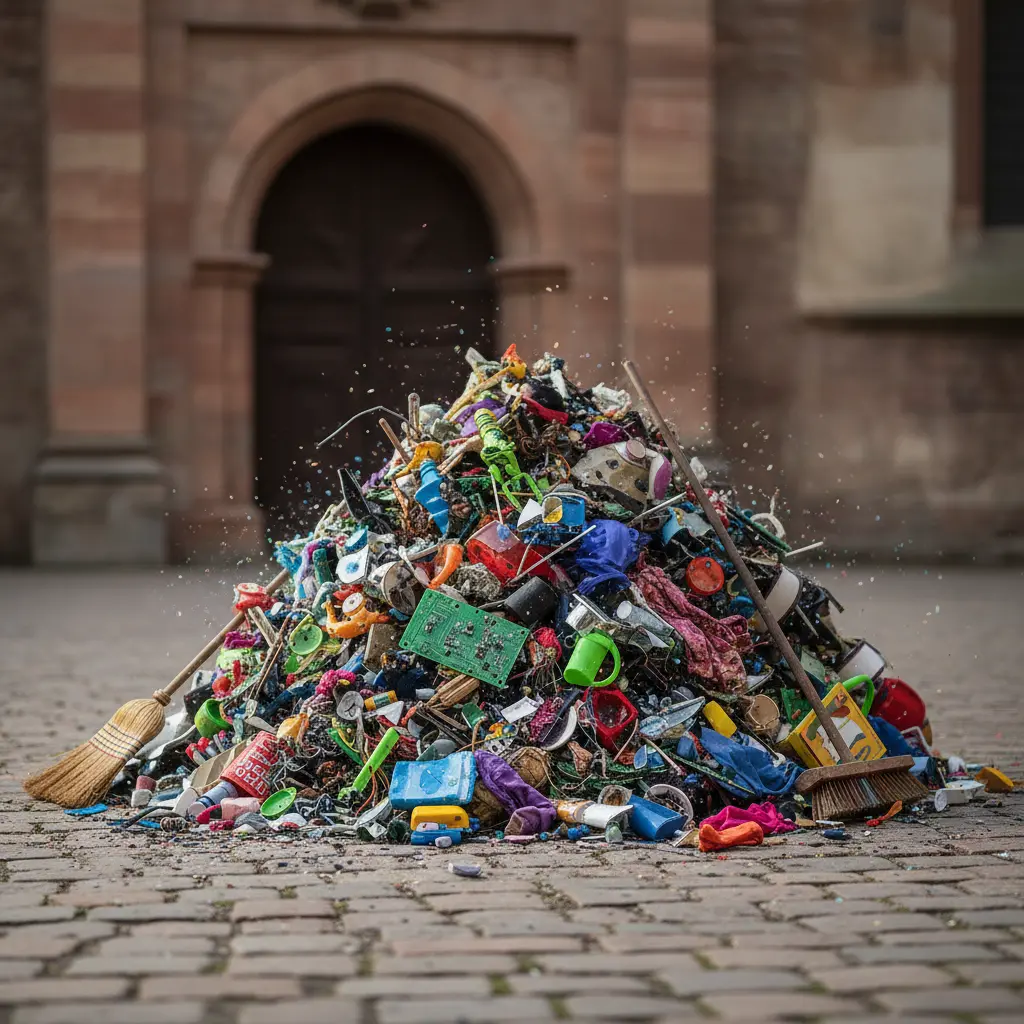
Root decomposition: rub (as in rub) + -ish (to make like). Historical origin: Latin 'rubere' (to be red) → Old French 'rubbish' → English. Memory image: Imagine sweeping up colorful, clashing debris that once held value but now lies discarded, symbolizing ideas or items that are no longer worthwhile.
Note 1: These definitions and etymologies are not standard dictionary definitions, but extended explanations provided to help with memorization and understanding of the actual application of words. Through this background information, we strive to make words more vivid and easier to understand, and help you remember their meanings in real life.
Note 2: LexiTalk designs the learning flow around the linguistics principle of “Comprehensible Input.” When learners encounter material that is slightly above their level but still understandable from context, the brain naturally absorbs the language. That’s why we keep every word inside authentic contexts, using examples and associations to help you understand it and use it flexibly.
Read the FAQ explanation of Comprehensible InputI pick up a crumpled wrapper and move it toward the bin, then push the lid and let it disappear. I feel a light weight lift and a small shift in the air as the trash slips away. That change in the room makes me decide what to keep and what to set aside, a simple adjust in how I view my things. Later, when someone calls an idea rubbish, I recall that moment of control and let the thought go, turning to what actually matters.
Rubbish is a versatile British English noun that mainly means waste material or trash, but it also describes something of poor quality or even nonsense. You will hear it in phrases like rubbish bin, rubbish dump, and rubbish ideas. In American English, trash or garbage is more common; rubbish sounds informal and a bit playful in the UK. A typical learner mistake is assuming rubbish always refers to physical waste, or that it cannot describe ideas or opinions. Use it for informal emphasis: That idea is rubbish, and this rubbish bin is full.
British English speakers use rubbish to describe trash and to express skepticism about ideas; learners often mix it with formal words or overuse it with people.
What does the word 'rubbish' mean?
Choose the correct sentence using 'rubbish'.
Which word is most similar to 'rubbish'?
What is the opposite of 'rubbish'?
Can you think of a real-life scenario where something is considered rubbish?
Download LexiTalk app for personalized learning experience
Download AppCookies
We use cookies for essential site functions, analytics, and ads. You can accept, reject, or manage preferences. Privacy Policy