sake - Master This Word
Master this word with our 5-step learning method – Learn English in English
Train English Through Brain Routes, Not Translation.
This page helps you stop memorizing isolated translations and start understanding a word through its shared mental image, native-style thinking, and practical training steps.
Master this word with our 5-step learning method – Learn English in English
Example sentences are the start of understanding. Don't rush to memorize. First feel how the word works in a sentence.
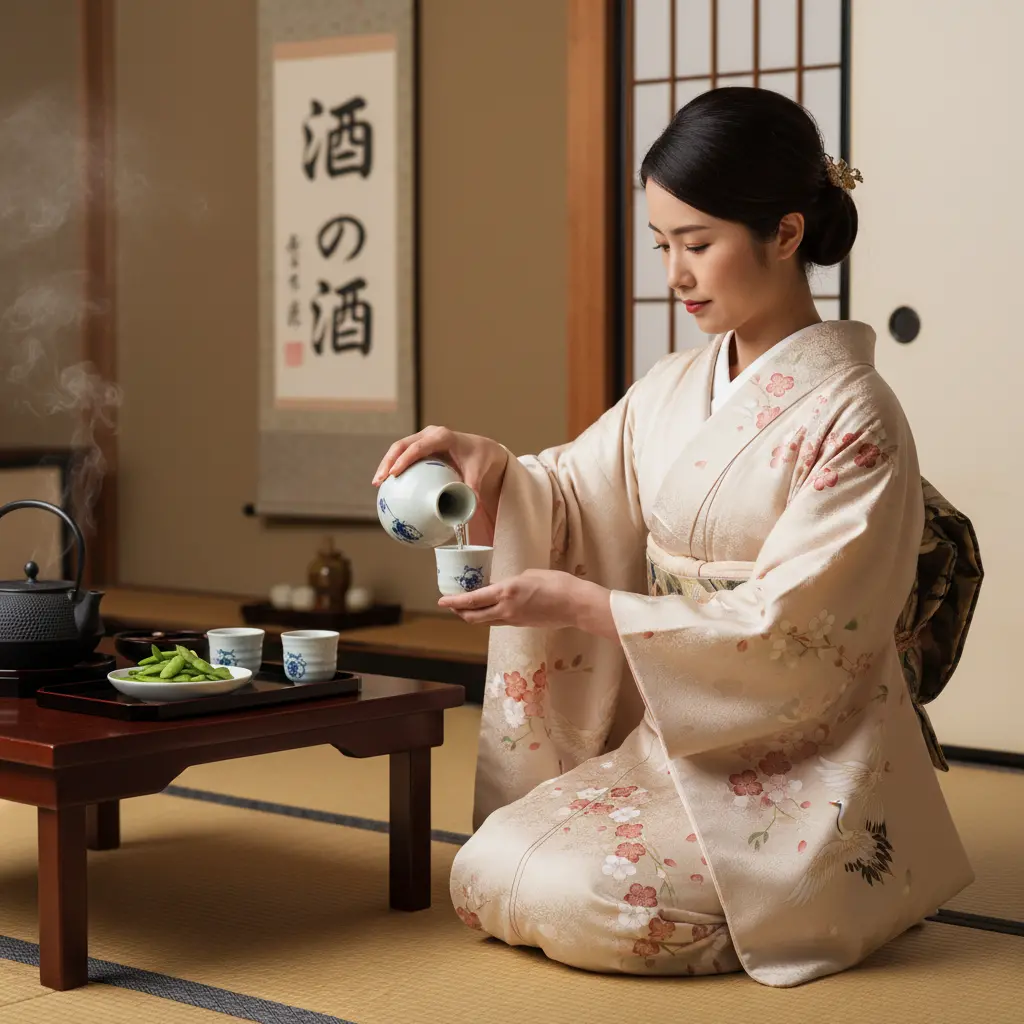
Root decomposition: sake (from Japanese 'sake'). Historical origin: the word 'sake' comes directly from Japanese. Memory image: picture a traditional Japanese sake pourer elegantly serving a small cup, symbolizing the rich culture and ceremonies surrounding this drink.
Note 1: These definitions and etymologies are not standard dictionary definitions, but extended explanations provided to help with memorization and understanding of the actual application of words. Through this background information, we strive to make words more vivid and easier to understand, and help you remember their meanings in real life.
Note 2: LexiTalk designs the learning flow around the linguistics principle of “Comprehensible Input.” When learners encounter material that is slightly above their level but still understandable from context, the brain naturally absorbs the language. That’s why we keep every word inside authentic contexts, using examples and associations to help you understand it and use it flexibly.
Read the FAQ explanation of Comprehensible InputI cradle the small cup in my hands and move it up to eye level. The sake inside shifts as I tilt the bottle, and its pale glow changes with the pour. I adjust my grip, take a steady breath, and hold the moment as the steam rises. For the sake of a simple, shared moment, I set the cup on the wood and keep my gaze with my friend.
Sake is a traditional Japanese beverage made by fermenting rice. It is also used in English to refer to actions done 'for the sake of' someone or something, expressing a reason, purpose, or benefit. The word sake in English comes directly from Japanese, and when used in the phrase 'for the sake of', it doesn’t refer to the drink itself but to a beneficial aim. In daily life, you might hear someone say they are taking a trip for the sake of tradition, or working harder for the sake of family. The etymology section notes that the root decomposition mirrors the cultural ceremonial role of sake in Japan. The concept can be tricky for learners because of two distinct senses.
In English, sake has two main senses: the drink and the expression 'for the sake of' meaning 'for the benefit of'. Learners often mix them, especially in casual speech or writing, so practice with clear context to choose the right sense.
In which of the following contexts is 'sake' used?
Which of the following words is similar to 'sake'?
Which of the following words is the opposite of 'sake'?
How is the word 'sake' commonly used in real-life situations?
English Learning Listening Content
Listen NowDownload LexiTalk app for personalized learning experience
Download AppCookies
We use cookies for essential site functions, analytics, and ads. You can accept, reject, or manage preferences. Privacy Policy