salmon - Master This Word
Master this word with our 5-step learning method – Learn English in English
Train English Through Brain Routes, Not Translation.
This page helps you stop memorizing isolated translations and start understanding a word through its shared mental image, native-style thinking, and practical training steps.
Master this word with our 5-step learning method – Learn English in English
Example sentences are the start of understanding. Don't rush to memorize. First feel how the word works in a sentence.
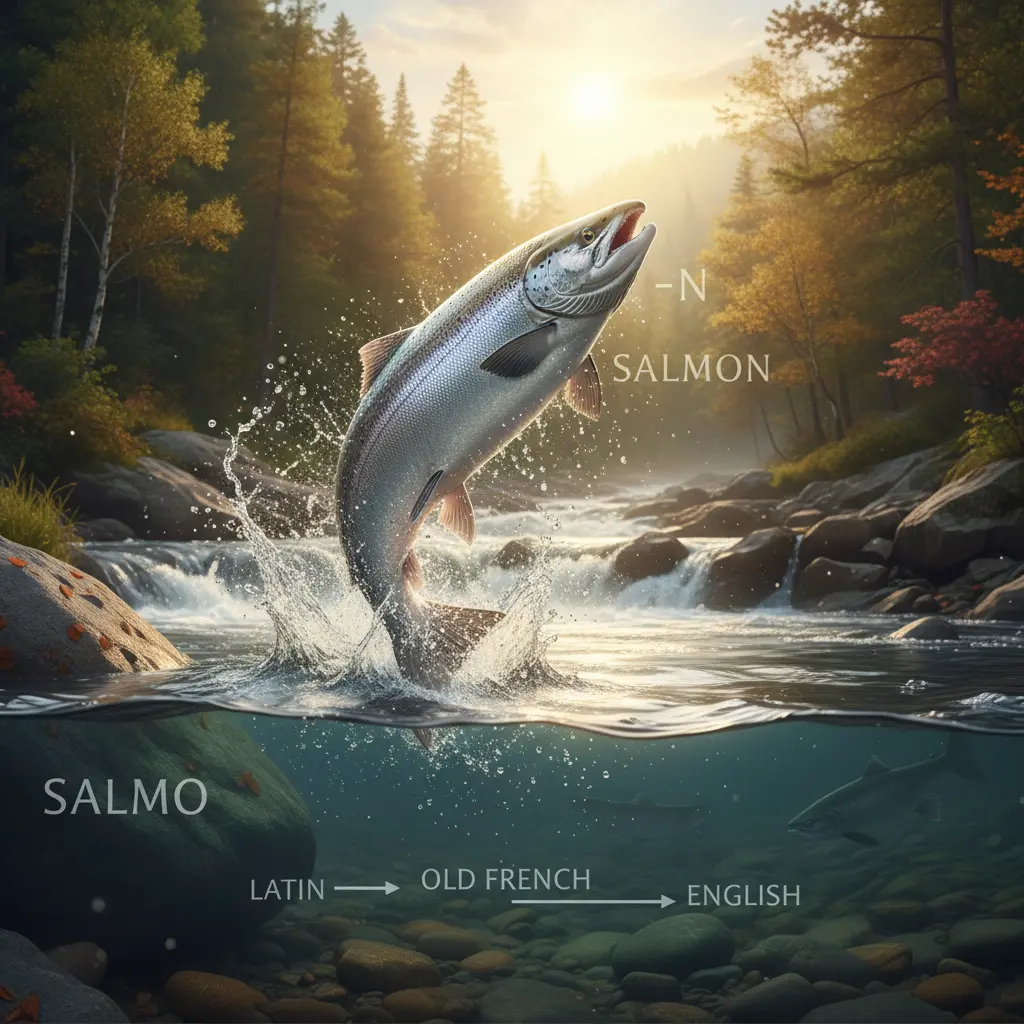
salmon = salmo (Latin) + -n (variation), derived from Latin, Old French to English. Imagine a fish leaping out of water, glistening in the sun, symbolizing the journey it takes upstream to spawn.
Note 1: These definitions and etymologies are not standard dictionary definitions, but extended explanations provided to help with memorization and understanding of the actual application of words. Through this background information, we strive to make words more vivid and easier to understand, and help you remember their meanings in real life.
Note 2: LexiTalk designs the learning flow around the linguistics principle of “Comprehensible Input.” When learners encounter material that is slightly above their level but still understandable from context, the brain naturally absorbs the language. That’s why we keep every word inside authentic contexts, using examples and associations to help you understand it and use it flexibly.
Read the FAQ explanation of Comprehensible InputSalmon is a freshwater and marine fish known for its pink or orange flesh and its legendary upstream migration. In biology, salmon refers to several species of the genus Salmo and Oncorhynchus, depending on the region. As food, it is valued for its rich flavor and versatility: it can be grilled, baked, poached, or eaten raw as sashimi or sushi. The word salmon comes from Latin salmo, with a late -n ending described as a variation, borrowed through Old French into English. This etymology reflects a long history of trade, study, and culinary exchange across Europe, and the fish’s remarkable life cycle continues to inspire chefs and naturalists alike.
English speakers treat salmon as both a fish and a color descriptor, with flexible count (a salmon, two salmon). Learners often assume plural always ends in -s and worry about color-only uses.
In which sentence is 'salmon' used correctly?
Which of the following is a similar word to 'salmon'?
What is the opposite of 'salmon'?
In what real-life context might you hear the word 'salmon'?
Download LexiTalk app for personalized learning experience
Download AppCookies
We use cookies for essential site functions, analytics, and ads. You can accept, reject, or manage preferences. Privacy Policy